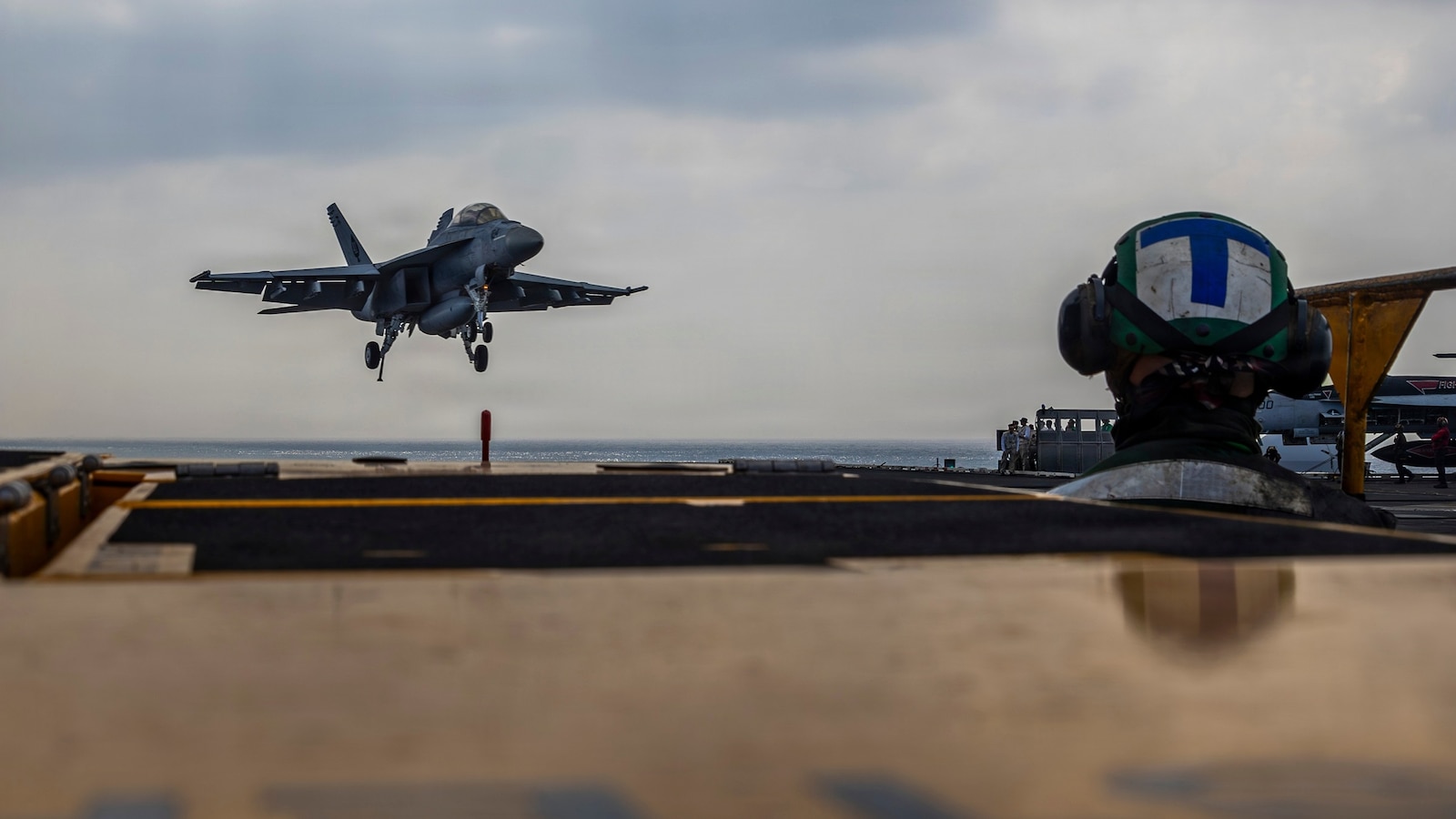
U.S.-Iran tensions escalated as Iran warned it is prepared to “immediately” retaliate amid a U.S. military buildup that includes the aircraft carrier USS Abraham Lincoln and three destroyers — a deployment that adds roughly 5,000 personnel to an existing regional presence of about 30,000–35,000 U.S. troops. Tehran rejected talks under threat even as President Trump threatened further strikes and referenced last summer’s attacks on Iranian nuclear sites; concurrent domestic unrest in Iran — sparked by a collapsing rial and resulting in large numbers of deaths and arrests per activist groups — increases political risk and the likelihood of market risk-off moves, particularly for regional and commodity-sensitive assets.
Market structure: A U.S.–Iran escalation is a clear near-term positive for defense primes (Lockheed LMT, Northrop NOC, RTX) and broad aerospace/defense ETFs (XAR) from immediate order/tender upside and higher FMS demand; expect 5–15% relative outperformance for large primes vs. the S&P over 3–6 months if skirmishes persist. Oil and insurance-linked sectors (energy producers XOM/CVX, reinsurers RNR) gain via a risk premium: a 5–15% jump in Brent is plausible within days if the Strait of Hormuz is threatened, tightening physical crude availability and pushing tanker rates up. Equity risk-off will pressure EM assets and travel/leisure names (AAL, CCL) while boosting safe havens (gold GLD, USTs).
Risk assessment: Tail scenarios include a sustained closure of Gulf exports (Brent >$120, >30% shock) or cyberattacks on regional infrastructure that could spark recessionary effects in 6–12 months; probability modest (<10%) but impact extreme. Short-term (days) expect volatility spikes (VIX +5–10 pts), medium-term (weeks-months) potential re-rating of defense multiples +5–20% and commodity-driven CPI upside of 20–80bps; long-term (quarters) depends on whether conflict triggers sustained higher defense budgets or is contained. Hidden dependencies: Israel involvement, proxy escalations, and global shipping insurance repricing amplify second-order costs to industrials and container lines.
Trade implications: Implement concentrated, hedged exposure: buy defense large-caps and sell travel/leisure; use options to cap downside. Favor short-dated oil call spreads and gold call options to play fast risk premia moves while keeping capital at risk limited. Rebalance after 10–20% moves and watch sanctions/shipments metrics (EIA flows, S&P Global tanker rates) as exit triggers.
Contrarian angles: Consensus may overpay for defense cyclicality; historically (2019 tanker attacks, 1990 Gulf crisis) oil spikes faded in 2–8 weeks absent full war, creating mean-reversion in oil and travel names. If conflict is contained, defense names can retreat 10–15% from peak as risk premium normalizes; structured option buys (call spreads) capture upside without paying full premiums. Unintended consequences include faster central-bank tightening if inflation jumps, which could hurt long-duration defense growth narratives and equities broadly.
AI-powered research, real-time alerts, and portfolio analytics for institutional investors.
Request DemoOverall Sentiment
strongly negative
Sentiment Score
-0.60
