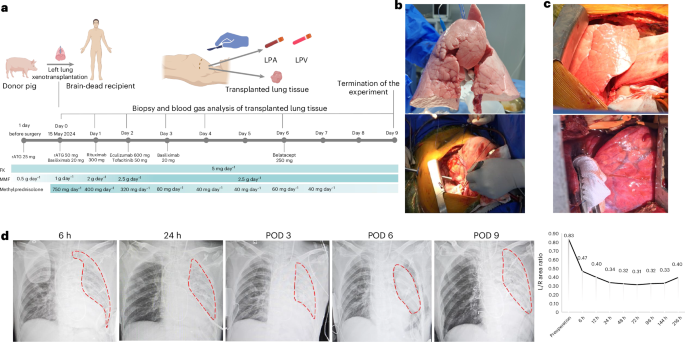
Researchers successfully performed the first reported pig-to-human lung xenotransplantation, implanting a six-gene-edited pig lung into a brain-dead recipient. The xenograft maintained viability and functionality for 216 hours without hyperacute rejection, demonstrating initial feasibility. However, the study noted challenges including early edema and signs of antibody-mediated rejection, underscoring that substantial hurdles related to long-term rejection and infection persist. This necessitates extensive further preclinical research before clinical translation, implying a significant, long-term R&D pathway for this nascent field within the biotech and healthcare sectors.
A recent study reports the first pig-to-human lung xenotransplantation, a significant scientific milestone demonstrating initial feasibility in this field. A six-gene-edited pig lung was transplanted into a brain-dead human recipient and remained viable and functional for a 216-hour monitoring period without signs of hyperacute rejection. Despite this success, the study highlights substantial challenges that temper the immediate outlook. The xenograft developed severe edema within 24 hours, and evidence of antibody-mediated rejection emerged on postoperative days 3 and 6, requiring adjustments to a complex immunosuppressive regimen. The researchers conclude that while the procedure is feasible, formidable hurdles concerning long-term organ rejection and infection must be overcome through further preclinical research before any clinical translation can be considered, indicating a very long and uncertain path to commercial viability.
AI-powered research, real-time alerts, and portfolio analytics for institutional investors.
Request DemoOverall Sentiment
mixed
Sentiment Score
0.10
