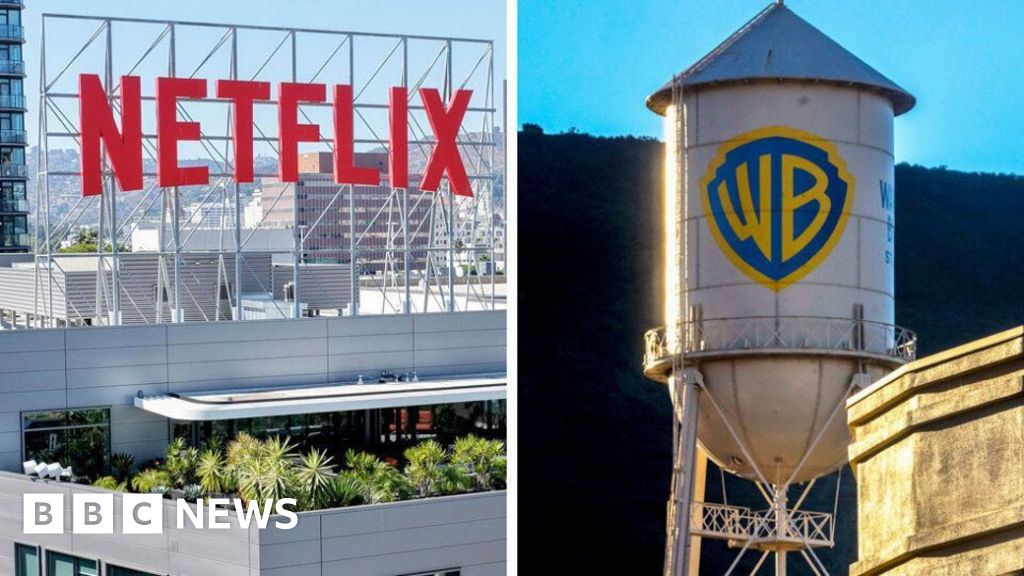
Netflix amended its bid for Warner Bros Discovery's streaming and film business to an all-cash offer of $27.75 per share (≈$72bn for the streaming/film assets, ≈$82bn enterprise value including debt) to accelerate shareholder approval while Warner shareholders will receive shares in the planned spinoff of the remaining businesses. Paramount Skydance continues a rival $30-per-share bid (≈$108bn overall) and has sued for deal details, while Warner’s board remains supportive of Netflix's offer despite antitrust and consolidation concerns. Netflix reported a strong quarter—revenue +18% Y/Y to >$12bn (including >$1.5bn advertising), net income +~30% to $2.4bn, and >325m paying subscribers (+~7% Y/Y)—yet its shares have fallen more than 10% since the deal announcement, reflecting investor unease about the contested takeover and regulatory risks.
Market structure: Netflix acquiring WBD’s streaming & film arm concentrates premium content (Harry Potter, GOT, HBO Max) under NFLX control, raising Netflix’s pricing power and bundling optionality globally. Winners: NFLX (scale, ad rev upside) and holders of the spun-off legacy assets if separation is executed cleanly; losers: smaller streamers (Roku/Peacock) and independent studios facing higher content access costs. Cross-asset: WBD equity will trade M&A arbitrage; WBD and Netflix credit spreads can widen on financing/levering risk; expect near-term equity vol and modest USD demand for deal financing flows.
Risk assessment: Tail risks include an antitrust injunction or a court win for Paramount forcing re-auction, plus integration execution that reduces free cash flow—each could erase >30% of merger equity value. Immediate (days) risk = volatility around disclosures/lawsuits; short-term (weeks–months) = shareholder votes and financing clarity; long-term (years) = realized synergies vs. incremental net leverage and content cost inflation. Hidden dependencies: valuation of the spun-off legacy assets (CNN, cable networks) and earnout/indemnity clauses that will materially affect realized consideration.
Trade implications: Favor structured, asymmetric exposure to WBD upside while protecting NFLX downside. Use long-dated WBD call spreads to capture M&A rerating and buy short-dated NFLX put spreads to hedge event risk; consider a relative-value pair (long WBD, short modest NFLX) into the vote window (3–6 months). Sector rotation: trim small-cap streaming exposure and redeploy into large-cap content owners or fixed-income protection if credit spreads widen.
Contrarian angles: Consensus fears of regulatory defeat may be overstated—the DOJ historically allows vertical content consolidations with divestitures; if regulators accept remedies, NFLX equity could re-rate +20–40% vs. current levels. Market may be underpricing the spin-off optionality of non-streaming assets (activist magnet) and overpricing integration risk—this creates a mispricing window of 3–9 months. Beware unintended consequences: higher content prices, talent/production bottlenecks and union negotiations that can increase cash burn.
AI-powered research, real-time alerts, and portfolio analytics for institutional investors.
Request DemoOverall Sentiment
mixed
Sentiment Score
-0.05
Ticker Sentiment
