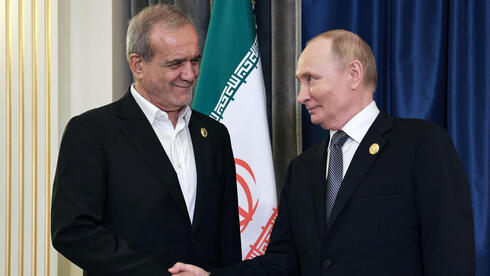
Event: Russia supplied Iran with satellite imagery, upgraded components for Shahed drones and tactical guidance to improve navigation and targeting of U.S. forces. Implication: materially raises escalation risk in the Middle East and strengthens Iran’s strike capabilities, supporting defense names and likely prompting short-term risk-off flows into safe havens and potential upward pressure on oil prices. Monitor related sanctions, U.S./allied diplomatic responses, and any changes in U.S. force posture or insurance/premia in the region.
The operational effect to watch is not just an incremental increase in Iranian strike capability but a compression of the learning curve: higher-precision navigation and employment doctrine from an experienced user (Russia) materially shortens the timeline for Iranian systems to achieve repeatable, mission-level effectiveness. Expect a faster cadence of probing attacks and seeding of tactics across proxies over the next 3–12 months, which amplifies demand for counter-UAS, electronic warfare, and persistent ISR rather than single-shot kinetic munitions. On the supply-chain side, this raises two durable vectors: (1) accelerated US export-control and secondary-sanctions focus on dual-use avionics, IMUs, FPGAs and satcom components within 3–24 months, and (2) a policy-driven push to onshore or certify Western suppliers. That produces an investment bifurcation — beneficiaries will be US defense primes and domestic suppliers of navigation/GNSS/EO tech, while smaller international imagery/sensor partners with cross-border footnotes face both order delays and customer flight-to-quality. Tail risk centers on escalation: a rapid kinetic response or maritime disruption would pressure energy and shipping within days–weeks, while a legal/administrative campaign (naming of Russian space entities) would reprice supply chains over months. The consensus risk to markets is that this is either only political posturing or already priced into defense names; reality is asymmetric — short shocks are likely, but longer-term structural reallocation of procurement and supplier relationships is the higher-probability outcome over 6–24 months.
AI-powered research, real-time alerts, and portfolio analytics for institutional investors.
Overall Sentiment
moderately negative
Sentiment Score
-0.60
