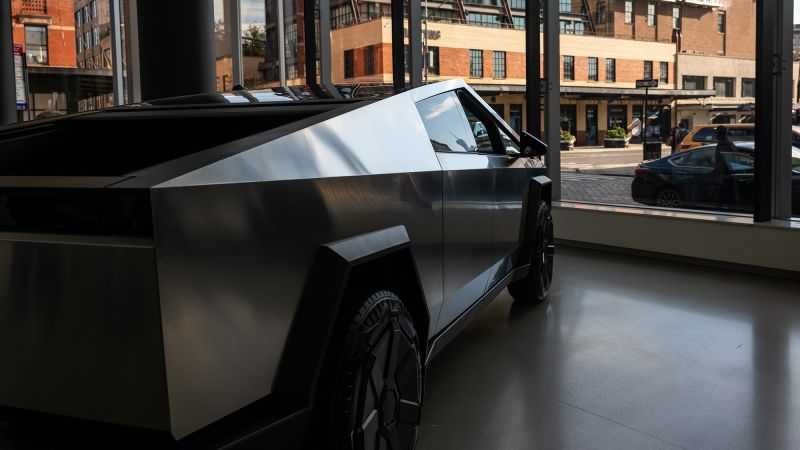
Tesla reported a 13.5% year-over-year decline in Q2 vehicle deliveries, with its 'other models' category, including the Cybertruck, collapsing 52% to 10,400 units, far below Elon Musk's ambitious targets for the truck. This underperformance, stemming from design, pricing, and recall issues, underscores Tesla's broader operational challenges and intensifying competition, particularly from BYD, which is poised to surpass Tesla as the world's largest EV producer. While Cybertruck's struggles won't sink the company, they highlight a turbulent period for Tesla, even as long-term investor sentiment remains tied to Musk's future-oriented promises.
Tesla's Q2 performance reveals significant operational stress, headlined by a 13.5% year-over-year decline in total vehicle deliveries to 384,000 units. The weakness is particularly acute in its premium segment, where the "other models" category, which includes the new Cybertruck, saw deliveries collapse by 52% YoY to just 10,400 units. Based on S&P Global Mobility data from Q1, a reasonable Q2 estimate places Cybertruck sales in the range of 5,000-6,000 units, a trivial figure compared to management's 2025 target of 250,000 units per year. The model's underperformance is attributed to a combination of its high price tag, multiple recalls, and a real-world range that is less than half of what was initially promised. This product stumble occurs amid intensifying competitive pressure, most notably from BYD, which sold 1 million EVs in the first half of the year, far surpassing Tesla's 721,000 and putting it on track to claim the title of the world's largest EV maker. While the stock has fallen 17% year-to-date, a core investor base remains focused on Elon Musk's long-term promises in AI and robotics, creating a disconnect between the company's deteriorating automotive fundamentals and its valuation narrative.
AI-powered research, real-time alerts, and portfolio analytics for institutional investors.
Overall Sentiment
strongly negative
Sentiment Score
-0.75
Ticker Sentiment
