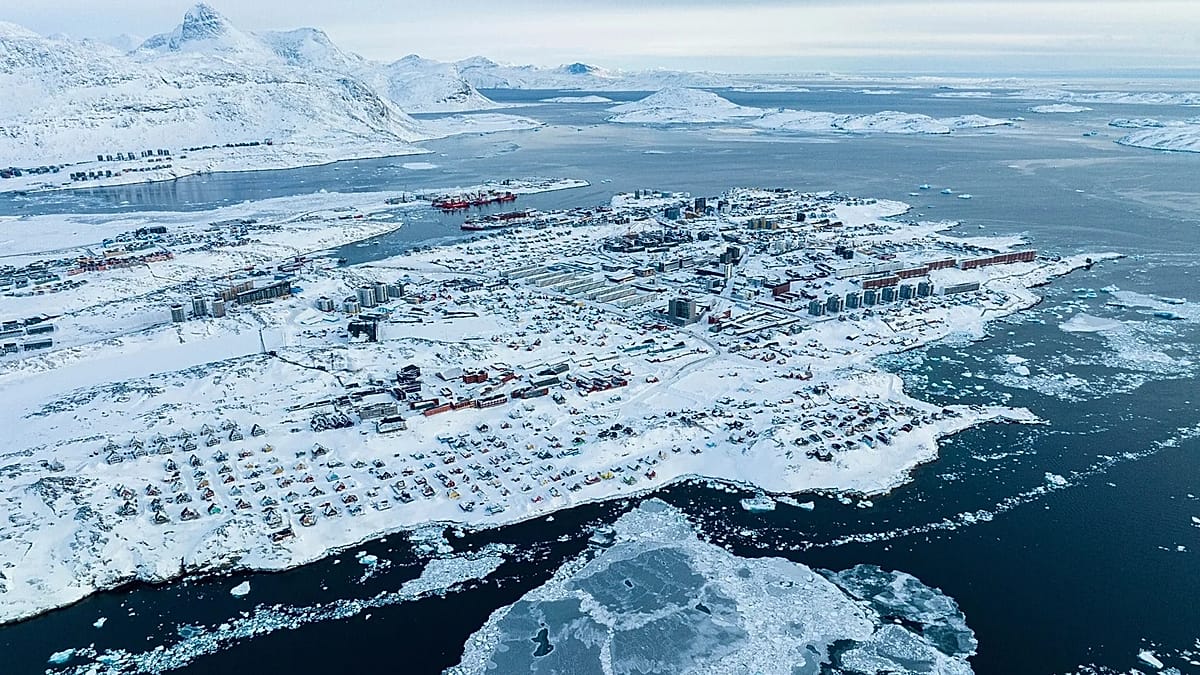
US-Denmark-Greenland tensions have escalated after President Trump reiterated threats to seize Greenland, arguing the island is vital for a proposed 'Golden Dome' air and missile defense system; European Commission President Ursula von der Leyen publicly backed Greenland's self-determination and Denmark said it will strengthen its military presence and coordinate with NATO. US Vice President JD Vance and Secretary of State Marco Rubio are hosting Danish and Greenlandic foreign ministers at the White House, a high-profile diplomatic response that increases geopolitical risk and could prompt reassessment of defense and regional risk exposures despite no direct economic data in the report.
Market structure: Immediate winners are US and European defense primes (Lockheed Martin LMT, Northrop Grumman NOC, Raytheon RTX) and Arctic infrastructure contractors (specialty EPC and satellite/ISR providers) as governments signal increased Arctic posture; expect a 3–8% re-rating tailwind over 3–12 months if NATO funding pledges materialize. Losers include Greenland tourism, local real-estate plays, and insurers writing Arctic-risk policies; commodity producers exposed to disrupted Arctic logistics (small cap Arctic explorers) face downside. Cross-asset: expect short-lived risk-off rallies in sovereign bonds and the USD; oil/gas sensitivity is asymmetric—sustained geopolitical escalation could lift Brent >$5–10/bbl within weeks.
Risk assessment: Tail risks include a miscalculated military incident or economic sanctions triggering supply shocks (low-probability, high-impact) with energy spikes >10% and insurance losses >$1bn regionally. Time horizons: immediate (48–72 hours) for headline-driven volatility, short-term (weeks–months) for defense procurement repricing, long-term (2026+) for NATO force posture and budget increases. Hidden dependencies: oil/gas shipping routes, rare-earth supply chains, and NATO accession politics; secondary effects may hit European defense suppliers differently depending on offset deals.
Trade implications: Direct plays favor 2–3% tactical longs in LMT/NOC/RTX sized to portfolio convexity (3–12 month horizon) and small long positions in satellite/ISR names (e.g., NG, private primes). Use buy-write or 3-month call spreads (5–15% OTM) to control cost; hedge macro with 1–2% long 10y UST futures or TLT if S&P drops >3% on headlines. Rotate away from Arctic tourism/insurance equities and small Arctic explorers until volatility subsides.
Contrarian angles: Consensus likely overweights headline defense exposure; the market underestimates procurement lead times—order books may not fill until 2026–2028, so favor names with near-term backlog (LMT, RTX) vs smaller primes. Reaction may be overdone in FX—DKK/SEK moves should be limited given pegs and Norway’s energy cushion. Historical parallels (Cold War Arctic buildouts) show multi-year capex cycles; avoid one-off momentum chase without waiting for NATO budget votes (target: recorded commitments within 90 days).
AI-powered research, real-time alerts, and portfolio analytics for institutional investors.
Request DemoOverall Sentiment
moderately negative
Sentiment Score
-0.40
