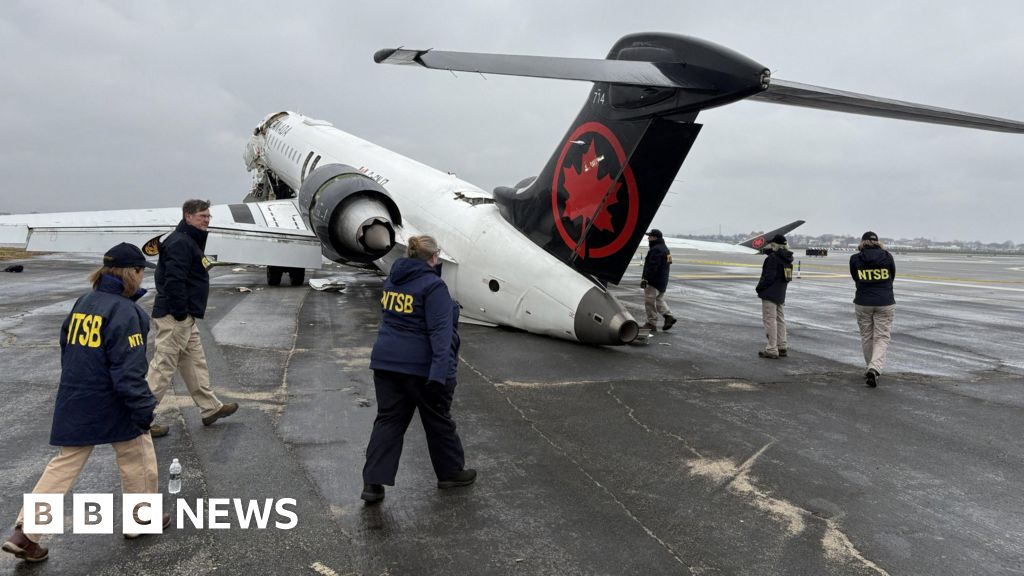
Two pilots were killed and 41 people were injured after Air Canada flight AC8646 collided with a fire truck on a LaGuardia runway at 23:40 local time, shutting the airport until Monday afternoon and causing hundreds of flight delays and cancellations. The NTSB has opened a preliminary investigation, recovered intact cockpit voice and flight data recorders, and is documenting extensive debris while the runway remains closed. The crash creates near-term operational and reputational risk for Air Canada and LaGuardia operations, with potential short-term pressure on airline/regional travel volumes and related stocks; investigator mobilization has been hampered by ongoing TSA staffing issues.
This is primarily an idiosyncratic shock to Air Canada’s brand, operations and P&L that will cascade through three channels: immediate capacity loss and repair/write-off costs (order-of-magnitude: tens of millions), a multi-month NTSB-driven operational review that raises short-term turn costs, and multi-year legal/insurance exposure that can create uncertain earnings drag. Expect market attention to focus on near-term revenue churn at New York-area gates and an elevated cost of capital for transborder flying until bookings/traffic normalize.
Second-order competitive winners are carriers with spare lift and NYC slot access — they can capture displaced passengers at higher margin fares for 4–12 weeks while Air Canada addresses regulatory/operational frictions. Conversely, suppliers tied to Air Canada’s fleet maintenance cadence (MRO contractors, spare-part sellers) face lumpy demand and delayed cash-flows; pockets of strike/contract renegotiation risk for ground staff and lessors could amplify cash needs.
Regulatory and insurer responses are the key multi-month catalysts: a finding that attributes systemic ATC/runway procedures fault to the airport or ground operator materially reduces Air Canada’s legal exposure, while any company-level safety findings (procedural or training lapses) would force immediate CAPEX/OPEX for remediation and a higher insurance premium cycle. Reversal scenarios include swift clarity from NTSB assigning third-party culpability or near-term settlement of major claims with insurers absorbing headline costs, which historically restores 60–80% of the equity drawdown within 2–3 months.
Near-term investor posture should be event-driven and convex to volatility. The political environment (funding disruptions, TSA staffing) and holiday travel seasonality are amplifiers of operational risk over the next 30–90 days; after that, focus shifts to litigation timelines (6–36 months) and any regulatory-imposed structural remediation that could meaningfully lift unit costs.
AI-powered research, real-time alerts, and portfolio analytics for institutional investors.
Request DemoOverall Sentiment
strongly negative
Sentiment Score
-0.75
Ticker Sentiment
