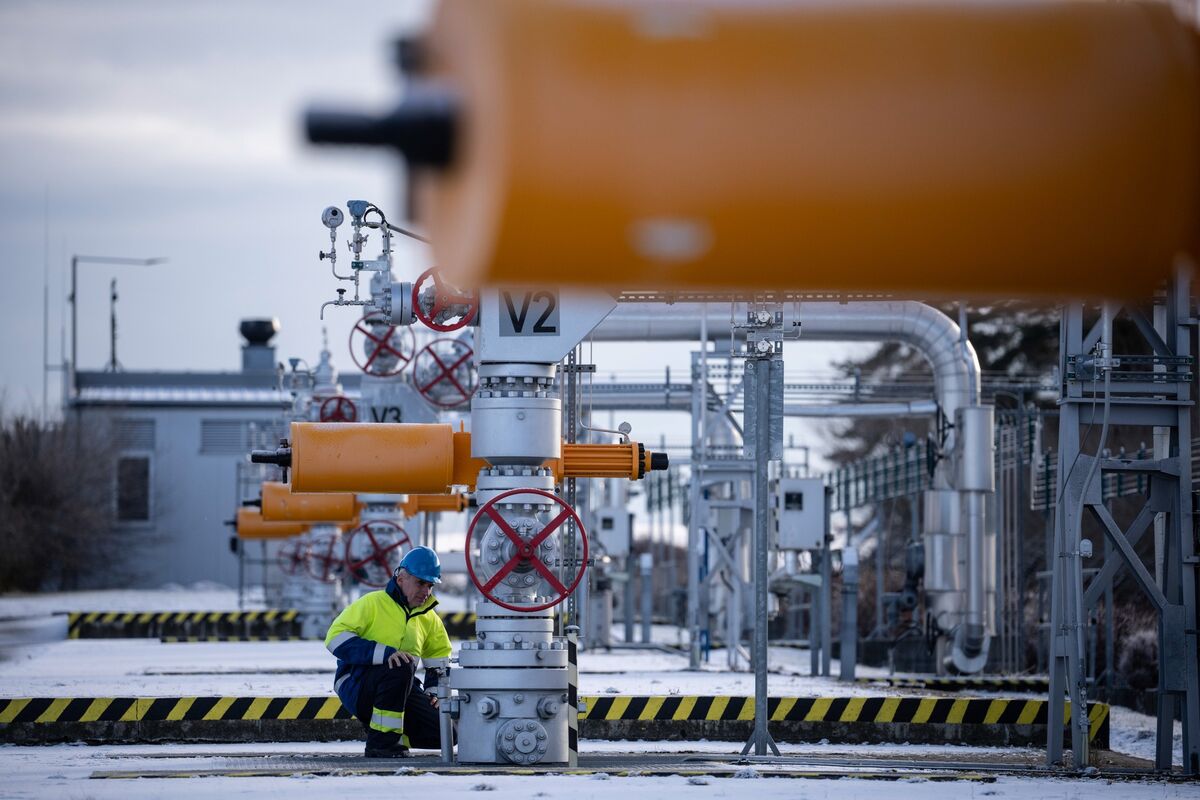
April stockpiling season is starting, but traders are hesitant to refill severely depleted European gas storage because the summer–winter price spread favors waiting despite government pressure to rebuild inventories. Recent Middle East-driven volatility — with prices surging, plunging and surging again — raises short-term price risk and complicates portfolio positioning across European gas and related energy exposures.
The immediate arbitrage is not about absolute spot levels but the option value of waiting: storage operators face a convex choice between locking in carry today or preserving flexibility to buy cheaper cargoes later if summer inflows (pipeline, LNG) arrive. That amplifies sensitivity to two variables with different lead times — LNG chartering/arrival (weeks–months) and pipeline nominations/flows (days). Expect liquidity-driven spikes if a chunk of nominally flexible demand decides to inject at the same time; constraints are more operational (pump/injection pipe capacity, gas quality swaps, regas slot timing) than purely capital.
Second-order winners are those sitting on regas and storage optionality — LNG terminal operators, charter owners with short notice availability, and traders with access to flexible gas-on-gas supply contracts that can be accelerated. Losers are parties with rigid pipeline-only supply or who must inject by mandate (state-directed utilities) and therefore will buy into the tightest intraday/weekly windows, creating micro-squeezes and basis blowouts across hubs (TTF vs NBP vs Zeebrugge).
Key catalysts across horizons: near term (days–weeks) — government statements, storage fill-rate data and a handful of LNG cargo reassignments; medium term (1–3 months) — weather variance, fuel-switching demand from power sector, and charter market tightness as owners reposition fleets; tail risks (3–12 months) — geopolitical escalation that curtails LNG routing or forces national storage requisitions. The path dependency is asymmetric: delayed injections can stay benign for months but will create acute volatility in a short window if a critical mass rushes to refill simultaneously.
AI-powered research, real-time alerts, and portfolio analytics for institutional investors.
Overall Sentiment
mildly negative
Sentiment Score
-0.15
