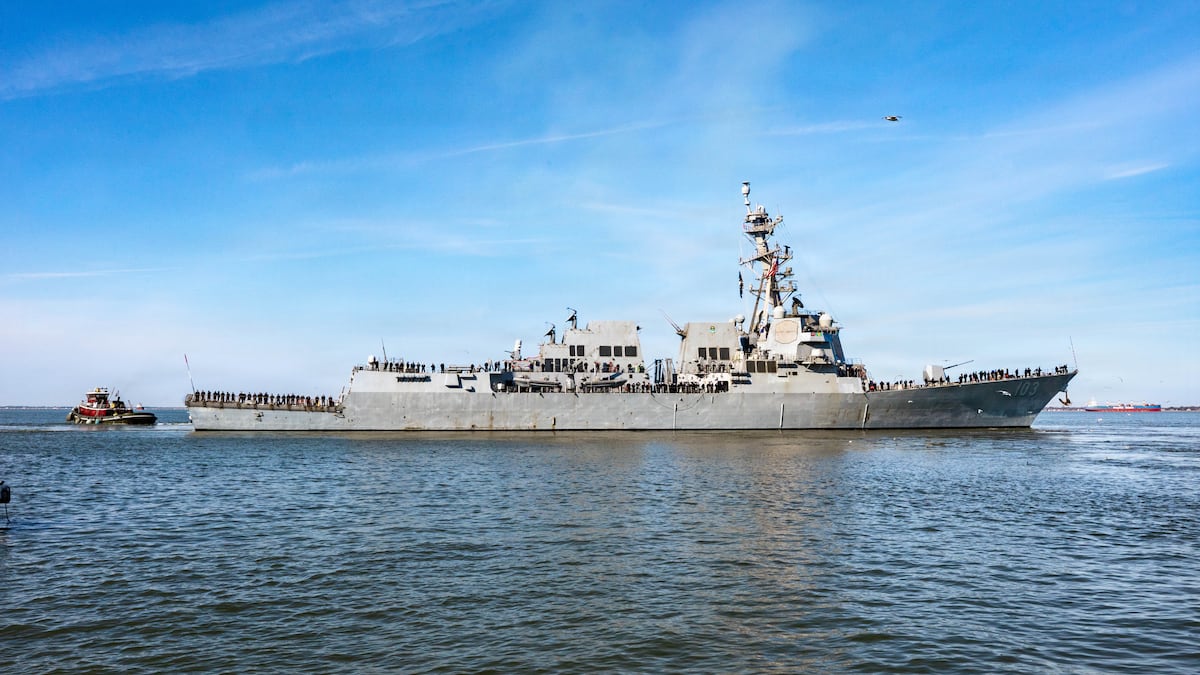
The U.S. Navy relieved Cmdr. James Koffi as commanding officer of the destroyer USS Truxtun for loss of confidence after a Feb. 11 replenishment-at-sea collision with USNS Supply in the Caribbean; two sailors sustained minor injuries and the Navy has opened an investigation. Truxtun is in port in Ponce, Puerto Rico, having deployed in February 2026 to U.S. Southern Command for counternarcotics operations near Venezuela; Koffi was reassigned and Cmdr. Taylor Auclair will assume command. The incident presents operational and reputational risks for naval readiness but is unlikely to have material market or financial implications.
Market structure: The incident is idiosyncratic but highlights recurring operational risks in surface fleet ops and replenishment-at-sea, creating a modest reallocation toward sensors, navigation, and depot-maintenance suppliers. Expect a 1–3% tactical re-rating for prime defense suppliers of shipborne sensors and training systems over 3–12 months if the Navy funds upgrades or accelerated maintenance slots (budget re-prioritization probability ~20–35%).
Risk assessment: Tail risks include a string of similar collisions prompting congressional inquiries, temporary operational slowdowns, or reallocation of FY27 Navy budgets away from new-builds toward training/maintenance — a scenario that could move related small-cap shipyards ±15–25% within 6–18 months. Hidden dependencies: limited dry-dock capacity creates a bottleneck; a 10–20% surge in maintenance demand would materially lift HII/GD service revenues but strain subcontractors.
Trade implications: Near-term actionable alpha sits in vendors of maritime navigation/C2 and depot-repair contractors; expect volatility windows around Navy investigation releases and FY27 budget milestones (30–90 days). Cross-asset: modest safe-haven bid for Treasuries if geopolitical tension rises near Venezuela; oil upside is conditional — watch a >5% crude move in 2 weeks as a trigger for commodity hedges.
Contrarian angle: The market will likely underreact to incremental but persistent operational risk — the mispricing is in multi-month options on mid-cap defense/service names (cheap implied vol vs realized shock scenarios). If no systemic findings within 60–90 days, growth names tied to fleet ops should mean-revert higher; if investigations escalate, names tied to maintenance capacity will outperform new-build contractors.
AI-powered research, real-time alerts, and portfolio analytics for institutional investors.
Request DemoOverall Sentiment
mildly negative
Sentiment Score
-0.25
