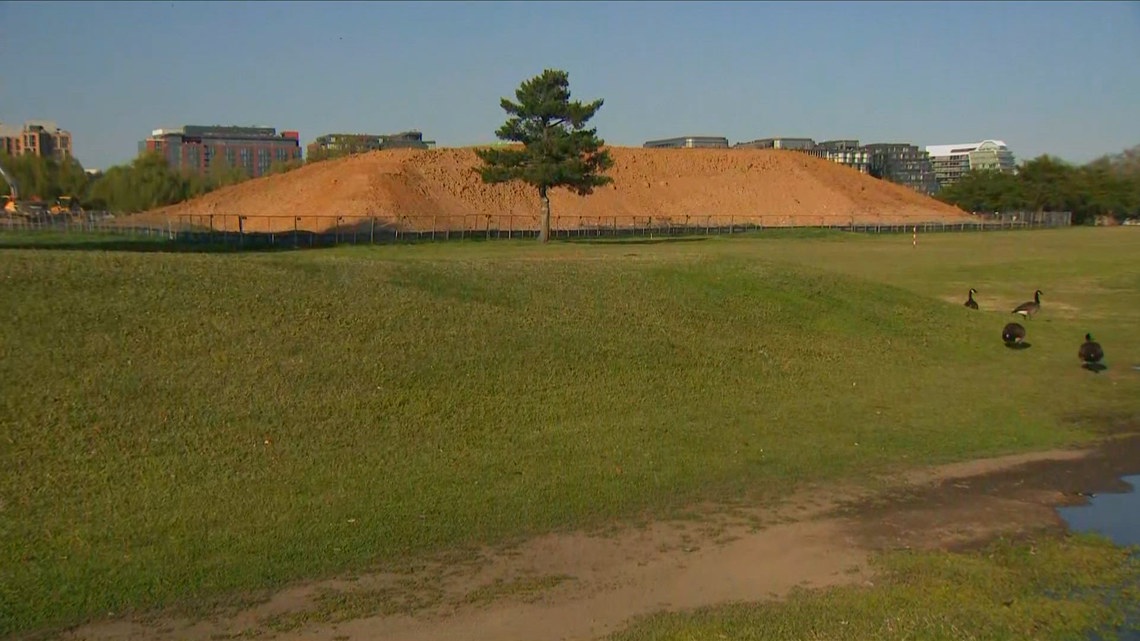
A potential closure of one of D.C.'s three public golf courses could begin as soon as Monday, prompting an emergency stay request and a court order limiting National Park Service actions. Judge Ana Reyes required court approval before more than 10 trees are cut and warned of serious consequences for any action beyond routine maintenance. The course remains open for now, but the dispute raises uncertainty for local golfers, employees, and the nonprofit operator.
This is less about a golf course and more about the precedent risk of federal intervention into a quasi-public, quasi-private asset with local cash flow. The immediate market read is that the operating uncertainty compresses near-term revenue visibility for the operator and any adjacent leaseholders, but the larger second-order effect is on permit, capex, and financing optionality: a project that was supposed to monetize through upgrades can quickly become stranded if court supervision becomes the binding constraint. The key catalyst is not the injunction itself but the time path of administrative friction. If the court forces approvals for tree removal and materially slows site work, the project shifts from a 1-3 month construction timeline to a litigation-driven process that can extend for quarters; that typically bleeds utilization, staffing continuity, and ancillary spend before any headline revenue impact shows up. For local stakeholders, the risk is not total shutdown so much as a “half-open” state that depresses demand and raises costs simultaneously. The contrarian angle is that the market may be overpricing permanent closure risk while underpricing the probability of a negotiated status quo. Public-facing leisure assets often re-open after legal restraint, but with a worse capital structure and a higher political risk premium. If that happens, the beneficiaries are not obvious course operators but nearby substitute recreation, municipal operators with clearer governance, and any leisure venue that can capture displaced demand without regulatory overhang. From a trading perspective, this is a short-duration event with a low direct beta but meaningful read-through to governance-sensitive infrastructure and leisure names. The best setup is to use the uncertainty window, not the eventual outcome: the next 1-2 weeks should see elevated headline risk, while the resolution path likely takes 1-3 months unless the parties quickly strike a lease or settlement.
AI-powered research, real-time alerts, and portfolio analytics for institutional investors.
Request DemoOverall Sentiment
mildly negative
Sentiment Score
-0.20
