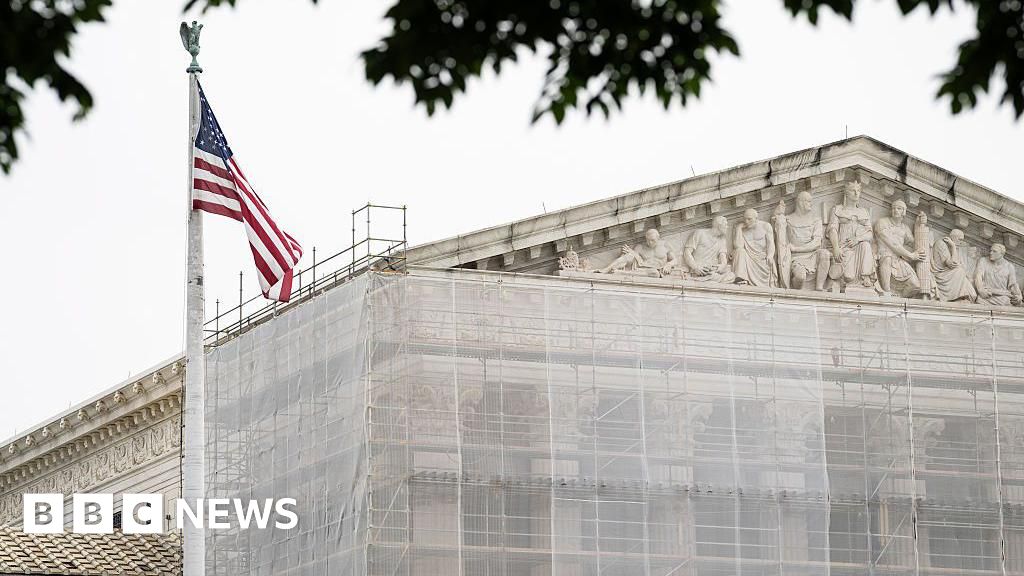
President Trump has petitioned the US Supreme Court to overturn a lower court ruling that deemed many of his tariffs, imposed under the International Emergency Economic Powers Act (IEEPA), illegal. The US Court of Appeals for the Federal Circuit ruled 7-4 that tariff imposition is a core Congressional power, not a presidential mandate. This case is significant as it could upend the administration's economic and foreign policy agenda, potentially forcing the US to refund billions in tariffs, with the lower court's ruling set to take effect on October 14 if the Supreme Court declines review.
The Trump administration's appeal to the U.S. Supreme Court introduces significant legal uncertainty into U.S. trade policy. A 7-4 ruling by the U.S. Court of Appeals for the Federal Circuit found that the broad tariffs imposed under the International Emergency Economic Powers Act (IEEPA) were an overreach of executive authority, asserting that setting levies is a 'core Congressional power.' The financial stakes are substantial, with the potential for billions of dollars in tariff refunds and a significant disruption to ongoing diplomatic trade negotiations, as highlighted by the Solicitor General. The ruling specifically targets the baseline 10% tariff and 'reciprocal' tariffs on over 90 countries, as well as certain levies on Canada, Mexico, and China, but notably excludes duties on steel and aluminum which were enacted under a separate authority. This legal challenge, brought forth by small businesses claiming 'serious harm,' creates a critical timeline, as the lower court's decision could take effect on October 14 if the Supreme Court declines to review the case, creating a major near-term catalyst for affected industries.
AI-powered research, real-time alerts, and portfolio analytics for institutional investors.
Overall Sentiment
mixed
Sentiment Score
-0.10
