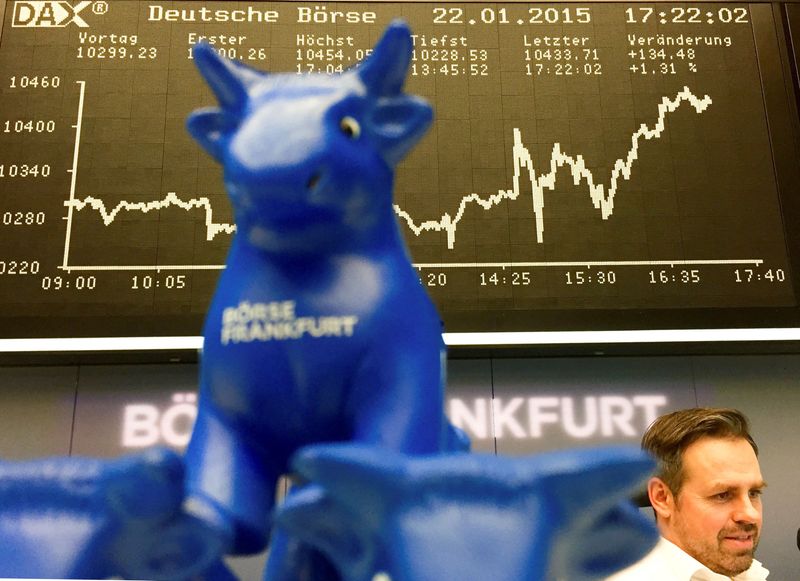
Brent futures for June fell about 5% to $98.81/bbl, dipping below $100, while pan-European stocks rallied (Stoxx 600 +2.3%; DAX +2.8%; CAC 40 +2.2%; FTSE 100 +1.8%). President Trump said the U.S. would exit the Iran war within 2–3 weeks, and reports the UAE may help reopen the Strait of Hormuz helped trigger a risk-on move and a fall in benchmark bond yields. Geopolitical risk remains elevated — the strait closures had pushed Brent toward $120 from about $70 pre-conflict — keeping commodity volatility and inflation/central-bank reaction risks on the table.
Recent price action now appears driven more by a short-term reassessment of conflict duration than by any durable change in physical flows; that creates a two-speed market where paper crude (futures/options) re-prices quickly while real-world chokepoints, insurance regimes and tanker routing adjust more slowly over weeks. Expect tanker utilization and time-charter rates to lag futures by 2–8 weeks because owners and insurers will wait for sustained signals before reversing precautionary layups and re-routing patterns.
Second-order winners from a sustained moderation in premiums are refiners with flexible crude slates and inland logistics (they capture widening crack spreads if crude falls faster than product prices) and commodity finance desks that can reduce haircuts on collateralized oil inventories; losers include short-duration tanker owners and P&I/war-risk insurers whose special premia compress. Interest-rate sensitivity is non-linear: a durable disinflation impulse from lower energy that persists 2–4 months would remove a tail risk bid in sovereign yields and could restore equity multiples, but a rapid flare-up would reprice term premia and risk assets inside days.
Key tail risks are asymmetric and concentrated: a tactical miscalculation or single strategic strike on export infrastructure could spike Brent-equivalents >$120 in under 72 hours, while coordinated diplomatic de-escalation plus a partial re-opening of insurance corridors could shave $10–15/bbl over 4–8 weeks. Monitor three near-term indicators for regime change: tanker rate panels (TC rates on 6–12 week fixtures), war-risk/terrorism premiums in marine hull/war policies, and front-month vs front-two-month contango/backwardation shifts in Brent/WTI spreads.
AI-powered research, real-time alerts, and portfolio analytics for institutional investors.
Request DemoOverall Sentiment
mildly positive
Sentiment Score
0.12
