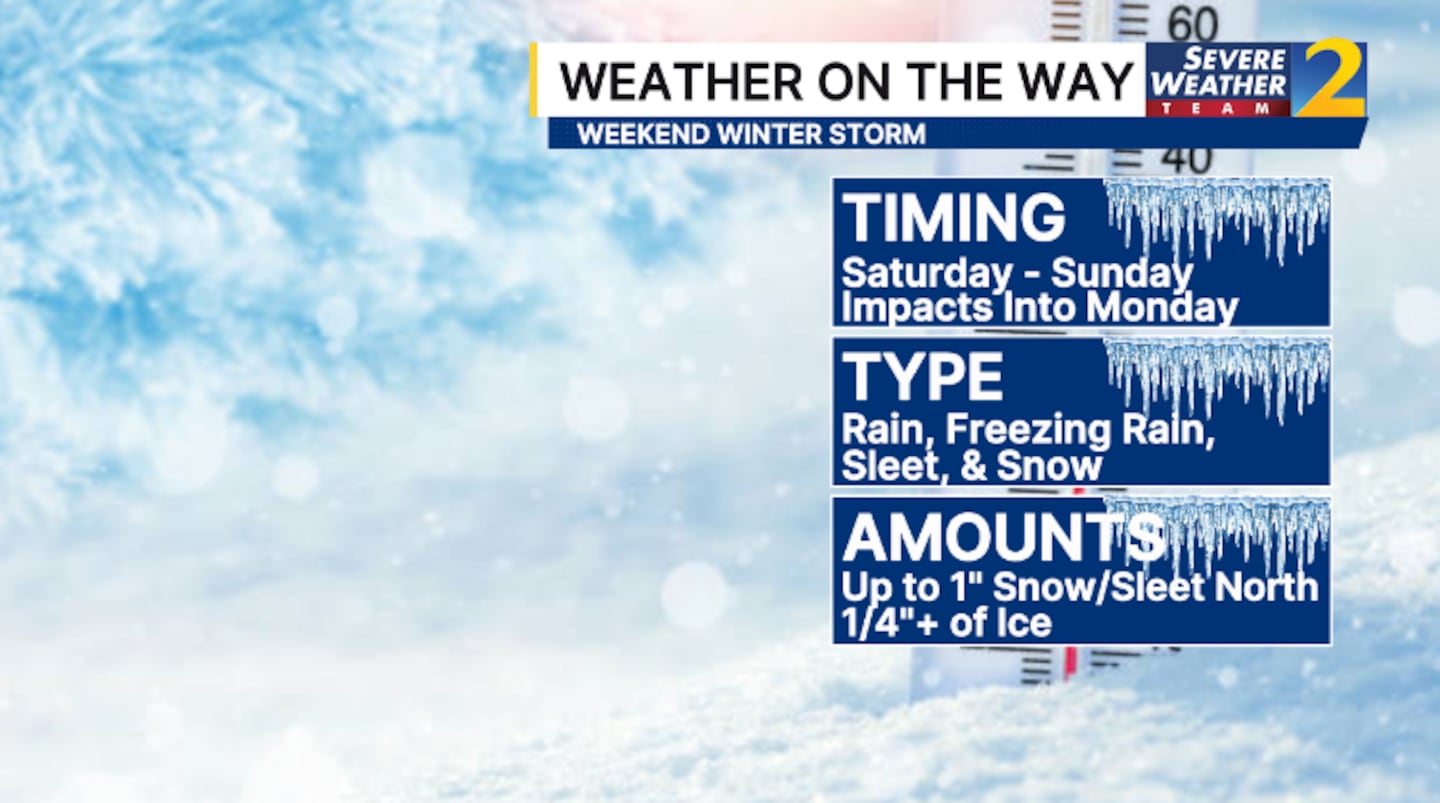
A multi-day winter storm is expected to impact north Georgia starting Saturday into Sunday with freezing rain, sleet and snow; a winter storm watch covers numerous north metro counties and Gov. Brian Kemp has declared a statewide emergency. Significant icing is the primary concern—0.25" of ice can cause dangerous travel and isolated outages while 0.5" or more would create widespread, potentially long-lasting power outages and make travel impossible—posing near-term downside risk to utilities, transportation and local infrastructure operations.
Market structure: Short-duration severe icing in north/metro Georgia favors generators, de-icing and home-improvement retail (Generac GNRC, Compass Minerals CMP, Home Depot HD, Lowe’s LOW) and regional propane/logistics midstream (Williams WMB, Kinder Morgan KMI). Utilities (Southern Company SO) face immediate downside from outage costs and reputational/regulatory pressure, while airlines and ground carriers servicing Atlanta hub (Delta DAL, UPS UPS, FedEx FDX) face direct revenue risk from canceled flights/shipments for 24–72 hours. Pricing power will be concentrated in suppliers with in-stock inventory and short lead times; retailers and de-icing producers can raise prices regionally for 1–4 weeks.
Risk assessment: Tail risk is a >1/2" ice accumulation (explicitly flagged) that triggers multi-day to multi-week outages and widespread tree/powerline damage, which could drive insurance losses in the low hundreds of millions locally and force utility emergency capex. Immediate impact window is 0–7 days (travel, power), short-term 2–8 weeks (sales lift, inventory depletion, claims), and longer-term 1–4 quarters (policy rates, utility storm-recovery filings). Hidden dependencies: mutual-aid limits for crews, regional propane stocks, and near-term supply chain lead times for generators/salt; model updates (forecast upswing) are the primary catalyst for price moves.
Trade implications: Tactical long exposure to GNRC and CMP and short exposure to DAL/UPS are high-conviction near-term plays; regional midstream like WMB gains from heating/propane draws. Use short-dated options to capture volatility spikes: buy 2–3 month ATM call spreads on GNRC and buy 2-week straddles on SO to hedge outage risk versus naked equity. Time entries pre-storm (within 48 hours) and trim/exit on inventory replenishment or within 2–6 weeks; set 20–30% stop-losses on option premiums.
Contrarian angles: Markets may underprice follow-on capex into vegetation management and grid hardening—beneficiaries include Eaton ETN and infrastructure contractors—creating a medium-term reflation trade over 1–4 quarters. Conversely, knee-jerk shorts in airlines could be overdone if cancellations resolve within 72 hours; prefer pair trades (long GNRC, short DAL) rather than large outright airline shorts. Monitor two threshold signals to recalibrate trades: region-wide customer outage count >100k and measured ice thickness >0.5"—both would justify scaling longs by +50%.
AI-powered research, real-time alerts, and portfolio analytics for institutional investors.
Request DemoOverall Sentiment
moderately negative
Sentiment Score
-0.35
