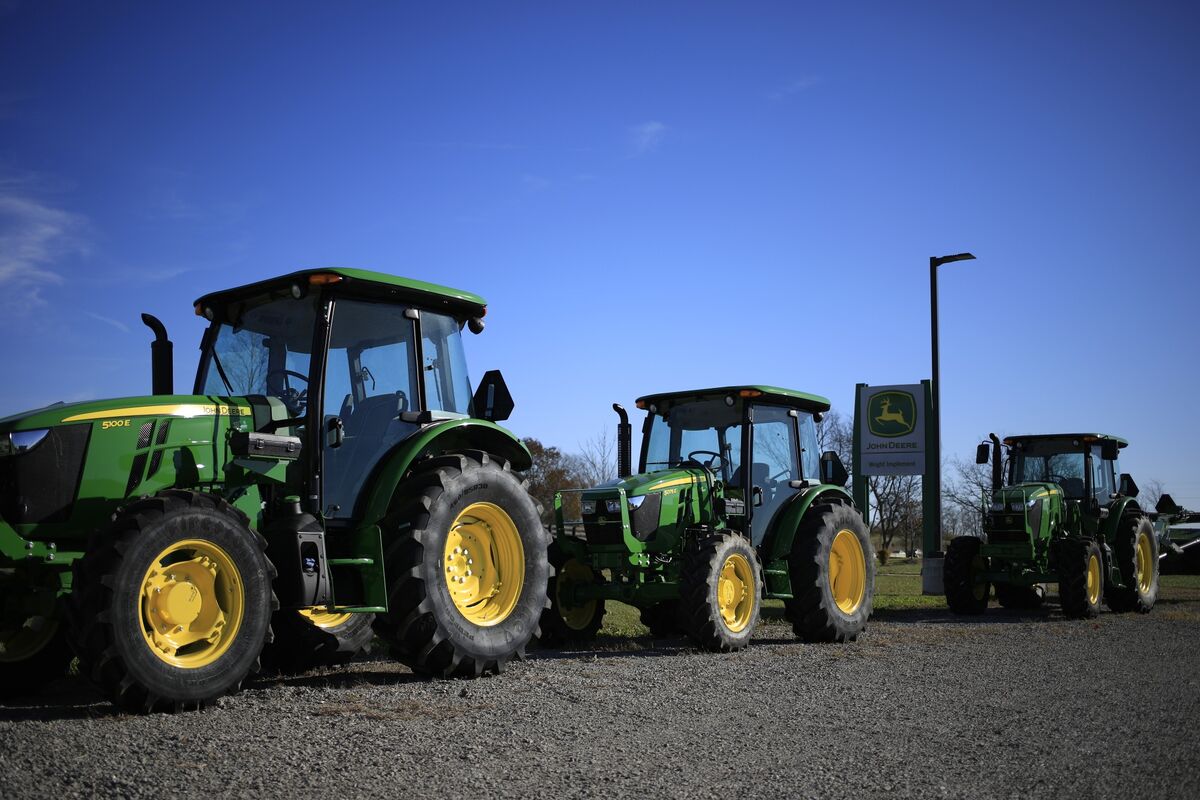
The administration announced $12 billion in direct aid to farmers while publicly pressuring farm-equipment manufacturers such as Deere & Co. to lower tractor prices and offering to relax environmental restrictions on machinery. The move aims to ease farmers' input-cost pressures and address domestic political concerns, but it also implies potential margin pressure for equipment makers and raises risks for ESG-exposed suppliers if regulatory rollbacks proceed.
Market structure: Short-term winners are US farmers and seed/fertilizer suppliers who may see cash flow relief and reduced input price pressure; losers include OEMs (Deere DE, CNHI, AGCO) and emissions-systems suppliers if political pressure forces price concessions or regulatory rollbacks. Pricing power for OEMs is at risk if administrations enable cheaper non-compliant machinery or pressure dealers on list prices; aftermarket service and financing arms may become the primary margin source over 12–24 months.
Risk assessment: Tail risks include an administration-mandated cap or guidance on equipment pricing or expedited deregulation that forces rapid product re-specification (low probability, high impact for DE margins). Near-term (days–weeks) volatility will hinge on headlines and dealer inventories; medium-term (3–9 months) depends on USDA planting reports and OEM order books; long-term (1–3 years) depends on whether farmers reinvest in capex versus inputs. Hidden dependencies: OEMs’ earnings tied to used-equipment values, captive finance receivables and dealer inventories—losses here can amplify equity downside.
Trade implications: Favor exposure to agricultural inputs/commodities (fertilizers, seeds—MOS, CF, ADM) on a 3–6 month basis funded by hedged short exposure to large OEMs (DE, CNHI) rather than naked shorts. Use defined-risk options: buy put spreads on DE 3–6 month expiries while buying call spreads on MOS/CF to capture a probable reallocation of farmer cash to inputs. Rotate out of capital goods ETFs (XLI overweight to underweight) into commodity/agricultural staples (DBA, MOS) over 2–8 weeks.
Contrarian angles: Consensus will focus on political pressure as uniformly negative for OEMs; market is underpricing the value of aftermarket services and captive finance which can preserve 40–60% of OEM EBITDA. Conversely, if rollback accelerates equipment sales, OEM order-books and parts revenue could rebound—watch dealer inventory turns and Deere order backlog releases as early reversal signals within 30–60 days.
AI-powered research, real-time alerts, and portfolio analytics for institutional investors.
Request DemoOverall Sentiment
mixed
Sentiment Score
0.00
