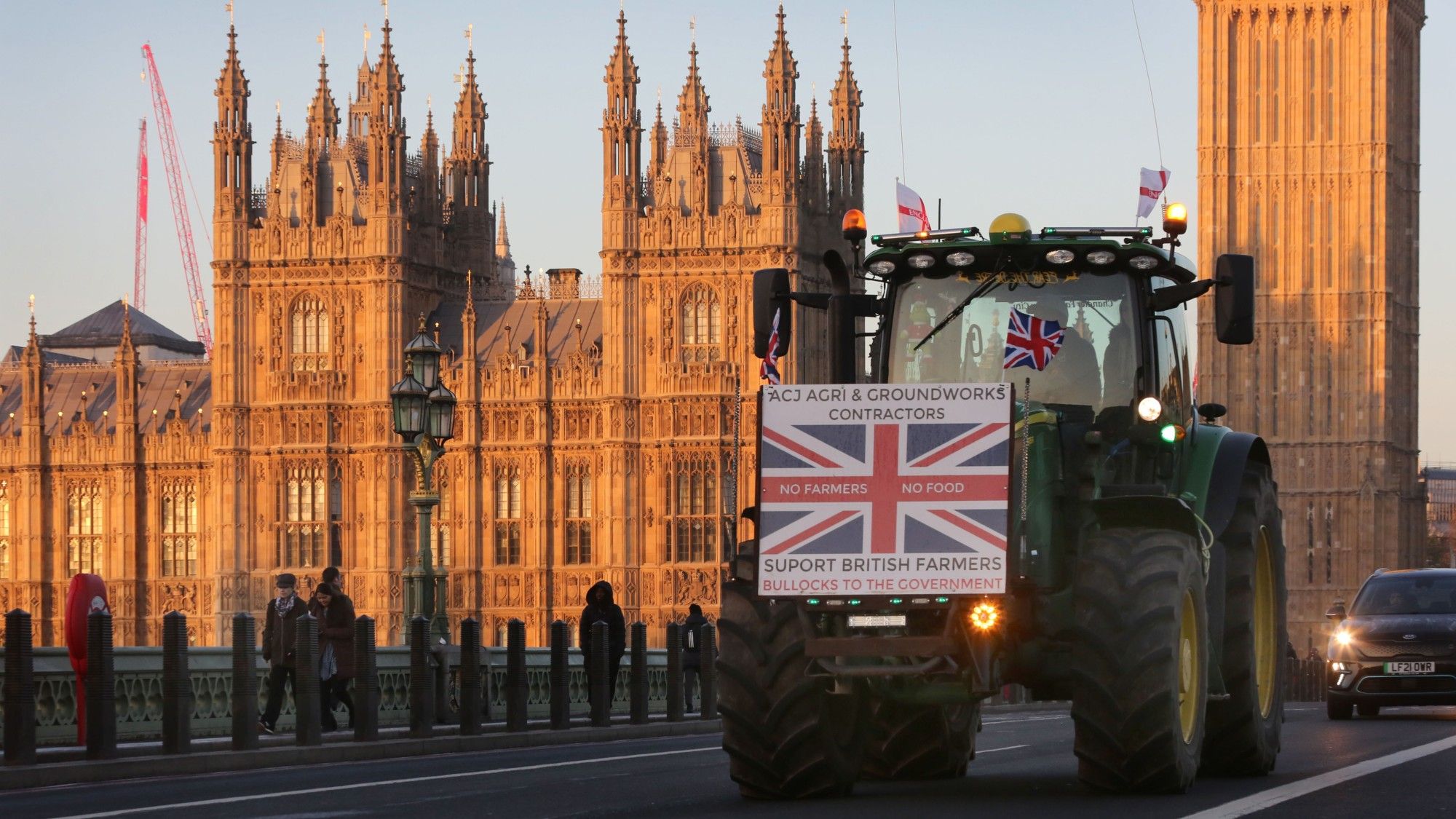
The government has reversed its planned inheritance tax threshold on agricultural assets, raising it from a proposed £1.0m to £2.5m, a move that will exempt roughly half of the farms that would have been affected when new rules take effect in April. The change, announced quietly during parliamentary recess after months of lobbying by the National Farmers Union, reduces near-term liquidity pressure on many family farms but leaves smaller, asset-rich/cash-poor farms still at risk of forced sales; the policy U-turn and simultaneous animal-welfare reforms have notable political implications for rural voter sentiment and party positioning ahead of future elections.
Market structure: Raising the agricultural inheritance-tax threshold from £1m to £2.5m materially reduces the odds of forced estate sales — TheWeek estimates ~50% of previously affected farms are now exempt — which should support UK farmland prices and transaction volumes in the near term (expect a 6–12% reduction in distressed listings into H1 2026). Winners: rural estate agents, land valuers, specialist agri-lenders and listed rural-services providers; losers: marginal family farms with high land:value ratios and intensive pig producers facing immediate animal‑welfare-driven capex.
Risk assessment: Tail risks include a second Labour policy reversal or a punitive compensation regime for animal-welfare losers that raises fiscal pressure (low probability, high impact within 3–12 months). Immediate (days–weeks): volatility in regional land M&A and rural equities; short-term (3–12 months): margin pressure for pig processors from capex (estimate 5–15% EBITDA hit for non-integrated producers); long-term (1–3 years): higher land prices reduce new entrant liquidity and increase credit concentration at specialist lenders. Hidden dependency: bank AG exposure concentrated in a few regional lenders — a small number of distressed farm sales could disproportionately stress local credit books.
Trade implications: Favor equities benefitting from higher land activity and consolidation; avoid or hedge names exposed to pig welfare capex. Specific sector moves (see decisions) include tactical long in listed rural real-estate/agency (Savills) via equity and call spreads, hedged short/put structures on pig-exposed processors (Cranswick) for 6–12 months, and trimming regional-bank exposure to agricultural loan books (NatWest) by 1–2% until lender-level exposures are disclosed. Options: use 6–12 month call spreads on beneficiaries and put spreads on exposed names to limit premium spend.
Contrarian angle: The market treats the U‑turn as a farmer win and political stabiliser, but that underestimates fragmentation risk: animal-welfare reforms could accelerate scale consolidation in meat processing, ultimately benefiting the largest integrators (contrary to short bias). Historical parallel: post‑policy U‑turns in UK rural policy (fox‑hunting era) produced multi-year re-pricing of rural service providers — early movers in high-quality rural agencies capture outsized gains. Unintended outcome: higher land values may create a supply squeeze for housing development land, perversely supporting select housebuilders with rural land banks.
AI-powered research, real-time alerts, and portfolio analytics for institutional investors.
Request DemoOverall Sentiment
neutral
Sentiment Score
0.05
