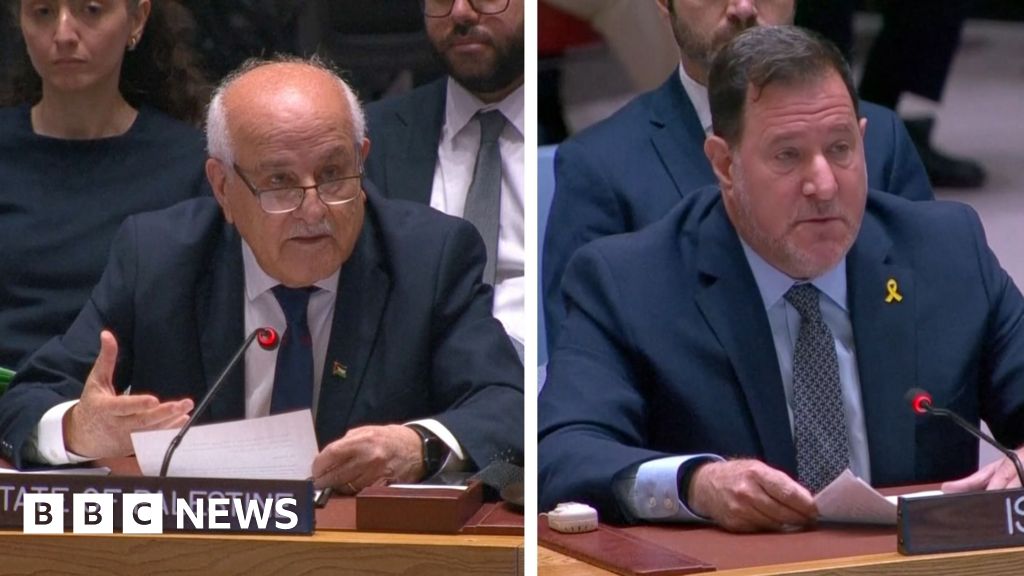
At an emergency UN Security Council meeting, Palestinian representative Riyad Mansour urged the UN to take concrete action beyond mere statements of support, while Israel's Jonathan Miller called for the council to prioritize dismantling Hamas. Concurrently, Israeli Prime Minister Benjamin Netanyahu defended the plan to take over Gaza City as the optimal strategy to end the conflict. This highlights the deep diplomatic impasse and Israel's continued military objectives, signaling prolonged regional instability and potential for extended market volatility related to the conflict.
The emergency UN Security Council meeting highlights a significant diplomatic impasse, underscoring the low probability of a near-term resolution to the conflict. The Palestinian representative's call for tangible action, contrasted with the Israeli representative's demand for a focus on dismantling Hamas, indicates deeply entrenched and conflicting priorities that diplomatic channels are currently unable to reconcile. Furthermore, Israeli Prime Minister Benjamin Netanyahu's explicit defense of the plan to take over Gaza City as the optimal strategy signals a clear and continued military objective. This combination of diplomatic stalemate and defined military intent points towards prolonged regional instability and sustains the geopolitical risk premium in global markets, particularly affecting energy prices and assets sensitive to Middle Eastern tensions.
AI-powered research, real-time alerts, and portfolio analytics for institutional investors.
Request DemoOverall Sentiment
Neutral
Sentiment Score
0.00
