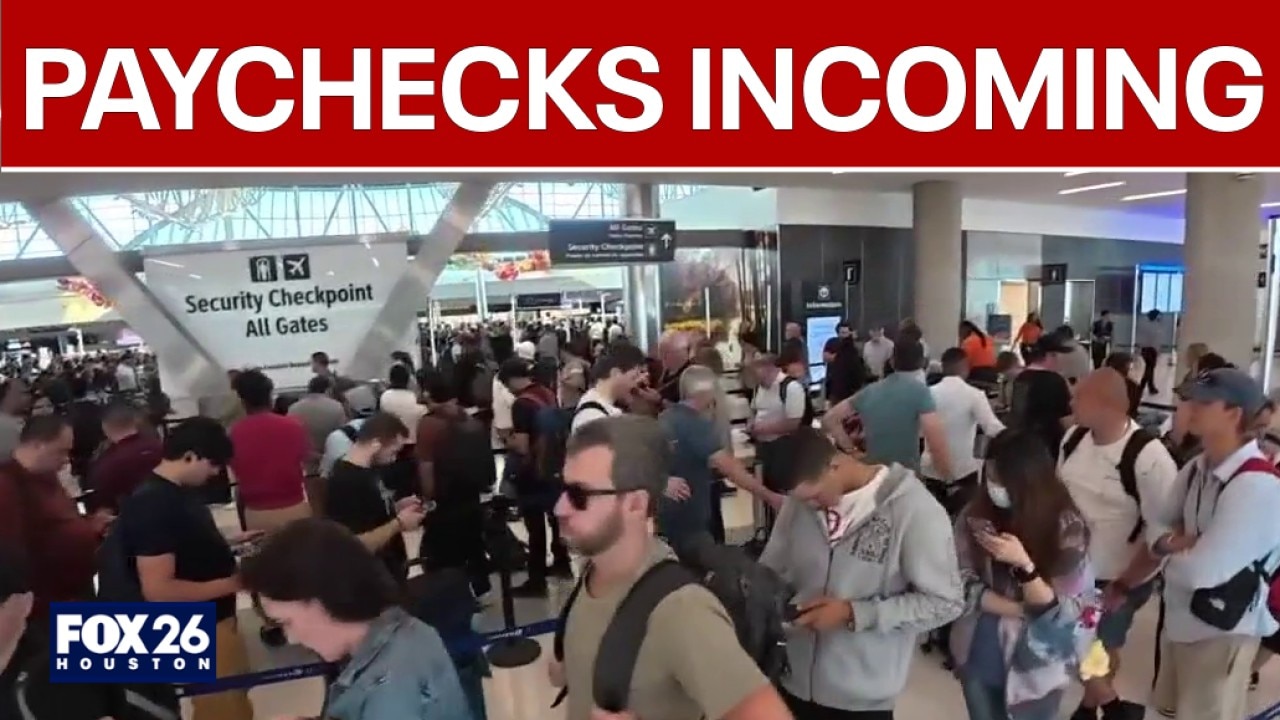
President Trump signed an emergency order on Day 42 of the partial government shutdown to have DHS immediately pay TSA agents, tapping funds from his 2025 'One Big Beautiful Bill' package with a goal of issuing checks by Monday. Nearly 500 TSA agents have resigned since the shutdown began, contributing to multi-hour wait times (reported >2 hours) at Houston IAH and consolidation of checkpoints; airport officials are urging passengers to arrive four hours early. The move circumvents Congress but faces likely legal challenges and political pushback, creating operational relief risk that may be temporary if courts block the funding mechanism.
Operationally, this is not a transient line-extension problem — it creates an immediate drag on airlines’ unit economics through increased misconnects, crew deadheading, and irregular operations costs. At a major hub handling ~1,000 daily flights, even a 0.5–1.0% rise in missed connections translates into multi-million dollar daily costs from rebooking, accommodation and crew overtime; those hit margin-sensitive regional routes first and force network pruning decisions within weeks.
The most important second-order shift is demand migration to non-government screening alternatives and capital upgrades: biometric/expedited providers capture share almost instantly, while incumbents selling checkpoint technology (AV/inspection systems, automation vendors) enter multi-quarter procurement cycles tied to event preparedness. That reallocates near-term discretionary spend from airlines toward airport operators and tech vendors, and pushes insurers and event organizers to price in higher operational risk for large international events.
Tail risks are legal and political rather than operational: a court injunction or a House resolution could halt the workaround within days and re-intensify disruptions, whereas congressional appropriations or a negotiated settlement would normalize flows but leave a permanent attrition scar that elevates long-term outsourcing and tech capex. Catalysts to watch are (1) court filings within 7–14 days, (2) House floor votes/negotiations over 1–4 weeks, and (3) procurement announcements tied to large events over 3–12 months.
Net: near-term winners are fast, consumer-facing security alternatives and equipment vendors; near-term losers are networked carriers and airport retail traffic. Trade structures should reflect high near-term event risk and asymmetric legal outcomes — small, option-based exposure to downside in airlines and larger, directional buy on technology/alternative screening names.
AI-powered research, real-time alerts, and portfolio analytics for institutional investors.
Request DemoOverall Sentiment
mildly negative
Sentiment Score
-0.30
