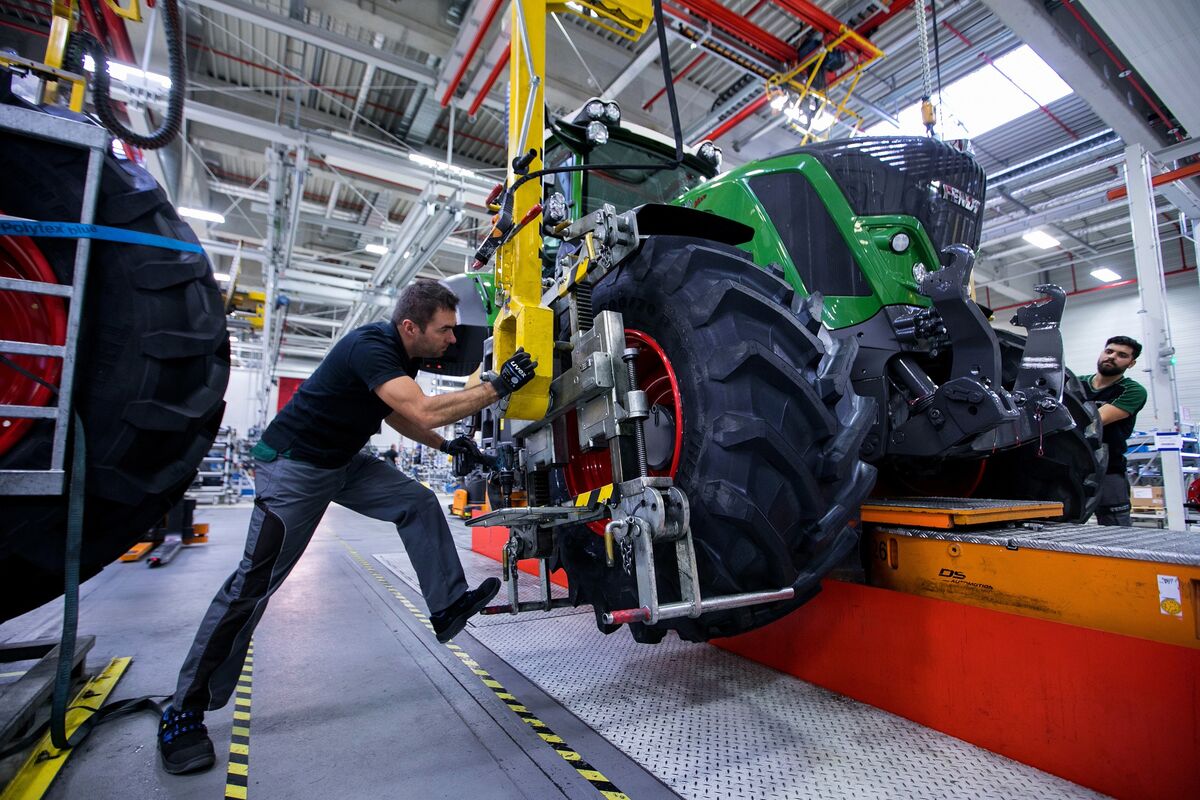
The Euro-zone private sector exhibited slight growth in May, with the Composite Purchasing Managers’ Index (PMI) registering 50.2, according to S&P Global. This figure, while down from April's 50.4, surpassed the initial estimate of 49.5, indicating the sector's resilience to uncertainty stemming from volatile U.S. trade policies and remaining just above the threshold for expansion.
The Euro-zone private sector demonstrated unexpected resilience in May, with the S&P Global Composite Purchasing Managers’ Index (PMI) registering 50.2. While this figure indicates a slight deceleration from April's 50.4, it crucially surpassed the initial flash estimate of 49.5, thereby remaining above the 50.0 threshold that distinguishes economic expansion from contraction. This upward revision suggests that the bloc's economic activity is holding up better than initially feared amidst the uncertainty stemming from erratic US trade policies. The data points to a marginal growth environment, but the ability to defy more pessimistic preliminary readings implies a degree of underlying strength within the private sector, a sentiment underscored by the reported "strongly positive" overall sentiment and "optimistic" tone associated with this news.
AI-powered research, real-time alerts, and portfolio analytics for institutional investors.
Request DemoOverall Sentiment
strongly positive
Sentiment Score
0.65
Ticker Sentiment
