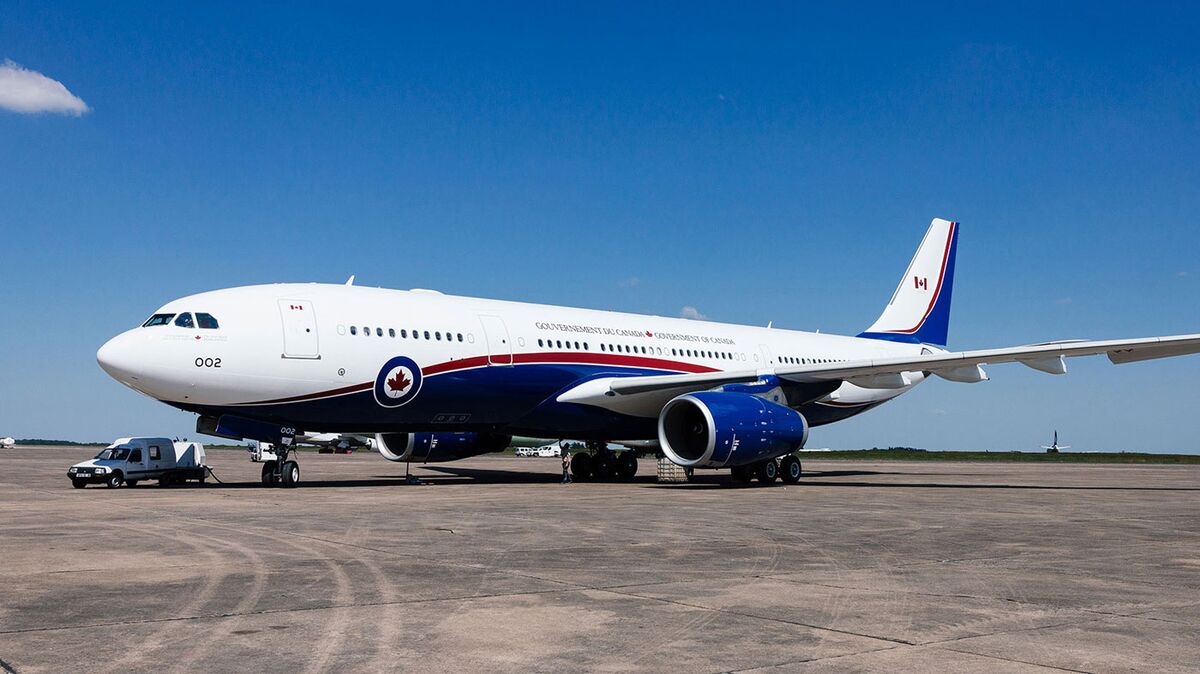
The Canadian government awarded three long-term contracts worth about C$1.5 billion (~$1.1 billion) to L3Harris and Airbus for in-service support of the new CC-330 Husky fleet. Contracts cover air-to-air refueling, passenger transport, medical evacuation and strategic missions, supporting Canada's increased defense spending. The awards are positive for L3Harris and Airbus revenue visibility but are unlikely to be market‑moving beyond modest single-digit share impacts.
This development meaningfully re-rates the services bucket for a prime-tier defense integrator: lifecycle support converts one-time program revenue into multi-year, annuity-like cash flows that typically carry 700–1,200bp higher operating margins than new-build work once ramped. Expect incremental EBITDA conversion to show up unevenly over 12–36 months as engineering, parts procurement and workforce hiring front-load cost, then flow through to outsized free cash flow in years two and three if supply-chain inflation remains benign.
Second-order winners include avionics and spare-parts specialists with existing PMA/DER pathways; these suppliers can extract higher ASPs and shorter lead times from captive sustainment platforms, creating stickier aftermarket catalogs. Conversely, commodity-focused subcontractors risk margin compression as primes internalize systems integration and push for longer vendor performance guarantees — look for a wave of small M&A among tier-2 MROs within 18–30 months as consolidation accelerates.
Key risks are execution and political/currency volatility: missed milestones or retrofit surprises can convert an expected annuity into a multi-year cost sink, and CAD/CAD-USD movements can swing reported USD EPS by several percentage points for a contract with multi-year payments. Near-term catalysts to watch are quarterly service revenue cadence, booking of follow-on options in FY+1 budget cycles, and any supplier change orders; a negative surprise on any of these can compress multiples quickly within weeks, while milestones and order options payoffs typically unfold over 6–24 months.
AI-powered research, real-time alerts, and portfolio analytics for institutional investors.
Overall Sentiment
moderately positive
Sentiment Score
0.35
Ticker Sentiment
