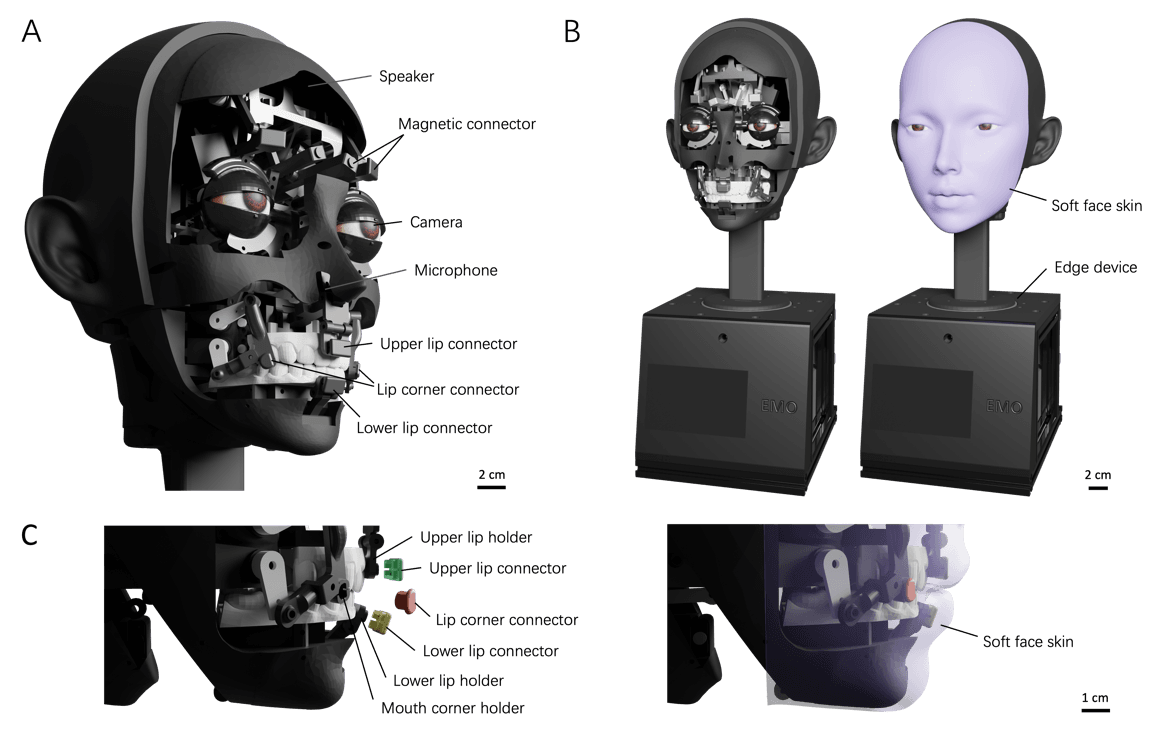
A research team has developed a bionic facial robot that achieves precise AI-driven lip synchronization and was featured on the cover of Science Robotics, signalling a notable advance in real-time facial actuation and multimodal AI control. The system pairs high-fidelity facial actuators with AI models for accurate, real-time lip-syncing, which could accelerate applications in human-robot interaction, telepresence, virtual avatars and entertainment, and may spur further R&D and eventual commercialization opportunities in those sectors.
Market structure: AI-driven bionic facial robotics and precise lip-sync broaden the TAM for synthetic media and physical humanoid robotics, concentrating value with GPU/cloud providers (NVDA, AMD, MSFT, GOOGL) and industrial robotics/actuator suppliers (FANUY, ABB, BOTZ ETF). Expect pricing power to shift to hyperscalers and GPU makers (potentially +10–20% incremental chip demand over 12–24 months if adoption accelerates) while labor-heavy VFX/localization shops face margin compression. Content platforms gain tooling but also bear authenticity risk that may compress ad CPMs intermittently.
Risk assessment: Tail risks include rapid regulatory action against deepfakes or new export controls on AI accelerators (probability moderate over 6–18 months) and IP litigation against academic spinouts (low-probability, high-cost). Hidden dependencies: large labeled datasets, sensor/actuator supply chains, and cloud GPU availability — a single choke (e.g., export clamp) could spike component prices >30% in weeks. Catalysts to watch: industrial partnerships, major studio pilots, and patent grants in the next 3–12 months that would materially derisk commercialization timelines.
Trade implications: Tactical alpha lies in hardware and security: consider a 2–3% long NVDA (6–12 months) and 1–2% long SOXX or BOTZ for semiconductors/robotics exposure; hedge by buying 3–6 month NVDA call spreads (target +15–25% upside) funded by selling OTM calls, avoid if 3m IV >60%. Pair trade: long NVDA, short a 1% position in a legacy media conglomerate (DIS) to express capex/monetization divergence over 12 months. Allocate +1% to cybersecurity (PANW) as insurance against deepfake-driven security spending.
Contrarian angles: Market likely underestimates regulatory backlash and time-to-monetize — CGI/motion-capture analogues took 3–5 years to scale commercially, so near-term revenue beats may be limited. The popularity story may be overdone for small creative vendors; instead, durable alpha is in chipmakers, cloud vendors, and IP holders. Unintended consequence: a surge in deepfakes could reduce platform ad engagement 5–10% within 12 months, creating short opportunities in ad-dependent midcaps.
AI-powered research, real-time alerts, and portfolio analytics for institutional investors.
Request DemoOverall Sentiment
mildly positive
Sentiment Score
0.30
