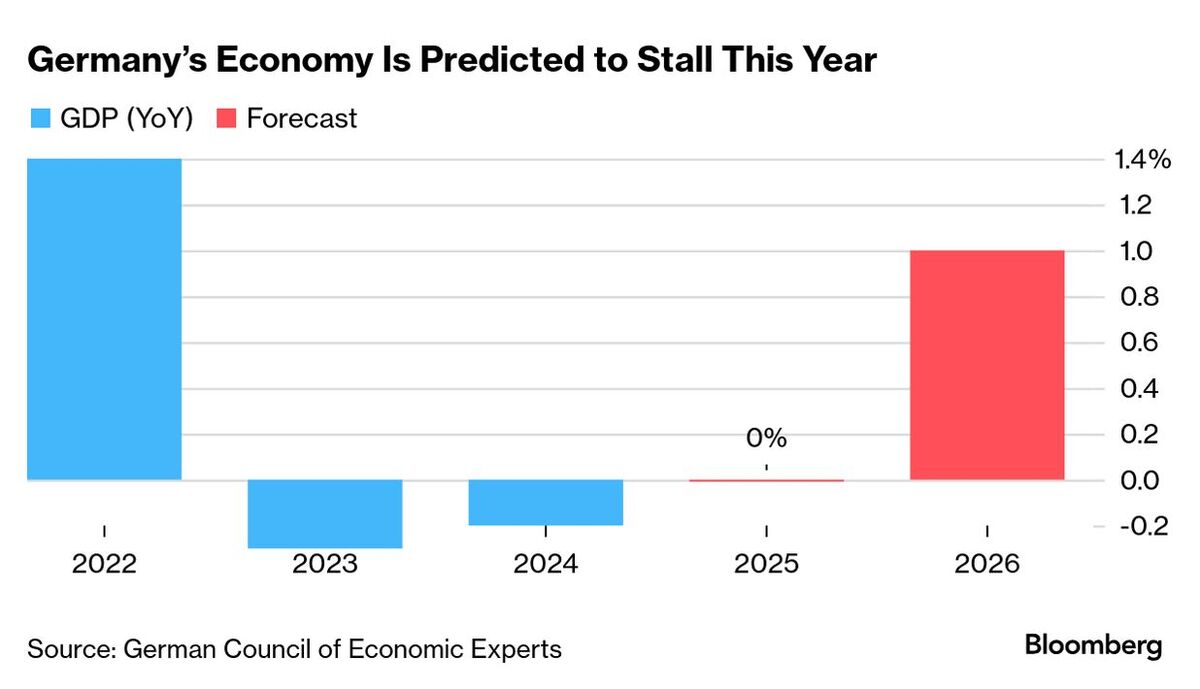
Germany's economy is projected to stagnate in 2025 with 0% GDP growth, a downward revision from a prior forecast of 0.4%, according to Chancellor Merz’s independent panel of experts. The panel anticipates a recovery in 2026, forecasting GDP growth of 1%, driven by increased government spending initiatives.
Germany's economic outlook for 2025 has been revised downwards, with Chancellor Friedrich Merz’s independent panel of experts now predicting stagnation (0% GDP growth) instead of the 0.4% growth forecasted in November. This adjustment signals a more challenging near-term environment than previously anticipated. However, the panel foresees a recovery commencing in 2026, with GDP projected to expand by 1%. This anticipated rebound is largely attributed to planned increases in government spending, highlighting fiscal policy as a key driver for future economic momentum. The overall sentiment from signals is neutral with a pessimistic tone, reflecting the immediate stagnation, while the market impact score of 0.3 suggests a relatively contained immediate market reaction to this specific forecast.
AI-powered research, real-time alerts, and portfolio analytics for institutional investors.
Request DemoOverall Sentiment
Neutral
Sentiment Score
-0.10
