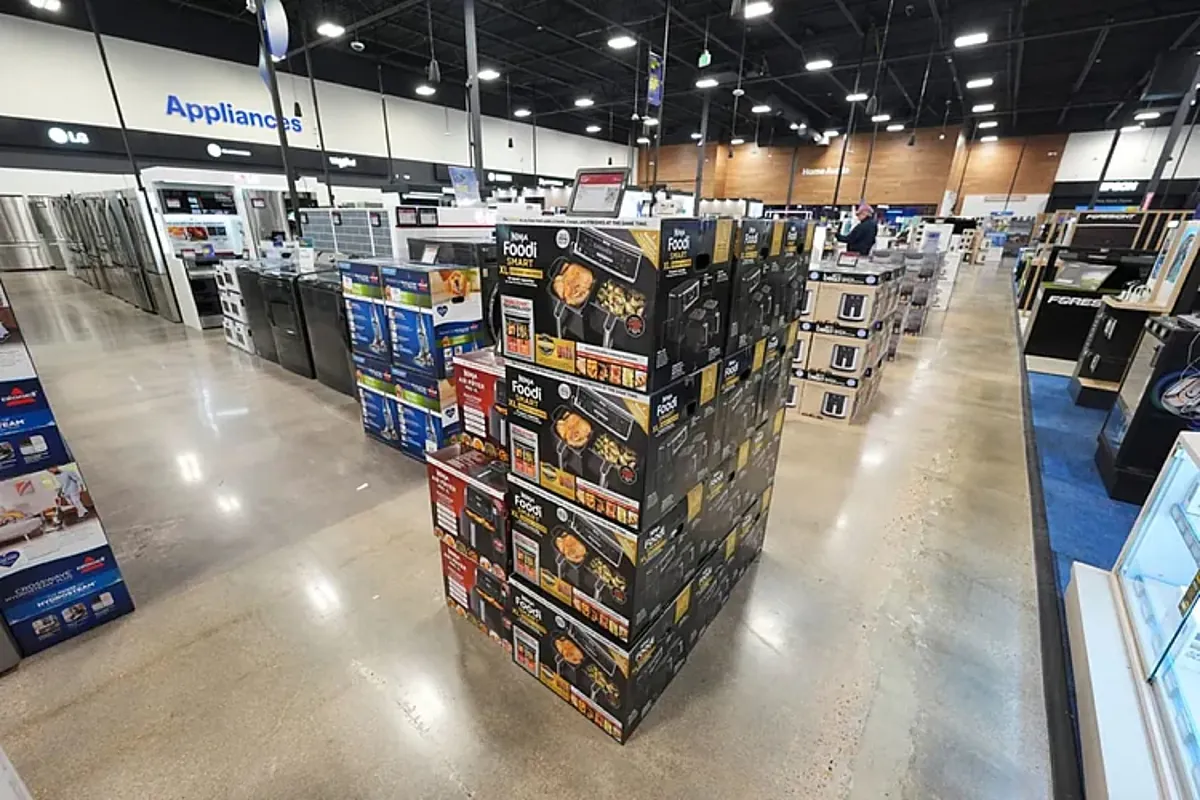
National Retail Federation data projects 186.9 million U.S. shoppers between Thanksgiving and Cyber Monday 2025, with Black Friday expected to attract 130.4 million shoppers and Cyber Monday 73.9 million, underscoring the weekend's importance for retail revenues. Black Friday remains the primary window for deep discounts on big-ticket items (TVs, appliances, computers) and in-store immediacy, while Cyber Monday favors online-centric categories (smart home, apparel, small electronics) supported by improved e-commerce logistics and online-only promotions; investors should monitor retailer inventory, fulfillment capacity and promo strategies when assessing near-term sales and margin outcomes.
Market structure: Winners are large omnichannel discount and electronics plays (WMT, TGT, BBY) and membership-based essentials (COST) because Black Friday concentrates high-ticket demand (NRF: 130.4M shoppers) and Cyber Monday shifts incremental online share to digitally-native channels. Losers include mid‑tier department stores (KSS) facing promo-cannibalization and higher returns; pricing power for discretionary retail will be capped by aggressive weekend markdowns, compressing gross margins by an estimated 100–200 bps versus a quiet weekend. Cross-asset: stronger holiday receipts should nudge short-term yields modestly higher (10–25 bps) if retail surprises persist, lift USD by ~0.5–1%, and raise near-term diesel/logistics costs supporting freight-sensitive names.
Risk assessment: Tail risks include shipping strikes, port congestion, or large-scale cyberattacks that would flip a positive weekend into a liquidity and reputational shock; margin hits could exceed 300 bps in a worst-case inventory glut. Time horizons: immediate (days) will show traffic and AOV flow; short-term (weeks) covers inventory and return wave; long-term (quarters) will reflect guidance resets for FY26. Hidden dependencies: promo stacking and extended return windows can cause a 5–15% post-holiday return drag on reported sales.
Trade implications: Direct: establish modest, tactical longs in BBY (2–3% portfolio) and WMT/TGT (2% each) into Thanksgiving week to capture upside from electronics/appliance demand; open a 1–2% short position in KSS into early December expecting market‑share erosion. Options: buy BBY and TGT 6–12 week call spreads to limit premium decay and sell high-IV weekly calls post-event if shares gap up. Rotate incrementally from discretionary department stores into staples (COST) and logistics names (UPS, FDX) as trade flows and freight rates firm.
Contrarian angles: Consensus underestimates Costco’s pricing/membership insulation—consider a selective 1–2% long in COST ahead of commentary on renewal rates; market may be underpricing a larger-than-expected return spike in Jan (scenario: +10–20% return rate) that would trigger markdown cycles and hurt margin guidance. Historical parallels (2019 ecommerce surge) show winners can quickly revert when inventory visibility deteriorates; monitor daily AUR, return rates, and shipping lead time as 48–72 hour catalysts for repositioning.
AI-powered research, real-time alerts, and portfolio analytics for institutional investors.
Request DemoOverall Sentiment
neutral
Sentiment Score
0.10
Ticker Sentiment
