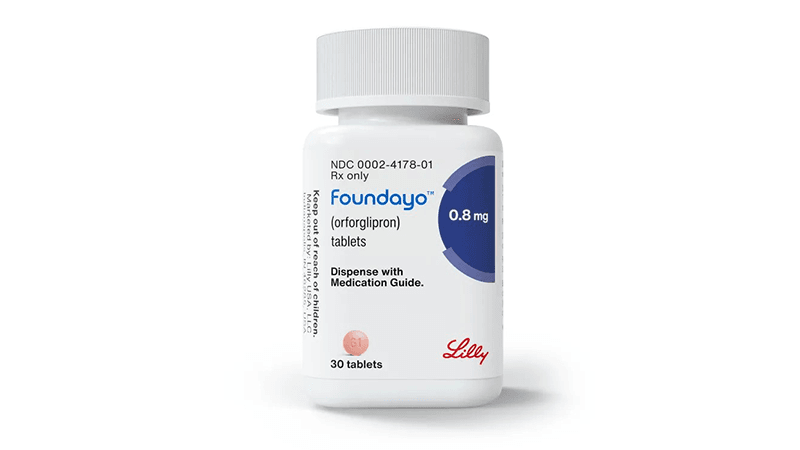
In a post hoc analysis of the phase 3 ATTAIN program, once-daily oral orforglipron produced clinically meaningful weight loss in adults aged 65 and older, with 7.9%-13.0% reductions in ATTAIN-1 and 7.5%-12.2% in ATTAIN-2 at week 72 versus 1.6% and 2.3% on placebo. A1c fell 1.5%-1.7% in older patients with T2D, while the safety profile was broadly similar to younger adults, though GI adverse events and discontinuations were higher at some doses. The data support broader use of GLP-1 therapy in older patients, but the analysis was not prospectively powered for frailty, sarcopenia, or functional outcomes.
This is incrementally positive for LLY because it removes one of the last credible objections to broadening GLP-1 use into an older, higher-comorbidity population: tolerability and functional concern. The second-order implication is not just more prescriptions, but a larger addressable market in primary care and geriatrics where oral convenience matters more than the incremental efficacy gap versus injectables. That favors a fast uptake curve in beneficiaries who are already polypharmacy-heavy and injection-averse, especially as payers increasingly prefer lower-friction chronic therapy with clearer adherence economics.
The bigger competitive read-through is that oral delivery may matter more than molecule-level differentiation over the next 12-24 months. If older patients and PCPs adopt oral therapy at scale, LLY can pull demand from both injectable incumbents and oral semaglutide franchises, while also forcing rivals to spend more on evidence generation around frailty, muscle preservation, and long-duration outcomes. NVO is the most exposed on the narrative side because this reinforces that convenience, not just class efficacy, will shape share in the next wave of obesity treatment.
The key risk is that the market may over-rotate on weight-loss efficacy and underprice reimbursement friction and geriatric safety scrutiny. Because the study is post hoc and not designed to answer frailty or sarcopenia questions, a more conservative payer or guideline response could cap near-term labeling or utilization expansion, particularly in frail patients where discontinuation and GI burden remain meaningful. Over the next 3-6 months, the main catalyst is commercial adoption data rather than additional clinical readout; if early scripts skew older and persistence holds, the bullish case strengthens materially.
Contrarianly, the setup may be slightly underappreciated for NVO on the negative side and slightly overappreciated for LLY on the positive side. The trial supports access expansion, but it does not prove superiority versus injectable GLP-1s in the subgroup that actually drives the highest revenue per patient, so near-term upside likely comes from breadth of utilization rather than dramatic price/volume re-rating. The best expression is likely relative value, not outright beta to the whole obesity basket.
AI-powered research, real-time alerts, and portfolio analytics for institutional investors.
Request DemoOverall Sentiment
mildly positive
Sentiment Score
0.45
Ticker Sentiment
