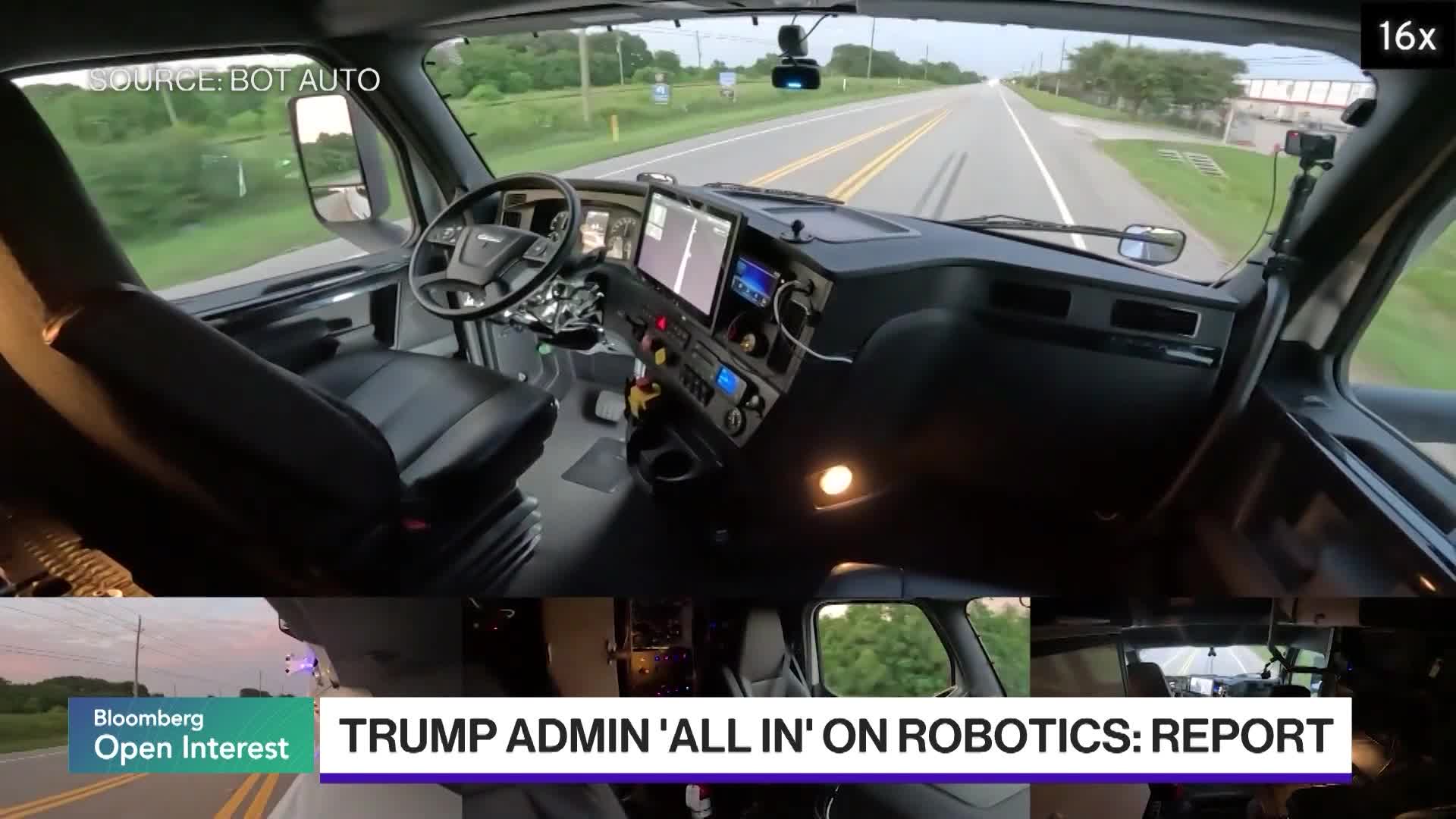
The company completed a human-supervised autonomous 18-wheeler run on a Houston highway and describes commercialization as roughly 70% complete, targeting continuous driverless commercial operations as soon as next year. Management cites an operating cost below $2 (versus $2.26 for human drivers), projects the technology could mitigate roughly 20% of the driver shortage by 2030, and is emphasizing stepwise safety validation and regulatory engagement amid international competition, notably with China.
Market structure: Autonomous retrofits and software suppliers (software-as-service for telematics, perception stacks, retrofit integrators) are the primary near-term winners; large fleet OEMs that can bundle retrofit services (e.g., PCAR/Volvo) capture recurring revenue and pricing power. Labor-heavy carriers and staffing suppliers face margin compression slowly — article cites operating-cost delta ~$2.00 vs $2.26 per mile (~11.5% unit opex edge) which implies economics supportive of pilots but far from immediate mass displacement.
Risk assessment: Tail risks are regulatory moratoriums or a high-profile fatality that could wipe 30–50% off valuations of pure-play AV vendors; probability low but impact systemic. Timing: expect headline-driven volatility in days–weeks around DOT/state rule announcements, material commercial rollouts over 6–18 months, and meaningful market-share shifts by 2028–2030 (company estimate: ~20% mitigation of driver shortage by 2030).
Trade implications: Favor selective exposure to OEMs that can retrofit at scale and semiconductor/sensor suppliers; avoid outright large long positions in speculative AV equities without regulatory clarity. Use options to time around regulatory/certification windows (3–9 month expiries); consider short-dated hedges on Amazon (labor automation headlines) because Amazon both benefits and carries reputational/regulatory risk.
Contrarian angles: Consensus overstates rapid job destruction and understates retrofit capex cycle: adoption is lane-by-lane and capital-intensive, creating a multi-year aftermarket opportunity for mid-cap integrators rather than instant winner-takes-all for software-only names. Unintended consequences include higher insurance and legal costs, and dependency on lidar/chip supply chains; a single supply shock could re-rate multiples across the group.
AI-powered research, real-time alerts, and portfolio analytics for institutional investors.
Request DemoOverall Sentiment
mildly positive
Sentiment Score
0.25
Ticker Sentiment
