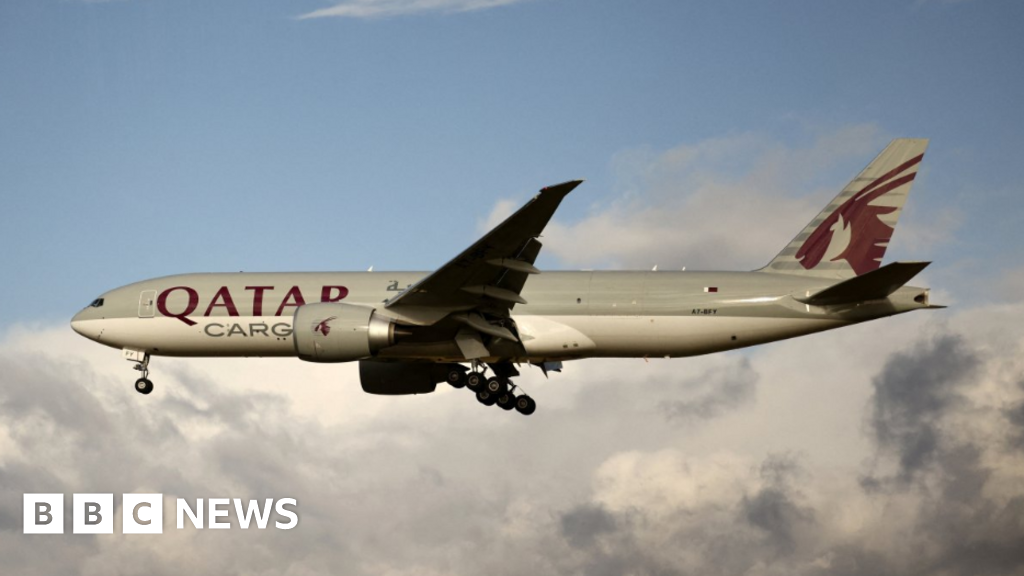
A Birmingham–Doha Qatar Airways flight was diverted and returned to Birmingham after Qatari airspace was closed amid US and Israeli air strikes on Iran; Qatar Airways suspended all flights to Doha and Emirates suspended Dubai services, while a British Airways Heathrow–Doha flight was also ordered to turn back. The regional military escalation and reported retaliatory strikes increase near-term operational risk for carriers and could exert upward pressure on regional energy and risk-sensitive assets, though the piece does not report immediate macroeconomic figures or sustained market-moving data.
Market structure: Immediate winners are defense contractors (US primes), energy producers and reinsurers; losers are long‑haul carriers, Middle East airport operators and travel insurers. Rerouting/airspace closures raise block hours and fuel burn by an estimated 2–5% on affected routes, compressing airline unit margins and forcing short‑term capacity cuts that can bid up regional fares but lower volumes. Cross‑asset flows are classic risk‑off: safe‑havens (USD, JPY, gold, Treasuries) appreciate while regional EM FX and airline stocks weaken; oil/Brent is the commodity most sensitive with potential 5–15% jump on mid‑severity escalation.
Risk assessment: Tail scenarios include (A) attacks on oil infrastructure or shipping lanes causing a >$15/bbl surge and sustained supply shock, (B) widescale airspace closures leading to multi‑week airline revenue losses, and (C) sanctions or insurance‑market dislocations that reset premium pricing by 20–50%. Immediate (days) risks are operational (flight cancellations, reroutes); short (weeks) are revenue and fuel hedge re‑pricing; long (quarters) are contract/route realignments and potential state responses that could normalize or worsen volatility. Hidden dependencies: cargo chokepoints (Suez/Hormuz), LNG shipment schedules, and airline fuel hedges can amplify or mute effects.
Trade implications: Tactical trades include long 3–6 month exposure to defense primes (RTX, LMT, NOC) and energy producers (XOM, CVX) to capture fiscal/commodity repricing, paired with short exposure to airline names or JETS ETF to capture margin compression. Options: buy 1–3 month Brent call spreads to cap premium while targeting a 5–20% move; buy puts on airline ETFs or 3–6 month protection on IAG/LHA. Rotate out of travel/leisure and into defense, energy, reinsurance and high‑quality sovereign duration until volatility subsides.
Contrarian angles: The market may overprice permanent disruption — past regional strikes (2019 tanker attacks) produced transient oil spikes of 4–8% that faded within 2–6 weeks absent infrastructure damage. If oil stays below $85 for 2 weeks or diplomatic de‑escalation occurs, unwind energy longs and cover airline shorts; conversely, a sustained oil >$95 or shipping‑lane attacks justify longer defensive exposure. Consider pair trades that fade volatility once realized moves exceed implied by options markets (sell premium 3–6 weeks after de‑escalation).
AI-powered research, real-time alerts, and portfolio analytics for institutional investors.
Request DemoOverall Sentiment
moderately negative
Sentiment Score
-0.45
