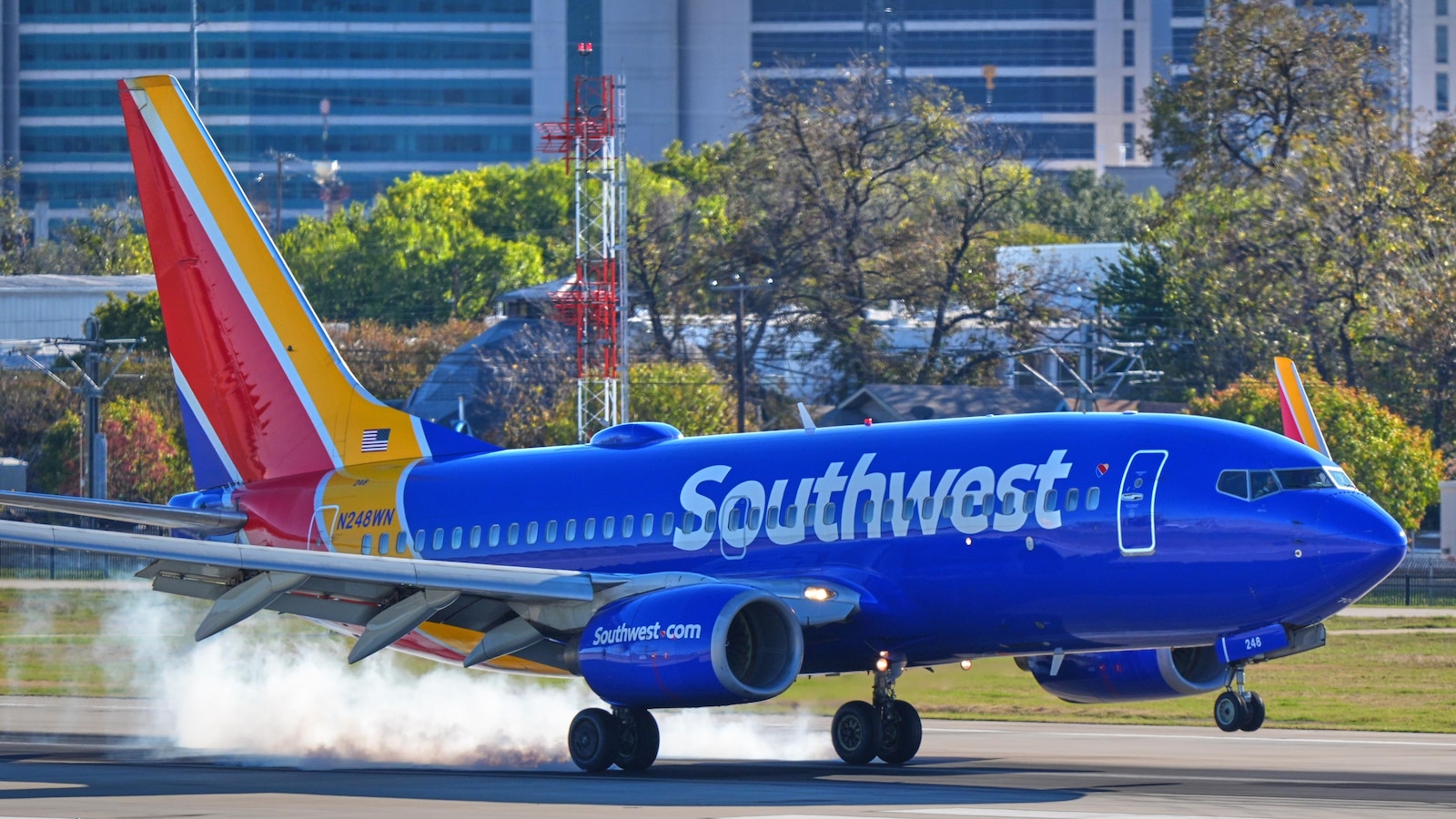
Southwest Airlines is ending its decades‑long open‑seating model and introducing assigned seats effective Tuesday, phased gate changes over ~two months, an eight‑group boarding structure, and tiered paid seating options (preferred and extra‑legroom) sold since July. The carrier also tightened its policy on purchasing an extra seat for passengers who do not fit within a single seat’s armrests and introduced baggage fees in May 2025; management frames the moves as revenue‑driving responses to investor pressure to restore pre‑pandemic profitability. These changes shift Southwest closer to legacy carrier revenue practices and could modestly improve unit economics while risking some customer backlash and potential demand effects.
Market structure: Assigned seating + baggage fees meaningfully converts an operational/loyalty benefit into recurring ancillary revenue. If Southwest converts even $3-6 per passenger at ~100m annual pax, that implies $300-600m incremental revenue (roughly +1–3% of 2024 revenues) and ~75–200 bps potential margin upside over 12–24 months, favoring LUV, co‑brand card partners and airports with leisure routing. Losers include price‑sensitive short‑haul competitors and passenger goodwill; near‑term demand elasticity could trim load factor by 0.2–1.0ppt on routes with tight competition.
Risk assessment: Tail risks include operational chaos from gate reconfiguration causing on‑time performance deterioration (each 1ppt OTP hit can cost ~$5–15m sequentially) or DOT/FTC pushback on “fairness” of forced extra‑seat rules and baggage changes leading to fines or mandated refunds. Immediate volatility is likely around the first full quarter of reported ancillaries (days–weeks); medium term (3–12 months) depends on adoption rates and churn; long term (12–36 months) depends on loyalty migration and corporate travel recovery. Hidden dependency: success hinges on IT/boarding execution and pricing psychology — poor UX will negate revenue gains.
Trade implications: Tactical: establish a 2–3% long position in LUV (stock) with a 6–12 month horizon to capture ancillary roll‑out and baggage fee pop; add a 6‑ to 12‑month bull call spread (buy ATM, sell +20–30% strike) to cap cost if IV is rich. Pair trade: long LUV, short AAL (2:1 notional) for 3–9 months to express superior monetization and leisure footprint; set stop at LUV down 10% or if ancillary take‑rate <30% after two quarters. Rebalance after next two earnings releases and gate conversion completion (~2 months).
Contrarian angles: Consensus underestimates downside from consumer backlash and incremental operational delays; but investors may also be underpricing upside: modest seat/bag fees are sticky and scale quickly — $300m+ becomes strategic for ROIC. Historical parallels: legacy carriers’ fee rollouts (2010–2015) caused short‑term PR pain but durable margin gains; watch customer sentiment metrics (NPS/YoY bookings) and first two quarters of ancillaries as the binary confirm/reject signals.
AI-powered research, real-time alerts, and portfolio analytics for institutional investors.
Request DemoOverall Sentiment
mildly positive
Sentiment Score
0.25
Ticker Sentiment
