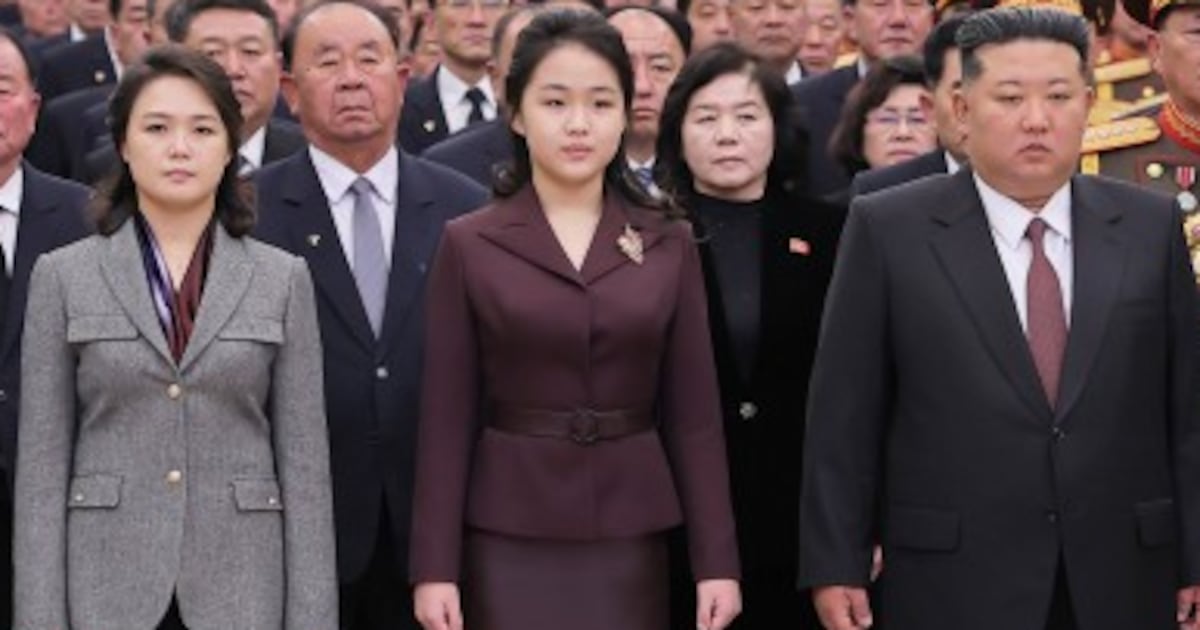
North Korean leader Kim Jong Un publicly escorted his daughter Kim Ju Ae, believed to be about 13, to the Kumsusan Palace of the Sun in Pyongyang, fueling speculation he is positioning her for succession. The girl's repeated appearances at high-profile events — including military parades, missile launches and a 2023 state visit to China — and analysts' suggestions she could receive a senior party post at the upcoming Workers’ Party congress underscore a potential deliberate effort to secure dynastic continuity. For investors, the development is primarily a political risk signal affecting regional geopolitics rather than an event with immediate market-moving financial metrics.
Market structure: The public grooming of a successor reduces the near-term probability of a sudden regime collapse but raises the probability of deliberate, calibrated provocation to signal strength. Expect modest bid for regional defense spend (South Korea, Japan) over 6–18 months—beneficiaries are US defense primes (LMT, NOC, RTX, GD) and regional defense suppliers, while NK-adjacent tourism, shipping routes to ROK/JP, and select EM Korean equities (EWY) face asymmetric downside on flare-ups.
Risk assessment: Tail risks include a surprise weapons test or targeted escalation that would trigger >2–4% intraday moves in safe havens (USDJPY, JPY, gold) and 5–10% knee-jerk drawdowns in Korean equities; low-probability political succession turmoil could lead to sanctions shift from China. Immediate (days): muted market reaction; short-term (weeks–months): volatility spikes around the Workers’ Party congress and any missile tests; long-term (quarters–years): gradual re-rating of defense contractors tied to fiscal appropriations.
Trade implications: Tactical plays: establish small long allocations (1–3% portfolio) in LMT/NOC/RTX with 12–18 month horizons, use 6–12 month call spreads 10–15% OTM to limit capital at risk. Hedge via 0.5–1% short EWY or KOSPI futures if provocations occur; consider buying 1–2% position in JPY (via FX forward or ETF FXY) if USDJPY falls >2% on risk-off within 30 days.
Contrarian angles: The market consensus treats family succession as increased instability; instead, grooming signals continuity that can actually lower extreme collapse risk and compress long-dated geopolitical volatility. If continuity reduces tail risk, defense equities may be overbought—pair trades (long LMT vs short volatility VXX or short small-cap Korea) with tight stops exploit mispricing; monitor China-NK diplomatic moves within 60 days as the main reversal catalyst.
AI-powered research, real-time alerts, and portfolio analytics for institutional investors.
Request DemoOverall Sentiment
neutral
Sentiment Score
-0.05
