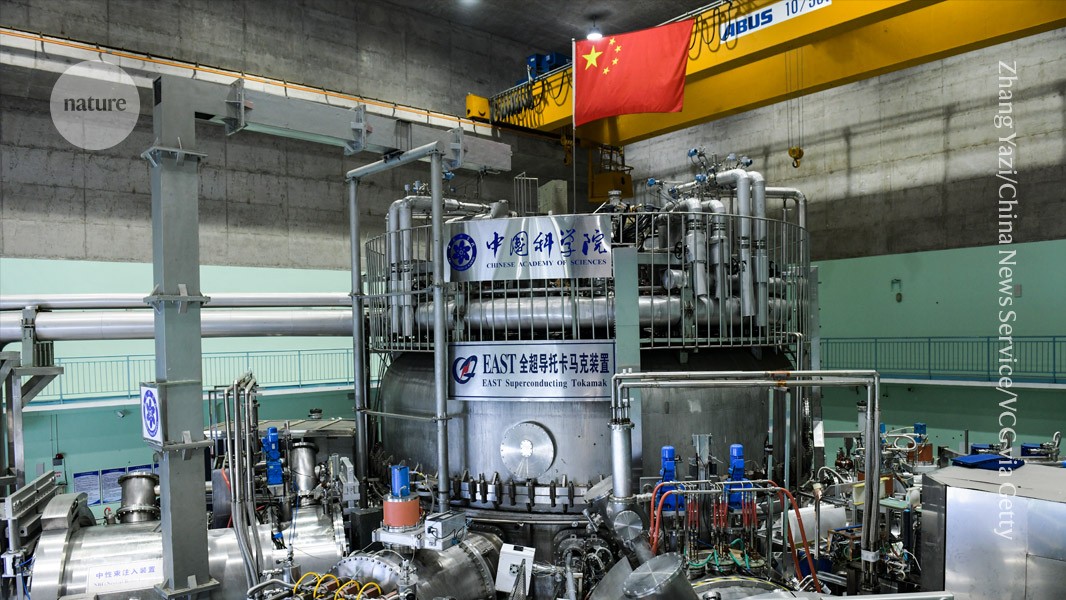
China’s Experimental Advanced Superconducting Tokamak (EAST) team reported in Science Advances that they pushed plasma densities 30%–65% above the long-accepted Greenwald limit, using high-power microwaves to reduce wall impurities and large neutral-gas injection to boost fuel. The results, achieved in Hefei and proposed in part by prior theoretical work, suggest a pathway to denser, more stable tokamak operation and improve prospects for fusion as a large-scale low-carbon energy source, though commercial implications remain long-term and exploratory.
Market Structure: Surpassing the Greenwald limit is a technical advance that primarily benefits suppliers of high-temperature superconductors, high-power microwave sources, cryogenics and vacuum/first-wall materials (potential TAM in low-single-digit billions annually). Near-term (0–24 months) winners are specialty-capex vendors and engineering contractors; losers are marginal — long-cycle uranium miners and some centralized baseload generators only if commercialization accelerates beyond a 10+ year horizon. Increased tokamak viability reduces long-run pricing power of fossil fuels/nuclear but requires many additional breakthroughs to threaten commodity demand materially.
Risk Assessment: Tail risks include scaling failure (materials damage, tritium handling), geopolitics/IP lock-in (China leadership + export controls), and funding pullbacks; each could wipe out >80% of early-stage thematic equity value. Immediate market impact is sentiment-driven (days–months), while technical de‑risking or replication on other devices is a 12–36 month catalyst window; commercial disruption is 5–20 years. Hidden dependencies: REBCO superconductors, niobium supply, and high-purity helium — constrained supply chains that can create short-term inflation in capex.
Trade Implications: Tactical trades favor suppliers of superconductors and cryogenics: target 1–3% positions in AMSC (NASDAQ:AMSC) and industrial gas leaders (LIN, APD) with 12–36 month holds; hedge with small short/put exposure to uranium via URA or CCJ. Use LEAP call spreads to cap premium for AMSC (12–24 months) and buy 9–12 month put spreads on URA (0.5–1% notional) to express asymmetric upside vs downside. Rebalance allocations to materials/industrial sectors +2–4% funded by cutting uranium/utility exposure by 30–50% over 12–36 months if corroborating results appear.
Contrarian Angles: Consensus underprices engineering scale risk and overprices short-term energy disruption; historical fusion cycles (1970s–90s) show repeated overoptimism before commercialization. The market may underreact to supply-chain bottlenecks that would inflate vendor margins (benefiting suppliers) while overreacting to single-experiment headlines. Trigger thresholds to change posture: if two independent tokamaks report sustained Q>1 or continuous operation >100s in 12 months, increase long supplier exposure by another 2–4%; if replication fails, reduce thematic positions by 50% within 3 months.
AI-powered research, real-time alerts, and portfolio analytics for institutional investors.
Request DemoOverall Sentiment
mildly positive
Sentiment Score
0.32
