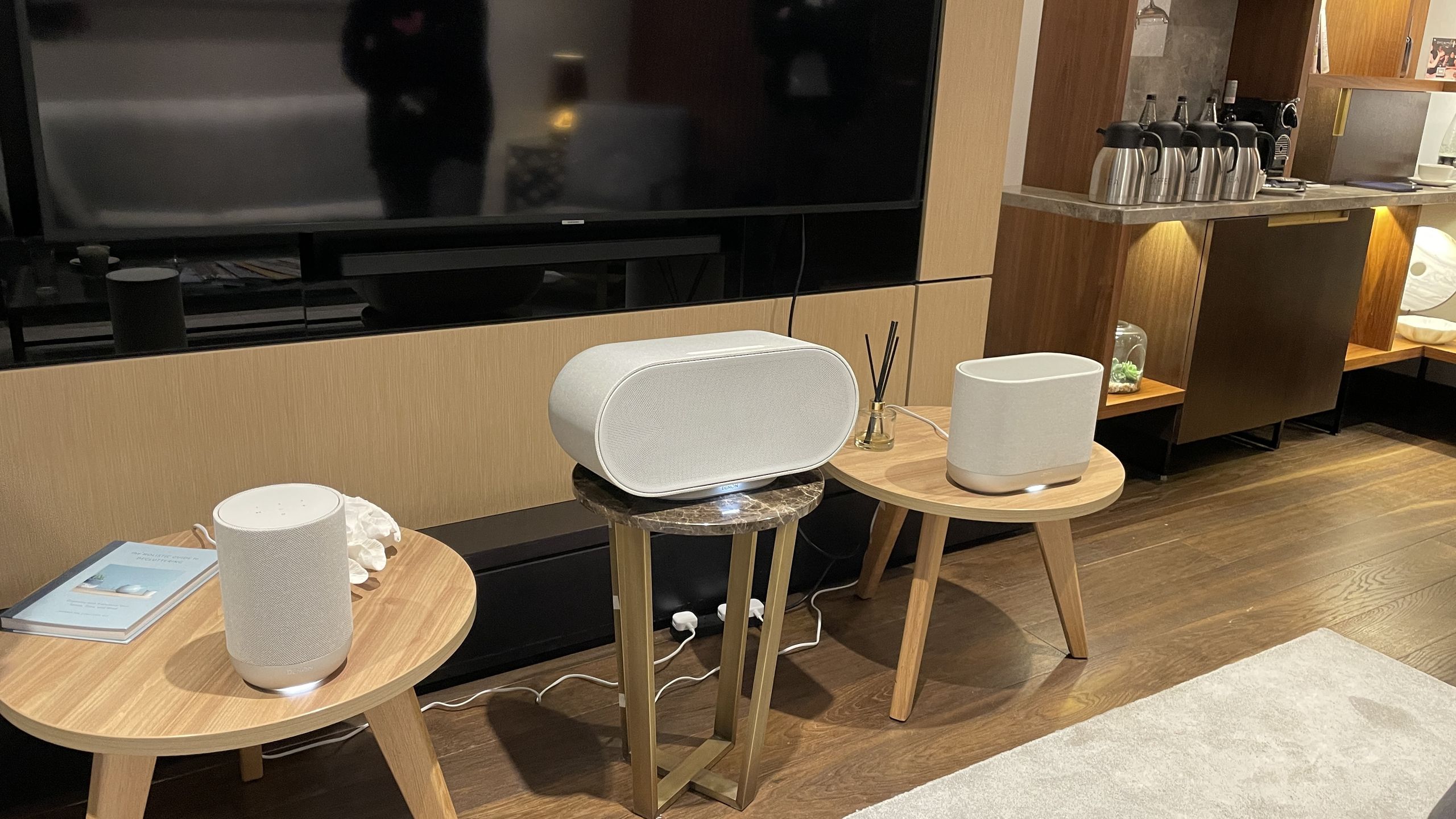
Denon launched a new 2.0 HEOS wireless speaker line: the Denon 200 (3-driver, Virtual Dolby Atmos, 65W, $399/£299/AU$699), 400 (6-driver, Dolby Atmos, 90W, $599/£449/AU$999) and 600 (8-driver, Dolby Atmos, 170W, $799/£599/AU$1,499). The speakers support Wi‑Fi, upcoming Bluetooth LE Audio, ALAC/aptX, AirPlay/Spotify/Tidal/Qobuz and Roon, allow up to 64 devices in 32 HEOS zones, and include microphone privacy controls. Reviewer praised sound quality and value, positioning the trio as direct competitors to Sonos and WiiM and likely to intensify competition in multiroom wireless audio.
Denon’s credible entry at competitive price points amplifies pressure on Sonos’ premium wireless-speaker franchise by attacking both the high-end “spatial audio” use case and the value segment. Second-order winners include Dolby (greater Atmos-enabled hardware TAM and incremental licensing/SDK adoption) and large omnichannel retailers that can monetize an expanded audio refresh cycle; second-order losers include smaller independent streaming/hardware bundles (WiiM) and any mid-size OEMs that rely on proprietary ecosystems rather than open codec support. Component suppliers for up‑firing drivers, mids and multi‑channel amp ICs should see order volatility as OEMs retool SKUs to chase Atmos-enabled feature parity.
Timing matters: expect review-driven demand signals in the next 4–12 weeks and measurable share shifts only after 3–12 months when retail sell‑through and firmware stability are apparent. Reversals come from three clear catalysts—Sonos tactical responses (price cuts, faster product refreshes, or free/software-only features), Denon execution problems (shipping delays or firmware quality issues), or a weak holiday channel that reduces discretionary audio upgrades. Over a 12–36 month horizon the decisive variable is ecosystem lock‑in: an installed base that refuses to migrate will blunt a one‑cycle product assault but continued feature parity and aggressive pricing can compress Sonos’ gross margins.
The consensus tends to underweight Sonos’ network effects and services revenue; many buyers care less about raw hardware specs than seamless multiroom UX and software longevity. That said, hardware economics are binary—if Denon converts even mid-single-digit percentage of Sonos’ aspirational buyers, SONO could face margin contraction forcing either higher R&D/marketing spend or price concessions. Key monitoring metrics: Sonos active installed base growth/decline, weekly sell‑through at Best Buy/Amazon, Dolby’s hardware licensing bookings, and early Denon firmware update cadence.
AI-powered research, real-time alerts, and portfolio analytics for institutional investors.
Request DemoOverall Sentiment
moderately positive
Sentiment Score
0.55
Ticker Sentiment
