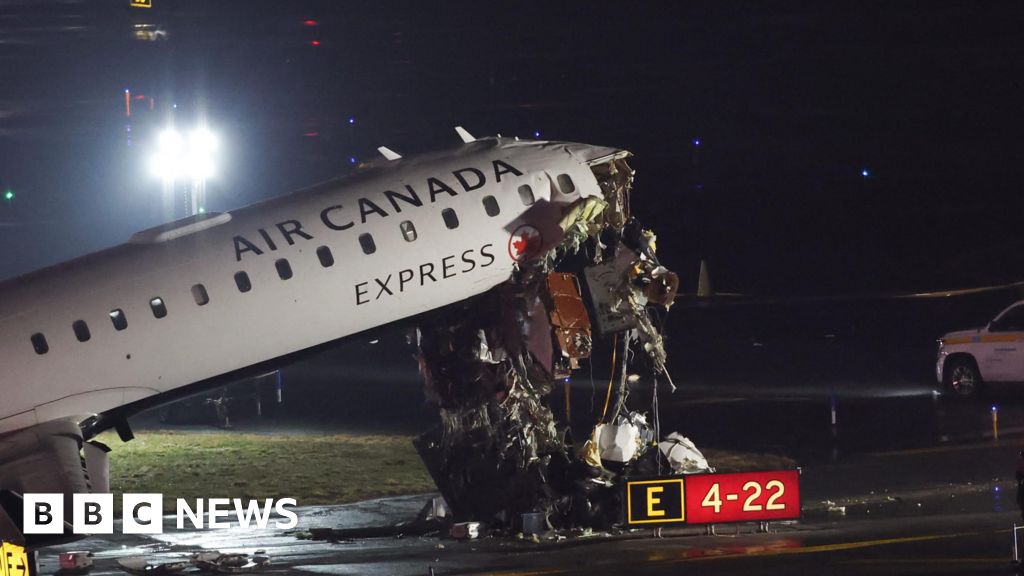
A Bombardier CRJ900 operated by Jazz for Air Canada struck a Port Authority aircraft rescue and firefighting vehicle while slowing to about 24 mph after landing at LaGuardia; a preliminary passenger list showed 76 people on board (including four crew). The collision caused significant aircraft damage, multiple reported injuries, and prompted a ground stop and closure of LaGuardia until further notice; NYPD, FDNY and Port Authority responded and the NTSB has launched an investigation.
The immediate market effect is a concentrated, transient capacity shock in one of the highest-frequency U.S. metro markets; expect 24–72 hours of rebooking and spillover that temporarily redistributes yields and ancillary revenue among carriers with spare Northeast capacity. That redistribution will show up as intra-week revenue capture for flexible network carriers and as short-term volume and delay-related cost hits for regional partners and ground handlers.
Regulatory and legal follow-through is the real multi-month catalyst: an NTSB-led review that results in stricter ground-movement protocols or mandatory ARFF staffing standards would nudge turn times and ground opex higher by a few percent for regional fleets, and create a multi-quarter procurement cycle for airport authorities. Insurance recoveries will mute direct balance-sheet hits for operators, but litigation against a port authority or contractor could drain political capital and trigger budget reallocations for capital-heavy airport agencies over 6–24 months.
For AC.TO the equity reaction should be front-loaded and sentiment-driven: near-term downside is amplified by investor focus on operational risk at regional partners and any uncertainty over insurance coverage timing. A medium-term recovery depends on transparency around repair costs, insurance recovery timing, and whether regulators impose operational limits that change Jazz/partner economics.
Winners on a 3–24 month view are OEMs and maintenance providers that sell ARFF vehicles, retrofits and MRO capacity — a small but high-ticket procurement market — and large network carriers able to monetize passenger spill with minimal incremental cost. Losers are regional operators with concentrated slot exposure and any contractors/authorities that face litigated damages or mandatory capital spending that squeezes operating budgets.
AI-powered research, real-time alerts, and portfolio analytics for institutional investors.
Request DemoOverall Sentiment
mildly negative
Sentiment Score
-0.30
Ticker Sentiment
