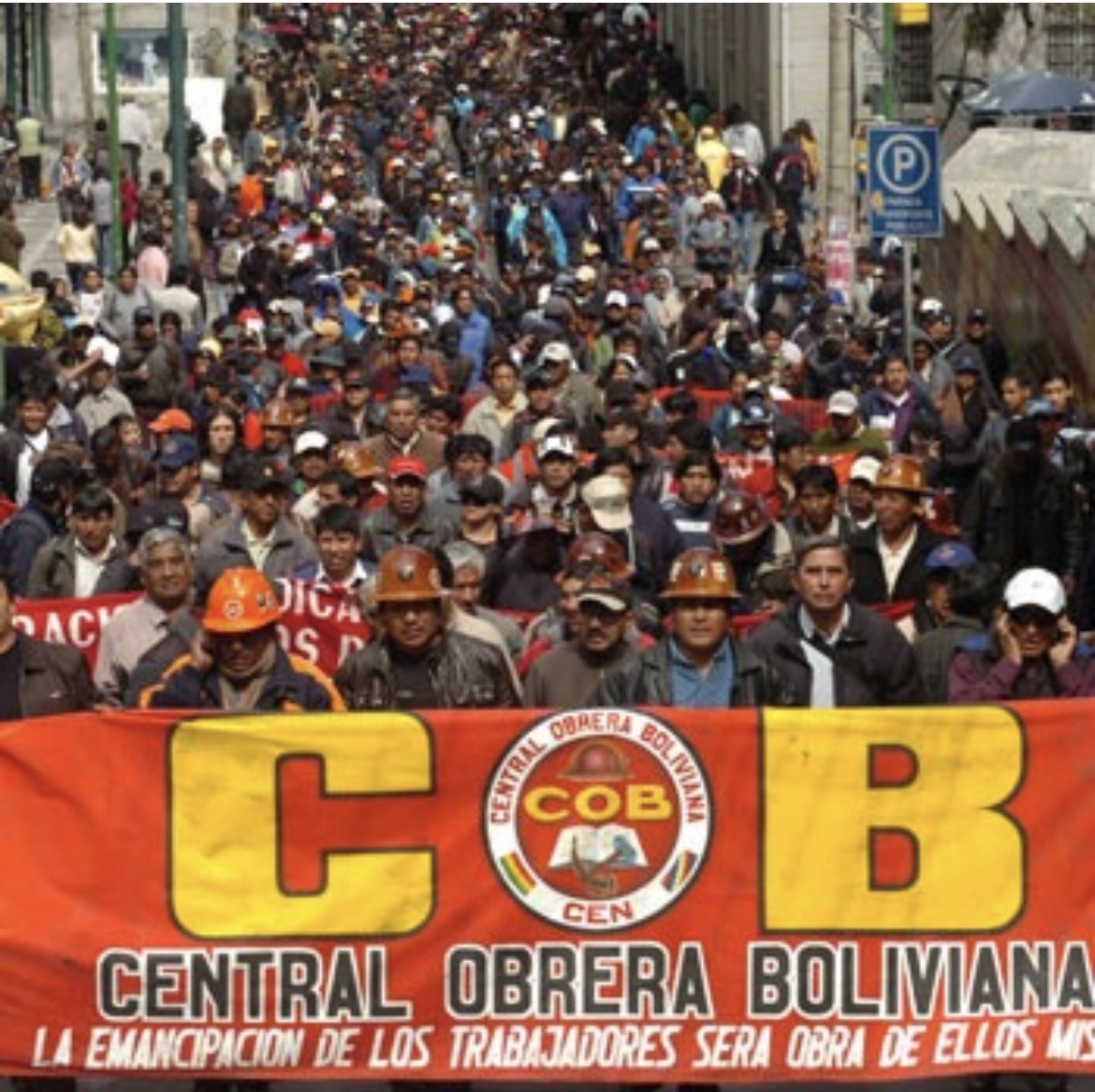
Bolivia is facing a nationwide labor and political crisis: more than 70 unions have launched an indefinite general strike with over 100 demands, alongside 60 reported roadblocks, 47 of them in La Paz. The unrest is tied to President Rodrigo Paz’s austerity, deregulation, and privatization agenda, as well as escalating tensions around Evo Morales and allegations of U.S.-linked efforts to detain or kill him. The disruption is concentrated in a key emerging market and could weigh on transport, mining, fuel distribution, and broader domestic economic activity.
Bolivia is moving from policy risk into operational disruption risk, which matters more for markets than the headline politics. The immediate loser is the sovereign’s ability to enforce its economic program: once roadblocks and labor stoppages start impairing transport corridors, inflation becomes sticky while tax collection and import flows weaken, creating a self-reinforcing fiscal squeeze over the next 1-3 months. That combination raises the odds of administrative backtracking, emergency measures, or a cabinet reset rather than a clean policy reversal.
The second-order effect is on the mining complex and any upstream logistics tied to Andean throughput. Even if production sites remain intact, bottlenecks in diesel availability, road access, and labor availability can cut realized output and widen the spread between global commodity prices and local cash margins. That typically hurts smaller, higher-cost operators first, while also impairing service contractors, local freight, and fuel distribution businesses exposed to inland transport.
For geopolitical names, the DEA read-through is not direct revenue impact but higher scrutiny and higher tail risk around U.S. involvement in the region. If the protest dynamic is framed as anti-external interference, Washington-linked agencies become a convenient political target, increasing the odds of policy noise, sanctions rhetoric, or diplomatic escalation over the next several weeks. That makes this less a one-day headline and more a volatility regime change until there is either credible dialogue or a visible split inside the security apparatus.
Consensus may be underestimating how quickly a protest against price reform can become a legitimacy crisis for the entire reform agenda. The market usually prices Latin American unrest as temporary, but when unions, miners, and indigenous groups align, the probability of a broader reversal jumps sharply; the real risk is not regime collapse but policy paralysis with persistent inflation and weaker growth. That outcome is bearish for local assets without necessarily being bullish for long-duration sovereign bonds if the state responds with repression instead of fiscal retrenchment.
AI-powered research, real-time alerts, and portfolio analytics for institutional investors.
Request DemoOverall Sentiment
strongly negative
Sentiment Score
-0.72
Ticker Sentiment
