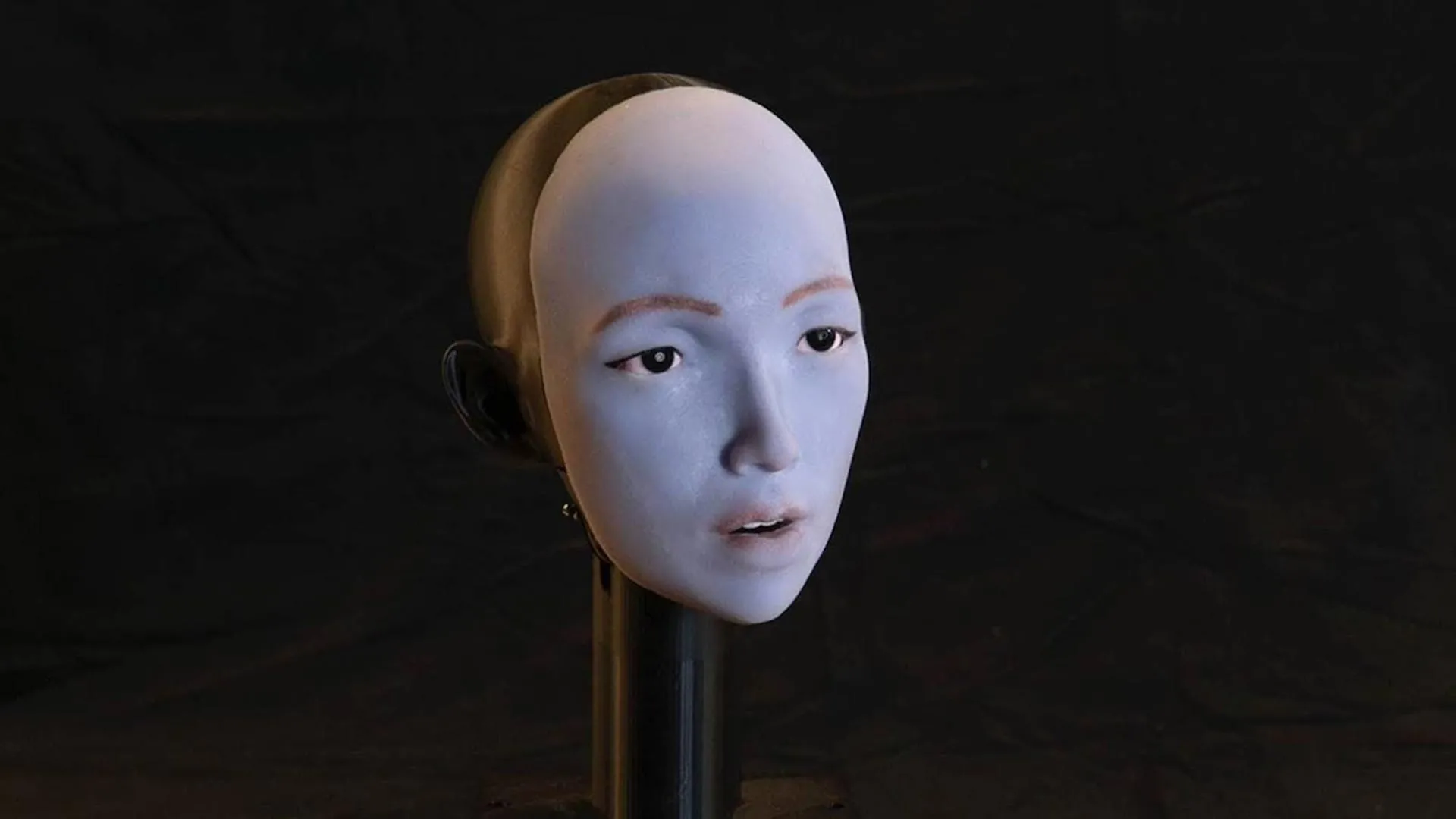
Columbia Engineering published a Science Robotics paper demonstrating a humanoid robot that learned realistic lip motions by watching its reflection and studying hours of human speech and singing videos, using 26 facial motors and a vision-to-action language model (VLA). The system produced synchronized lip-sync across multiple languages and musical examples, highlighting potential commercial applications in entertainment, education and elder/healthcare settings while researchers note limitations on certain phonemes and ethical risks to be managed.
Market structure: This breakthrough raises demand for three upstream buckets—AI accelerators (inference GPUs/edge NPUs), precision actuators/quiet motors, and realistic soft-face materials—over a 1–5 year horizon. Winners are large-cap AI semi (NVDA, QCOM) and diversified industrials with robotics divisions (ABB, SFTBY exposure via Boston Dynamics investments); losers are low‑margin, software‑only avatar vendors and small-cap consumer-robot names that lack proprietary hardware (high risk of margin compression within 12–36 months).
Risk assessment: Tail risks include regulatory action (EU/US rules on synthetic faces/consent within 6–18 months), high‑profile liability incidents (product injuries leading to mandatory safety retrofits), and IP litigation from training-data owners—any could wipe out near‑term adoption and cause >30% re‑rating. Hidden dependencies: a handful of specialist motor/material suppliers create single‑supplier concentration risk and supply shocks; monitor lead times and component price inflation over next 3–9 months.
Trade implications: Direct plays: overweight NVDA and QCOM for 6–24 month exposure to inference compute and edge integration; use a relative value pair (long NVDA, short INTC) to express AI accel share gains. Options: buy 4–9 month NVDA call spreads (10%/30% OTM) sized 1–2% portfolio for asymmetric upside while capping premium; hedge with 3–6 month puts on small‑cap robotics ETFs if deploying leverage.
Contrarian angles: Markets may be underestimating hardware complexity and per‑unit cost; realistic humanoids could take 3–7 years to reach mass adoption, so small-cap hype will likely mean‑revert. Historical parallel: robotics/media tech cycles (late‑2010s drone/consumer-robot hype) show consolidation and acquisition; look to buy high-quality suppliers after a >40% pullback, not at peak valuations.
AI-powered research, real-time alerts, and portfolio analytics for institutional investors.
Request DemoOverall Sentiment
mildly positive
Sentiment Score
0.28
