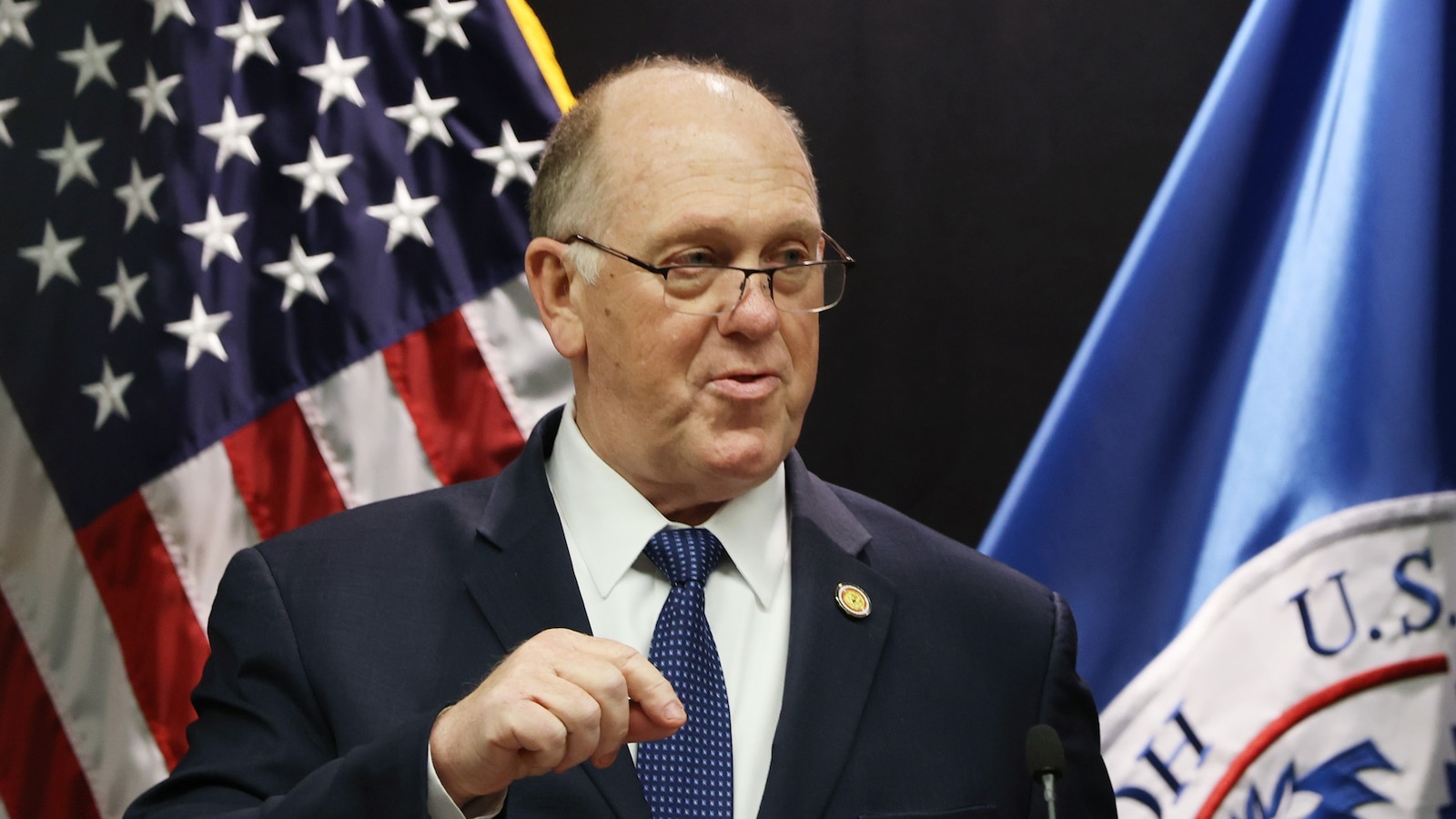
Border Czar Tom Homan announced agreements with local and state officials that would allow targeted immigration enforcement in jails and a potential drawdown of federal agents in Minneapolis, contingent on local cooperation, while ICE and CBP work on a withdrawal plan. Minnesota Attorney General Keith Ellison publicly denied making any agreements, stressing state law limits on holding people solely on ICE detainers; tensions persist after two fatal confrontations with federal agents. For investors, the development is primarily political and operational—it may ease local security costs and reduce visible federal presence but carries limited direct market impact beyond localized political risk and potential municipal reputational effects.
Market structure: The Minneapolis shift from street sweeps to jail-based, targeted enforcement benefits govtech vendors (Tyler Technologies, TYL) and data/integration contractors (Palantir, PLTR) that sell inter-agency booking and analytics; detention operators (GEO, GEO and CoreCivic, CXW) could see incremental detainee flows. Local services (hospitality, retail on Nicollet/Hennepin) and Minneapolis municipal credit face transient revenue and demand shocks; expect localized muni spread widening of ~5–20bp in near-term stress scenarios. Cross-asset: move is idiosyncratic — expect muted Treasury reaction, modest lift in security/defense IV (+5–15% for names tied to civil‑security headlines) and small muni underperformance regionally.
Risk assessment: Tail risks include federal escalation (national deployment) or legal prohibitions on jail-ICE cooperation that could remove expected upside for detention and govtech firms — a reversal could cut projected incremental revenue by >30% for detention operators over 12 months. Time horizons: immediate days (protests, headline volatility), short-term weeks–months (county policy memos, DOJ/state AG statements), long-term quarters–years (procurement cycles, election-driven DHS budgets). Hidden dependencies: sheriff-level cooperation, state statutes on ICE detainers, and DOJ civil-rights probes; each is a binary catalyst within 30–90 days.
Trade implications: Tactical direct plays favor PLTR and TYL exposure (procurement tailwinds) and cautious, hedged exposure to GEO/CXW given ESG/legal risk. Implement option structures to cap downside (buy call spreads on PLTR, protective puts on GEO). Underweight Minneapolis/Hennepin muni credit for 0–3 months; consider buying selective muni protection if spreads widen >15bp. Pair trades: long govtech (TYL) vs short regional-bank or leisure names exposed to local commerce (KRE) to hedge macro/local demand risk.
Contrarian angles: Consensus expects de-escalation; the overlooked outcome is a durable shift into software/data-first enforcement that raises recurring SaaS revenue for govtech and analytics firms over 6–18 months. The market may underprice contract rollouts — if three county sheriffs sign MOUs within 90 days, PLTR/TYL upside could accelerate +25–50% vs current levels. Conversely, lawsuit filings or a state-level ban on ICE detainers would rapidly re-rate detention names downward; size positions accordingly and watch for legal filings as early-warning signals.
AI-powered research, real-time alerts, and portfolio analytics for institutional investors.
Request DemoOverall Sentiment
neutral
Sentiment Score
0.00
