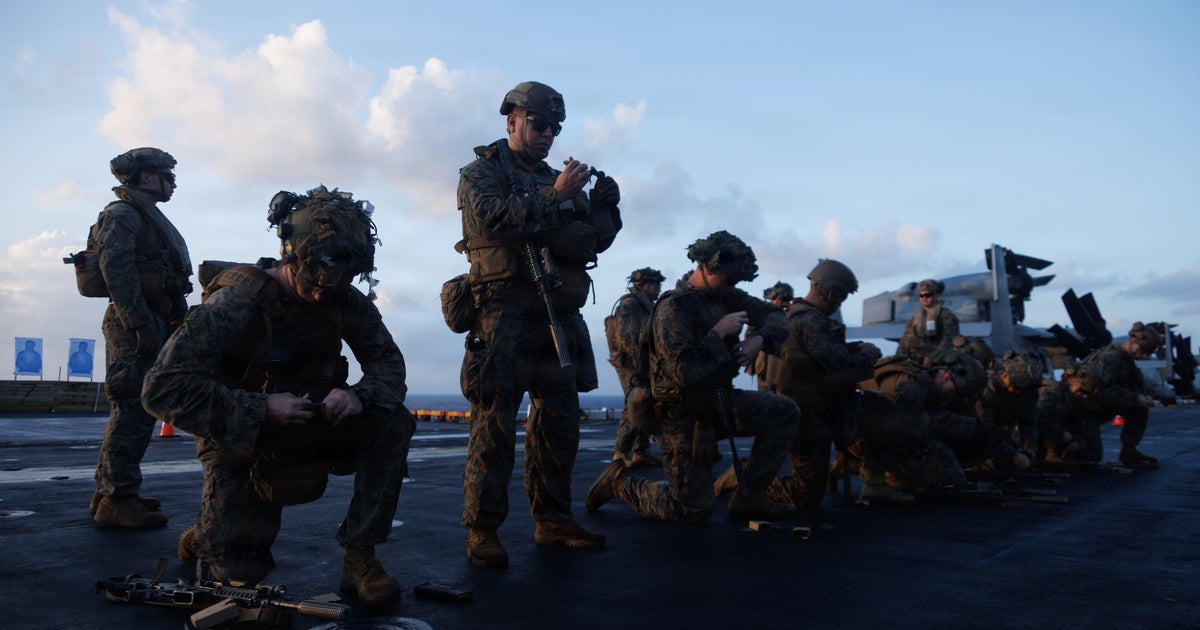
More than 3,500 U.S. troops have been deployed to the Middle East, including roughly 2,500 Marines aboard the USS Tripoli, hundreds of Special Operations forces (Navy SEALs, Army Rangers) and elements of the 82nd Airborne (<1,500), with a second MEU en route. Sources say the deployments are to give the U.S. options against Iran — potential targets cited include the Strait of Hormuz, Kharg Island oil facilities, Iran's enriched uranium stockpile, and other energy infrastructure. This is a significant geopolitical escalation with material risk to oil flows and a likely risk-off reaction across energy markets and defense-sector exposures.
The presence of credible kinetic options materially raises near-term premium in seaborne oil logistics, war-risk insurance and tanker time-charter rates; those markets move in hours-to-weeks and feed directly into physical crude/backwardation dynamics that premiums alone can lift by the equivalent of $5–$20/bbl in realized landed cost for Asian refiners. Tanker owners and specialty brokers are the immediate convex beneficiaries because higher daily TCEs compound quickly and are capital-light compared with upstream capex responses.
On a slightly longer horizon (weeks→months) the most important limiter is supply elasticity: U.S. shale and floating storage can blunt an oil-price shock, but these responses take multiple drilling cycles and logistics shifts — i.e., months — not days. This creates a convex window where price moves and volatility spikes are largest; policy responses (SPR releases, diplomatic backchannels, targeted sanctions on insurers) are the high-probability catalysts that can unwind much of the move within 30–90 days.
The consensus risk-off positioning in equities is rational for equities but overstates duration risk in commodities and shipping where mean reversion is faster. That makes option- and volatility-based tactical plays more attractive than outright multi-quarter equity longs in energy or defense; selling premium into the first violent spike (structured credit lines permitting) and owning directional optionality on freight/Brent are higher Sharpe ways to express the view.
Second-order winners include Gulf and Indian refiners with flexible import origination (they can buy displaced barrels at a premium discount), while airlines and tourism-exposed consumer discretionary face a near-term margin squeeze. Watch for cliff events — a temporary chokepoint closure or a sharp diplomatic signal — that will create 24–72 hour trading opportunities across freight, oil vols and defense primes.
AI-powered research, real-time alerts, and portfolio analytics for institutional investors.
Request DemoOverall Sentiment
strongly negative
Sentiment Score
-0.60
Ticker Sentiment
