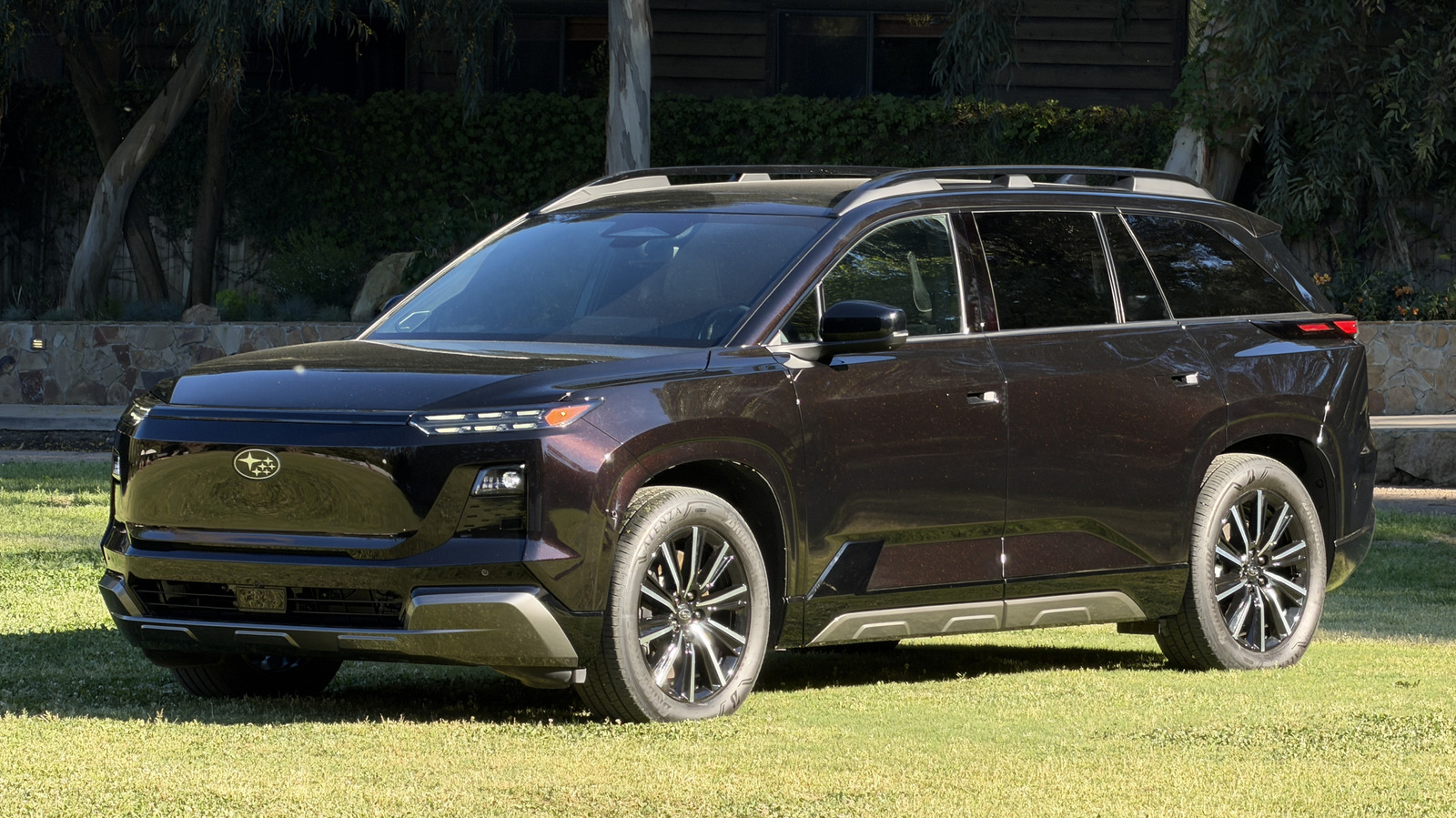
Subaru unveiled the 2027 Getaway three-row EV with dual motors producing 420 hp and a claimed sub-5s 0–60 mph time. It launches with a 95.8‑kWh battery for “more than 300 miles,” 150‑kW DC fast charging (10–80% in ~30 minutes), 3,500 lb towing capacity, and 8.3 in ground clearance; a 77.0‑kWh dual‑motor variant is due H1 2027. On-sale timing is late 2026, pricing TBD (author estimates ≈$50k); product should modestly bolster Subaru’s EV lineup and consumer appeal but is unlikely to move markets materially.
Subaru’s three-row EV push is less about raw specs and more about repositioning an AWD, lifestyle brand into a higher-content EV segment — that shifts demand from commoditized midsize EVs toward higher gross-profit per-unit variants that carry more motors, higher‑capacity packs, and premium interior options. That composition effect (more dual-motor AWDs, larger cells, more premium trim) should disproportionately benefit e‑axle/inverter suppliers and mid‑to‑high‑tier cell manufacturers during 2026–2028 production ramps, while compressing the margin upside for low-cost, high-volume EV platforms.
Adoption of NACS on a non‑Tesla flagship accelerates charger‑format standardization and raises utilization on existing Tesla infrastructure or forces parallel investment by CCS networks; this is a multi‑year catalyst for charging operators and adapter makers, and it raises regulatory attention on interoperability and network access fees within 12–24 months. Dealers and service networks will face a higher CAPEX and training load to support larger battery and dual‑motor repairs, which implies aftermarket parts and warranty exposure — a +ve for independent service chains, a -ve for captive dealer margins in the near term.
Risks cluster around pricing elasticity and volume: if Subaru undercuts Toyota or prices similarly, the brand may win share but erode per-unit profitability, reversing supplier demand assumptions. A secondary reversal could come from faster charging technology (250–350 kW becoming standard) making mid‑tier 150 kW vehicles less attractive to long‑distance buyers, pressuring resale values and uptake in suburban towing/utility segments within 18 months.
AI-powered research, real-time alerts, and portfolio analytics for institutional investors.
Request DemoOverall Sentiment
mildly positive
Sentiment Score
0.25
Ticker Sentiment
