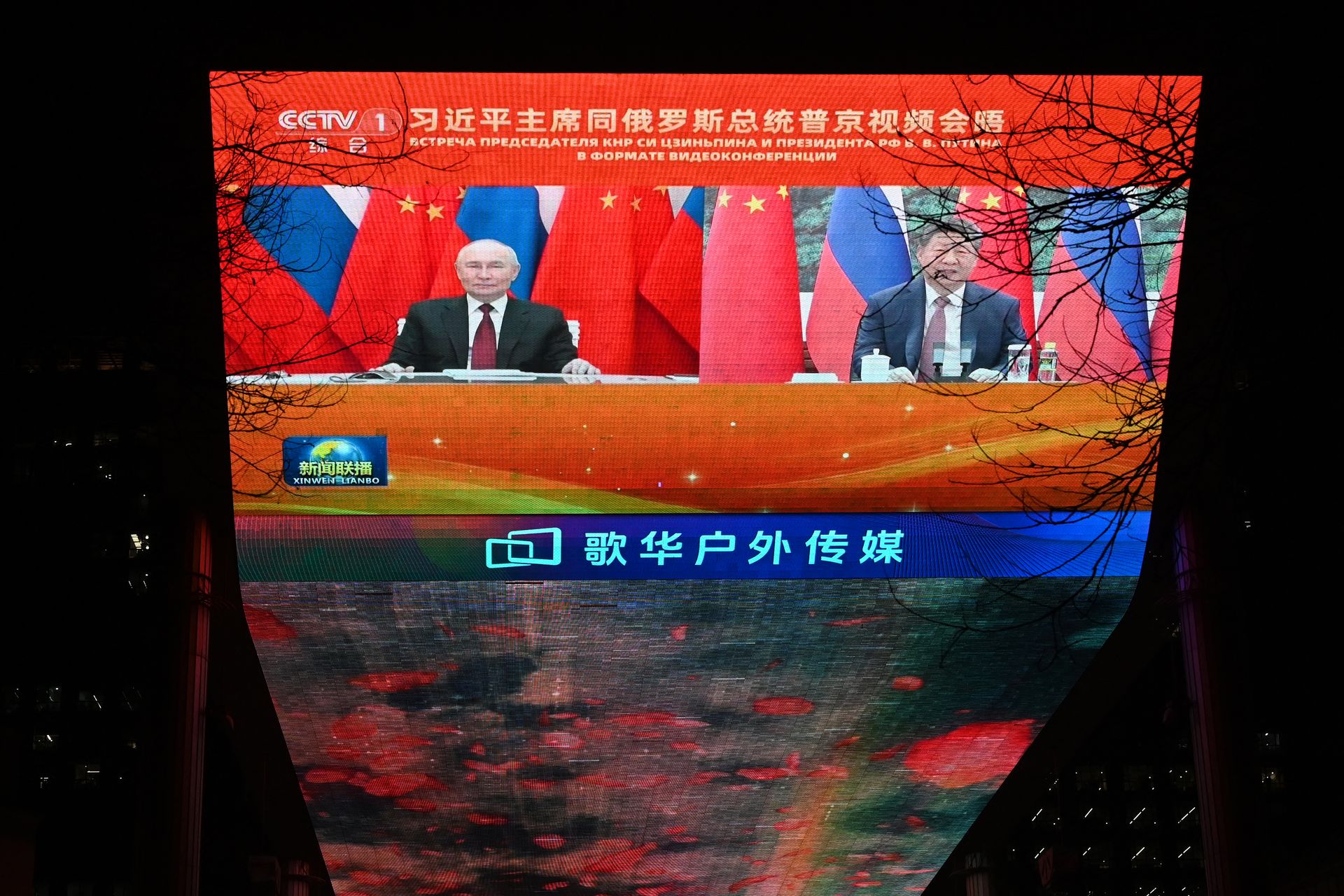
Reuters reported that China secretly trained about 200 Russian military personnel in 2025, with some later fighting in Ukraine, signaling deeper Beijing-Moscow military cooperation than previously known. The training reportedly focused on drone warfare, electronic warfare, demining, and counter-drone tactics at Chinese facilities in Beijing, Nanjing, and Shijiazhuang. The disclosure heightens geopolitical risk around the Russia-Ukraine war and could weigh on sentiment toward China-related defense, sanctions, and broader risk assets.
This is less about immediate battlefield incrementality than about Beijing crossing a threshold from dual-use ambiguity into repeatable force-multiplication for Moscow. The most important second-order effect is that China is now helping compress the Russian learning curve in the exact domains that have made the war expensive for both sides: drone saturation, EW, and counter-UAS. That should raise the expected attrition rate for Ukrainian frontline logistics and air-defense coverage over the next 1-3 quarters, even if the headline combat balance does not shift decisively. For defense supply chains, the signal is bearish for any assumption that Western sanctions are cleanly isolating Russian battlefield adaptation. If Chinese instructors, systems, and doctrine are being transferred into Russian training pipelines, then Russian demand will increasingly shift from imported finished weapons toward components, software, optics, batteries, RF gear, and industrial machinery that are harder to police. That favors Western vendors of counter-drone, ISR, and EW systems, but hurts niche European suppliers exposed to prolonged procurement delays if governments reallocate budgets toward replenishment and homeland defense. The bigger market implication is that geopolitical risk premia should rise, but the trade is asymmetric by asset class: broad market beta is unlikely to care unless there is a visible escalation in sanctions enforcement or a fresh China-related secondary-sanctions regime. The near-term catalyst is diplomatic: if the upcoming leadership meeting yields overt military language or new evidence of training throughput, expect a fast repricing in defense names and Asia-exposed industrials. The contrarian miss is that investors may overfocus on headline symbolism and underprice how durable, cheap, and scalable this kind of training support is relative to shipping finished munitions.
AI-powered research, real-time alerts, and portfolio analytics for institutional investors.
Request DemoOverall Sentiment
strongly negative
Sentiment Score
-0.55
