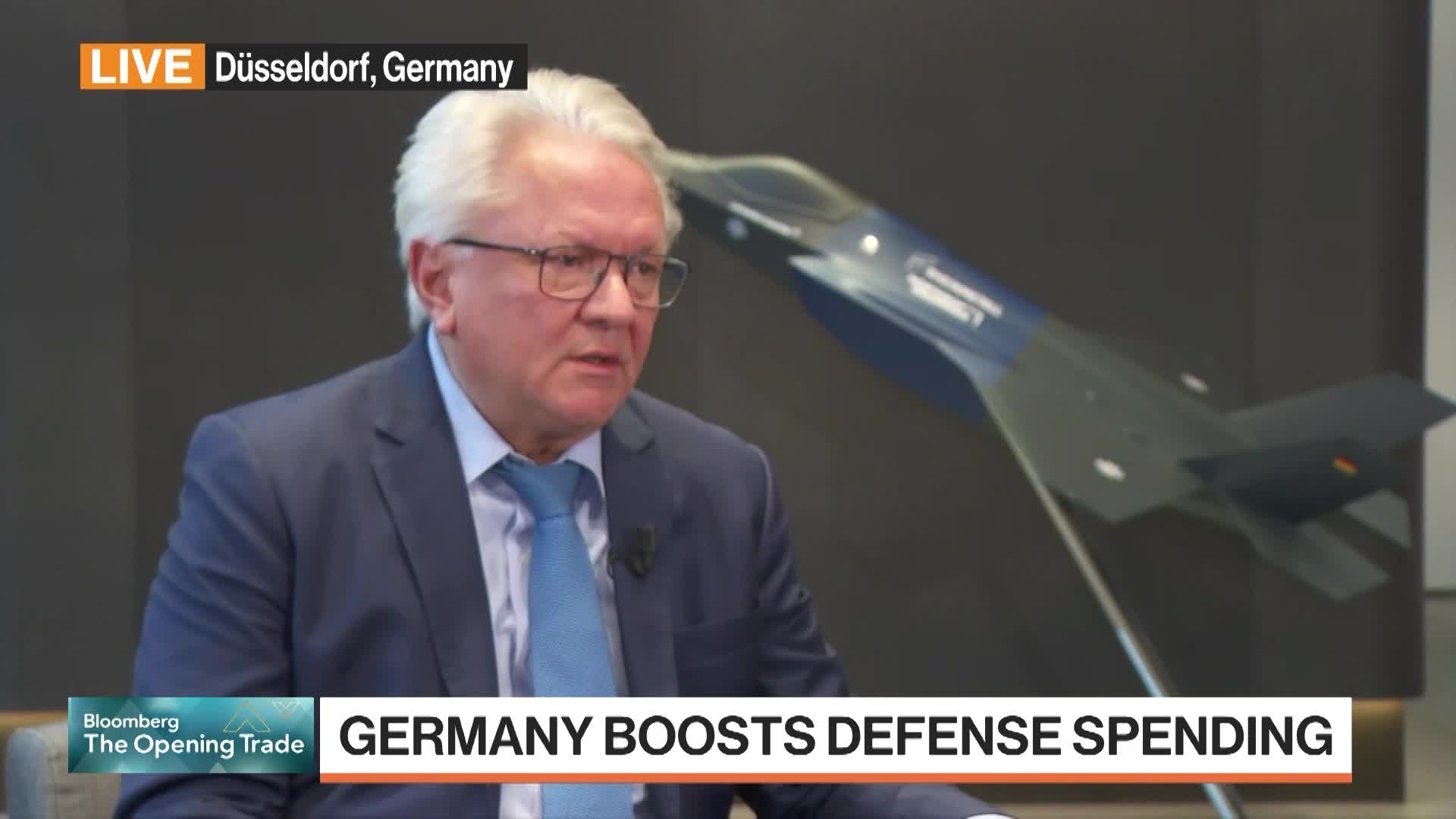
Rheinmetall's management says a potential Ukraine peace deal would have limited direct revenue impact—the company estimates roughly €1bn of Ukraine-related business versus a much larger NATO/European backlog—but could be accelerated if seized Russian assets are monetized and used for reparations. The group is aggressively expanding capacity, building 13 factories and doubling/tripling existing plants to meet what it expects to be sustained high demand for munitions, vehicles and electronics over the next 10–15 years; management stresses strong government defense budgets and a technological edge over Russia.
Market structure: The immediate winners are European defense OEMs and tier-1 suppliers (Rheinmetall-style builders of vehicles, ammunition and electronics) and upstream steel/chemicals producers; losers include pure-play Russian exporters and civilian-capex discretionary sectors that compete for government funding. Rheinmetall’s comment that Ukraine is ~€1bn vs a much larger NATO pipeline implies pricing power and multi-year backlog visibility (2–5 year horizon) even if Ukraine demand drops short-term. Capacity expansion (13 factories) signals supply will scale but creates short-term capex and working-capital drag.
Risk assessment: Tail risks include an abrupt peace (materially reduces marginal Ukraine orders but not core NATO demand), political U-turns on defense budgets in key EU states (electoral risk), and execution/supply-chain failures (skilled labor, explosives feedstocks, microelectronics). Hidden dependencies: access to critical inputs and export licenses; catalyst accelerants include monetization of frozen Russian assets (>€50–100bn would materially shorten procurement cycles). Time buckets: immediate (days) volatility on headlines; short-term (3–12 months) execution and margin pressure; long-term (1–5 years) structurally higher revenue if governments sustain budgets.
Trade implications: Prefer selective long-alpha in Rheinmetall (RHM.DE) and upstream metal/chemicals (e.g., ArcelorMittal MT) while underweight long-duration Euro sovereigns (expect fiscal issuance + yields). Use relative-value to express conviction: long Europe-focused defense vs global diversified contractors that have larger commercial exposure. Options: use 9–12 month call spreads to capture upside while capping capital; size at 1–3% NAV per idea.
Contrarian angles: Consensus understates execution risk from rapid factory builds — overcapacity by 2026 could compress margins if demand moderates. Historical parallel: 2014 rearmament spikes faded as political focus shifted; if EU spending falters, high-multiple defense names could correct >20–30%. Hedge with tail protection (OTM puts) and profit-take thresholds on +25–35% moves.
AI-powered research, real-time alerts, and portfolio analytics for institutional investors.
Request DemoOverall Sentiment
moderately positive
Sentiment Score
0.45
