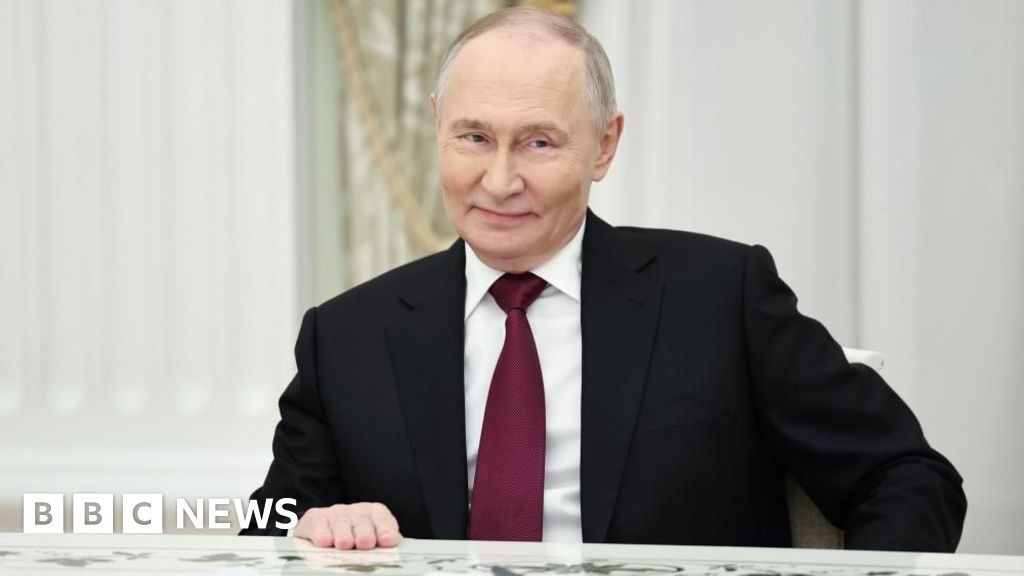
Five hours of Moscow talks between Vladimir Putin and a US delegation led by Trump's special envoy produced no breakthrough, with the Kremlin calling parts of the US-backed draft peace plan unacceptable and key disagreements remaining over territorial concessions and European security guarantees. Fighting continued on multiple fronts (Pokrovsk, Vovchansk, Kupyans), while Kyiv and European partners have pushed back on elements of a 28-point plan seen as favorable to Russia, leaving the negotiation process unresolved and sustaining geopolitical risk that could support defense sectors and commodity risk premia while weighing on regional assets and broader risk appetite.
Market structure: A failed diplomatic breakthrough is positive for defense and energy cyclicals and negative for European growth-sensitive assets. Expect sustained order backlog and pricing power for prime defense contractors (Lockheed, RTX, Northrop) as governments fund readiness; energy producers (XOM, CVX, XLE) gain from higher risk premia on supply concerns. Risk-off flows should bi-directionally support gold and US Treasuries while pressuring the ruble and peripheral European FX.
Risk assessment: Tail risks include NATO involvement (assigned probability 2–5% over 12 months) and a partial EU gas cutoff this winter (10–15% chance) which could spike Brent >$110/bbl; cyber-attack or sanctions escalation on payment rails is a 5–10% tail. Immediately (days) expect VIX +20–40% on headlines and EM FX stress; over weeks–months defense order announcements and EU fiscal responses drive equity re-rating; long term (quarters+) persistent defense capex and energy re-shoring reshape supplier supply chains.
Trade implications: Favor tactical longs in defense and energy and safe havens while hedging geo-political reversal risk. Use sector ETFs (ITA, XLE) and core primes (LMT, RTX, NOC) with 3–9 month targets of +12–20% and hard stops at 7–10%. Implement volatility-aware option overlays (see decisions) rather than outright leveraged directional bets; trim Europe beta, underweight cyclical consumer and airlines (JETS) into any risk-off spikes.
Contrarian angles: Markets may be underpricing a protracted stalemate rather than rapid escalation — that favors quality, cash-generative defense/energy names but penalizes high-multiple cyclicals. Conversely, a surprise thaw (probability ~15% if quid-pro-quo concessions emerge) would crush defense rerating and Europe shorts; consider allocation symmetry. Historical parallel: 2014–16 showed defense equities outperformed for years after a frozen conflict — but liquidity and sanctions regimes differ this cycle, raising idiosyncratic execution risk.
AI-powered research, real-time alerts, and portfolio analytics for institutional investors.
Request DemoOverall Sentiment
moderately negative
Sentiment Score
-0.42
