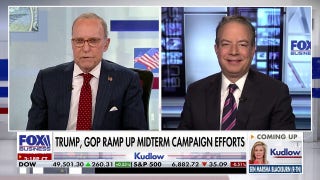
Senate Banking Committee Chair Tim Scott said he does not believe Fed Chair Jerome Powell committed a crime in his testimony about the Federal Reserve’s over-budget headquarters renovation, calling Powell inept but not criminal. The DOJ has opened a criminal inquiry amid pressure from President Trump, who has nominated Kevin Warsh to replace Powell, while Sen. Thom Tillis is vowing to block Fed nominations until the probe concludes — a development that increases political uncertainty around Fed leadership and could influence future monetary policy decisions.
Market structure: The Powell/DOJ story raises political risk to Fed independence that will transiently increase term premium and option-implied volatility. If the nomination fight delays a new chair >60 days, expect safe-haven flows: 2y yields could fall 10–30bps while 10y yields trade flatter or down 5–15bps; banks (XLF) will underperform vs long-duration defensives (TLT/GLD) in the short run. Conversely, a quick confirmation of a market-friendly nominee (<=60 days) would re-price policy risk lower and push yields 10–25bps higher, benefiting banks and cyclical equities.
Risk assessment: Tail risks include DOJ bringing charges or a prolonged Senate blockade creating a multi-week policy vacuum that triggers a 5–15% S&P drawdown and 30–60bps spike in the term premium. Time horizons: immediate (days) = vol spikes; short-term (weeks–months) = nomination outcome driving rate re-pricing; long-term (quarters) = credibility erosion leading to permanently higher term premium if politicization persists. Hidden dependencies: funding-sensitive regional banks, repo/tax flows, and FX carry can amplify moves; catalysts are DOJ announcements, Banking Committee calendar, and next FOMC statement.
Trade implications: Favor convex, event-driven trades: hedged equity exposure and directional rate plays tied to Senate signals. Options and pairs give control of downside (buy VIX/put protection and use relative-value long financials vs long-duration bonds). Size moves small (0.5–3% per idea) and trigger entries on two specific signals: DOJ resolution or explicit Senate timeline within 30–60 days.
Contrarian angles: The market consensus underestimates how quickly confirmation (<=60 days) would steepen the front end; this setup creates a mispricing favoring short-duration long-bank exposure financed by long-duration shorts. Historical parallels: nomination fights (Greenspan/Volcker eras aside) often produce short-lived volatility, not permanent policy shifts — so insurance-priced assets (TLT, GLD) may be overbought if resolution comes quickly. Unintended consequence: aggressive hedging by institutions could amplify rallies in banks once political risk subsides.
AI-powered research, real-time alerts, and portfolio analytics for institutional investors.
Request DemoOverall Sentiment
neutral
Sentiment Score
-0.05
