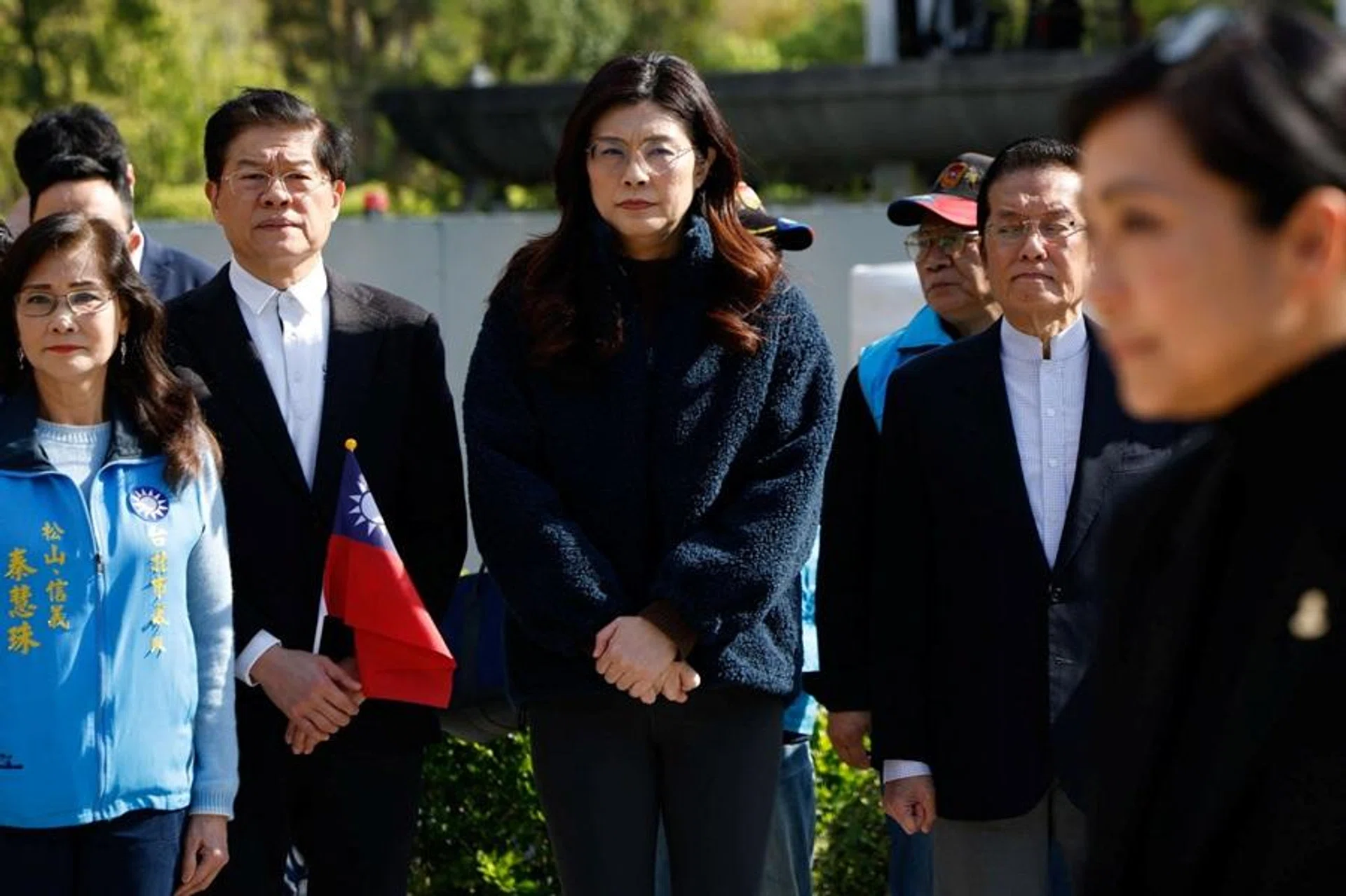
Cheng Li-wun has accepted an invitation from the CCP Central Committee to visit Jiangsu, Shanghai and Beijing from 7–12 April, signalling a high-level Cheng–Xi meeting aimed at advancing cross-strait peace under the 1992 Consensus. The trip seeks to highlight economic ties and business cooperation but faces strong headwinds from deep KMT factionalism, DPP criticism and election-year political sensitivities; internal disputes include competing defence budget proposals (a party-backed NT$380 billion + N vs. Taichung mayor’s NT$800 billion–NT$1 trillion range) and concerns about arms-sale implications. Expect limited near-term policy or transactional outcomes; monitor political-risk sentiment for Taiwan equities, cross-strait trade exposure and defence contractors rather than a market-wide shock.
A tactical thaw in cross-strait signaling is likely to compress the elevated geopolitical risk premium that has been embedded in Taiwan-focused assets over the past 24 months, creating a window for short-term carry and multiple expansion across equities and FX. Expect a measurable move in TWD forwards (tighter risk premium) within 1–3 months if media and official signals remain conciliatory; the same window is where local election noise can still produce idiosyncratic volatility in municipal names.
Operationally, the most immediate supply-chain effect will be inventory and services sequencing: Taiwanese exporters and EMS providers may accelerate shipments and cross-strait collaboration to secure near-term orders, favoring OSATs and contract manufacturers over pure-play leading-node fabs. Over 6–24 months, however, regulatory alignment or preferential market access could redirect lower-tech assembly and specialty IC production onto the mainland, pressuring margins for Taiwanese players focused on non-advanced nodes.
A lower-probability but high-impact outcome is a pause or slowdown in high-dollar external defense procurement tied to political de-escalation, which would dent the forward-sales visibility of vendors relying on that cycle; conversely, it opens markets for dual-use civilian suppliers and local defense contractors. Key catalysts to watch are (a) shifts in US diplomatic posture and arms sale timing within 30–90 days, (b) onshore official language and state media phrasing as a leading indicator, and (c) domestic electoral shocks that can rapidly re-price risk over weeks.
Net: position size should be time-limited and conditional. Trade windows of 3–12 months look most attractive for directional exposure; maintain hedges sized to cover a sharp 10–20% geopolitical re-rating event within days if deterrence signals re-emerge.
AI-powered research, real-time alerts, and portfolio analytics for institutional investors.
Request DemoOverall Sentiment
mixed
Sentiment Score
0.00
