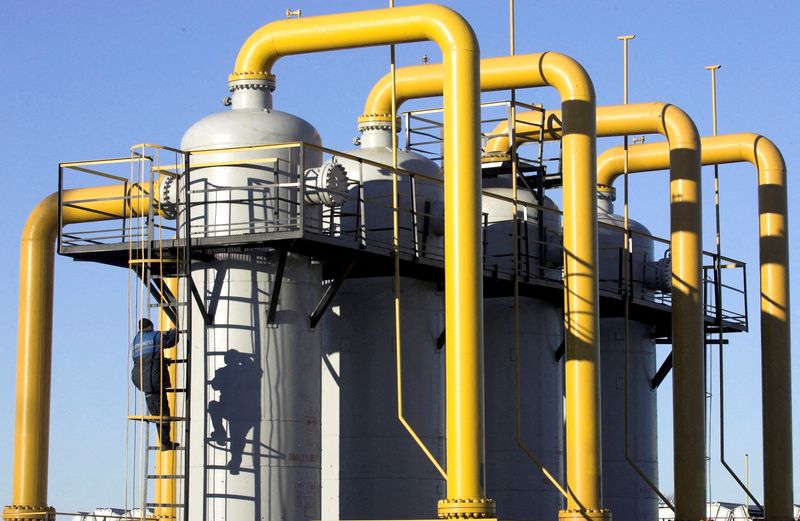
Henry Hub natural gas prices are down about 28% year-to-date, but Morgan Stanley sees long-term support from LNG export growth and rising power demand. Near-term pricing remains range-bound to slightly weaker as inventories sit about 5% above the five-year average and spring demand stays soft. The backdrop is still mixed for energy markets, with Iran-related geopolitical tensions and a 10.9% M/M jump in energy-related CPI underscoring volatility.
The setup is still a classic term-structure trade: near-dated gas can stay soft while forward demand tightens, so the cleanest expression is not outright bull exposure but optionality on the back end. The market is underpricing how quickly LNG and power load can absorb currently comfortable inventories once summer cooling demand, export ramp, and low hydro converge; that creates a path where prompt stays capped while 2026-2027 strips re-rate.
The second-order winners are the midstream and export infrastructure names with volumetric exposure, not just dry gas producers. If feedgas grows into a structurally tighter balancesheet, toll-like cash flows at LNG terminals and pipes should de-risk while upstream names remain trapped by low spot realizations and hedged production. The losers are high-cost Appalachian gas producers and any industrials with limited pass-through on energy inputs if gasoline and power costs keep stoking inflation expectations.
The main risk is timing: a mild spring, elevated storage, and any de-escalation in Hormuz can extend the oversupply window by 1-2 quarters and punish early longs. But the asymmetry shifts sharply if summer weather normalizes or hydro remains impaired; a 1 bcf/d change in power burn is material enough to flip sentiment fast because marginal LNG trains and utilities compete for the same molecules. Consensus likely overweights current spot weakness and underweights how quickly export demand can tighten basis and strip pricing once inventories stop looking benign.
The contrarian angle is that this is less a commodity call than a re-rating call on infrastructure and power scarcity. If gas remains cheap into 2026, the real trade is that lower input costs expand LNG export margins and keep gas-fired generation economical versus constrained hydro, making the winners those with scale, takeaway, and export optionality rather than pure production beta.
AI-powered research, real-time alerts, and portfolio analytics for institutional investors.
Request DemoOverall Sentiment
mildly negative
Sentiment Score
-0.15
Ticker Sentiment
