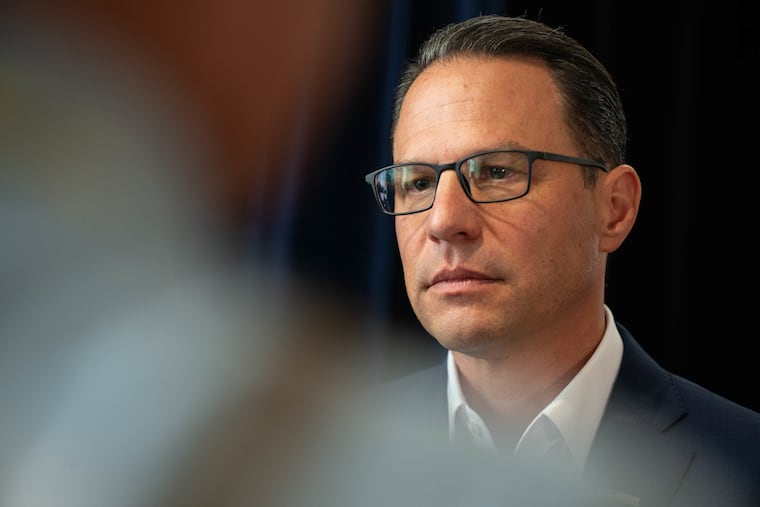
A weeks‑long dispute over President Trump’s initial decision to invite only Republican governors — and his subsequent disinvitation and re‑invitation of Maryland Gov. Wes Moore and Colorado Gov. Jared Polis — threatened the nonpartisan character of the National Governors Association ahead of a White House breakfast. Pennsylvania Gov. Josh Shapiro attended after the re‑invitations and used the closed‑door meeting to press federal officials on state issues including avian flu, withheld broadband funding and HHS policies affecting rural residents, while several Democrats such as New Jersey Gov. Mikie Sherrill declined to attend in protest; governors from both parties subsequently reiterated a willingness to work with the administration despite the turmoil.
Market structure: The political spat mostly redistributes gov-to-state policy levers — winners are broadband equipment vendors (NOK, ERIC, CSCO) and large ISPs that can absorb BEAD/ Treasury awards; losers are small regional contractors/ISPs and poultry processors (TSN, PPC) if avian flu spreads. Pricing power will tilt to vendors with scale and supply-chain resilience: expect equipment OEM gross margins to improve if BEAD funds are released within 30–90 days and backlog fills, while small contractors face margin compression and payment timing risk. Commodity supply signals: a confirmed avian-flu cluster would tighten poultry supply, pushing wholesale chicken prices +5–15% in 1–3 months based on historical outbreaks.
Risk assessment: Tail risks include protracted Treasury withholding of broadband funds (>90 days) causing project cancellations and state budget stress, and an expanded avian-flu outbreak triggering export bans — both low-probability but high-impact. Time horizons: immediate (days) for headlines and USDA outbreak confirmations; short-term (weeks–months) for funding disbursement and contract awards; long-term (quarters) for capex rollout and market-share shifts. Hidden dependencies: federal procurement rules, incumbent vendor relationships, and local permitting capacity; catalysts are Treasury announcements, USDA/APHIS outbreak bulletins, and large contract awards to NOK/ERIC/CSCO.
Trade implications: Favor scalable equipment OEMs and Tier-1 ISPs ahead of BEAD releases, hedge protein exposure and regional muni duration risk. Use options to asymmetrically express risk around discrete catalysts (funding release or USDA reports) rather than large directional equity exposure. Expect modest impact on rates/state credit spreads if federal/state friction persists; rotate 3–6 month duration out of exposed state munis into short-duration instruments.
Contrarian angles: Consensus underestimates how BEAD awards will concentrate with incumbents — NOK/ERIC/CSCO stand to capture >50% of equipment TAM for initial waves, so a focused 6–12 month play may outperform broader telecom ETFs. The market may overreact to partisan theater but underreact to execution risk: procurement delays could create 10–20% short-term downside in small-cap contractors. Unintended consequence: aggressive legal or civil-rights scrutiny could slow federal operations, delaying funding and magnifying alpha for patient, capitalized winners.
AI-powered research, real-time alerts, and portfolio analytics for institutional investors.
Request DemoOverall Sentiment
neutral
Sentiment Score
0.00
