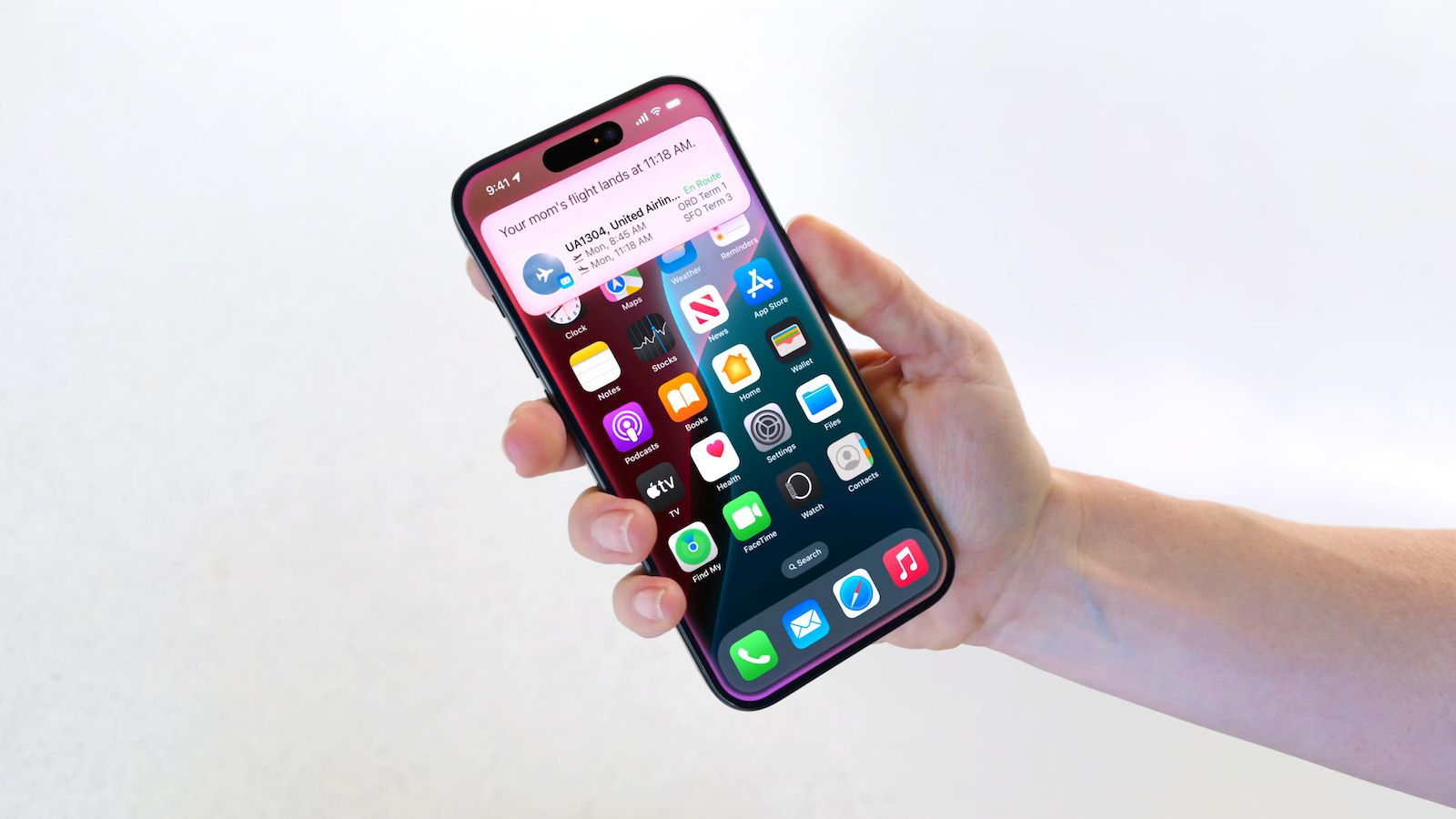
Apple has agreed to use Google's Gemini as the foundation for a more personalized Siri, enabling capabilities such as richer factual Q&A, storytelling, emotional support, task assistance (e.g., booking travel) and creating content in Notes; Apple says it will fine‑tune Gemini and strip Google/Gemini branding. The revamped assistant is expected to begin shipping with iOS 26.4 in March/April with additional context-aware and proactive features unveiled at WWDC and some capabilities delayed to iOS 27; the deal raises competitive scrutiny as noted by public comments from industry figures.
Market structure: The immediate winners are AAPL (stronger device differentiation, higher attach-rate for paid features) and GOOGL/GOOG (Gemini licensing revenue + cloud) but the economic split favors Apple over time because Apple controls UX, billing, and branding — expect incremental services ARPU lift of ~1–3% over 12–24 months if adoption is broad. Losers are niche voice/assistant vendors and ad-heavy search incumbents that could see query volume reallocation; handset OEMs without similarly capable assistants face pricing pressure. Cross-asset: a visible product win for AAPL should compress its equity risk premium (supporting tighter credit spreads for tech paper) while increasing implied equity volatility into WWDC and iOS releases.
Risk assessment: Tail risks include a targeted antitrust action in US/EU that could force separation of model access or data-sharing restrictions (low-probability, high-impact within 6–24 months), operational risk from data/privacy breaches, and commercial terms renegotiation between Apple and Google. Near-term (days–weeks) risk is event-driven volatility around iOS 26.4 (Mar/Apr) and WWDC (June); medium-term (3–12 months) is adoption and monetization; long-term (2+ years) is ecosystem lock-in and regulatory restructuring. Hidden dependency: Apple’s ability to fine-tune and restrict telemetry may blunt Google’s direct monetization and reduce Google’s bargaining power.
Trade implications: Tactical: take AAPL exposure pre-iOS 26.4 and WWDC (expected catalysts) and a smaller, longer-dated GOOGL position to capture Gemini upside while hedging regulatory risk. Use options to exploit event vol — buy 3–6 month AAPL 8–12% OTM call spreads into iOS/WWDC and buy 9–12 month GOOGL 20% OTM call spreads rather than outright stock to limit capital at risk. Sector rotation: overweight Consumer Electronics/Software & Services and AI infrastructure, trim pure-play ad-reliant media and small AI voice plays.
Contrarian angles: Consensus rewards both names; market underestimates that Apple’s fine-tuning and absent Gemini branding limit Google’s visible monetization and marketing lift — that suggests AAPL could capture disproportionate pricing; conversely regulatory scrutiny could materialize if Musk/X noise becomes political leverage. Historical parallel: Microsoft/OpenAI deal drove cloud uptake but also political scrutiny and slow direct ad monetization; similar mixed outcome is plausible here, so position sizes should reflect asymmetric regulatory tail risk.
AI-powered research, real-time alerts, and portfolio analytics for institutional investors.
Request DemoOverall Sentiment
mildly positive
Sentiment Score
0.25
Ticker Sentiment
