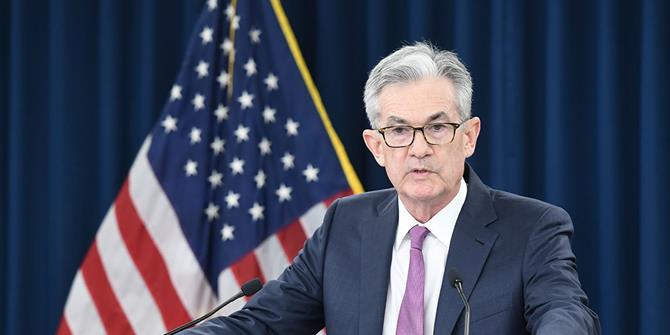
The Federal Reserve cut interest rates three times in 2025 (September, October and December), shifting policy from fighting inflation toward supporting growth and bringing the fed funds range to roughly the mid‑3% area, amid a weakening labor market and persistent inflation. The year featured significant political pressure from President Trump — including public criticism of Chair Powell, removal of a governor, a nomination push, and tariff actions that raised inflation concerns — producing internal Fed divisions, reliance on private data during a government shutdown, market volatility and a dot‑plot that generally forecasts at most one further cut in 2026.
Market structure: Political pressure on the Fed + tariff-driven price shocks creates a two-speed market. Beneficiaries: domestic industrials, commodities (oil, base metals) and asset managers (JPM, GS, LPLA) that earn fee/revenue from higher volatility and fiscal-driven risk-assets; losers: import-dependent retailers/consumer discretionary and banks with large deposit-funded NIMs (WFC, regional banks) as 25–75bps of Fed easing squeezes margins. Expect a 25–75bp downward drift in 2–5y yields if markets price 1–2 cuts in H1 2026; USD likely to weaken 1–3% on easing expectations but could spike on political shocks.
Risk assessment: Tail risks include (A) a forced dismissal/replace of Powell that spikes the term premium +75–150bps within days, and (B) tariffs creating persistent inflation adding 0.2–0.6pp to CPI forcing Fed tightening within 6–12 months. Immediate horizon (days): nomination headlines/Court rulings drive volatility; short-term (weeks–months): CPI, payrolls and tariff announcements shift rate-path bets; long-term (quarters): fiscal expansion + structural tariffs reshape margins and capex. Hidden dependency: markets currently price using private-sector data — if official data resumes with a divergence, rapid repricing can occur.
Trade implications: Go long duration selectively: establish a 2–3% portfolio position in IEF (2–10y bias) or 10y futures targeting a 30–50% ETF gain if yields drop 30–60bps over 3–6 months; hedge with 1% position in GLD (gold) for political/real-rate risk. Pair trade: long GS (1–2%) and JPM (1–2%) vs short WFC or KRE (2% net short) to exploit fee/ trading resilience vs NIM pressure; execute 3-month put spread on KRE (buy 2% notional) to cap cost. Entry: stagger after Powell-succession clarity or CPI prints — add on a 10y yield move >20bps in either direction.
Contrarian angles: Consensus expects only one cut — underpriced is the scenario of a highly dovish new chair (2+ cuts priced quickly) which would push real yields lower and outperform growth/commodity cyclicals; conversely, markets understate sticky tariff inflation where TIPS (TIP) outperform nominal Treasuries by >100bps over 6–12 months. Historical parallel: 1970s policy/political mix shows outsized volatility and regime shifts — size positions small (1–3% each) and use options to asymmetrically hedge against regime flips.
AI-powered research, real-time alerts, and portfolio analytics for institutional investors.
Request DemoOverall Sentiment
moderately negative
Sentiment Score
-0.35
Ticker Sentiment
