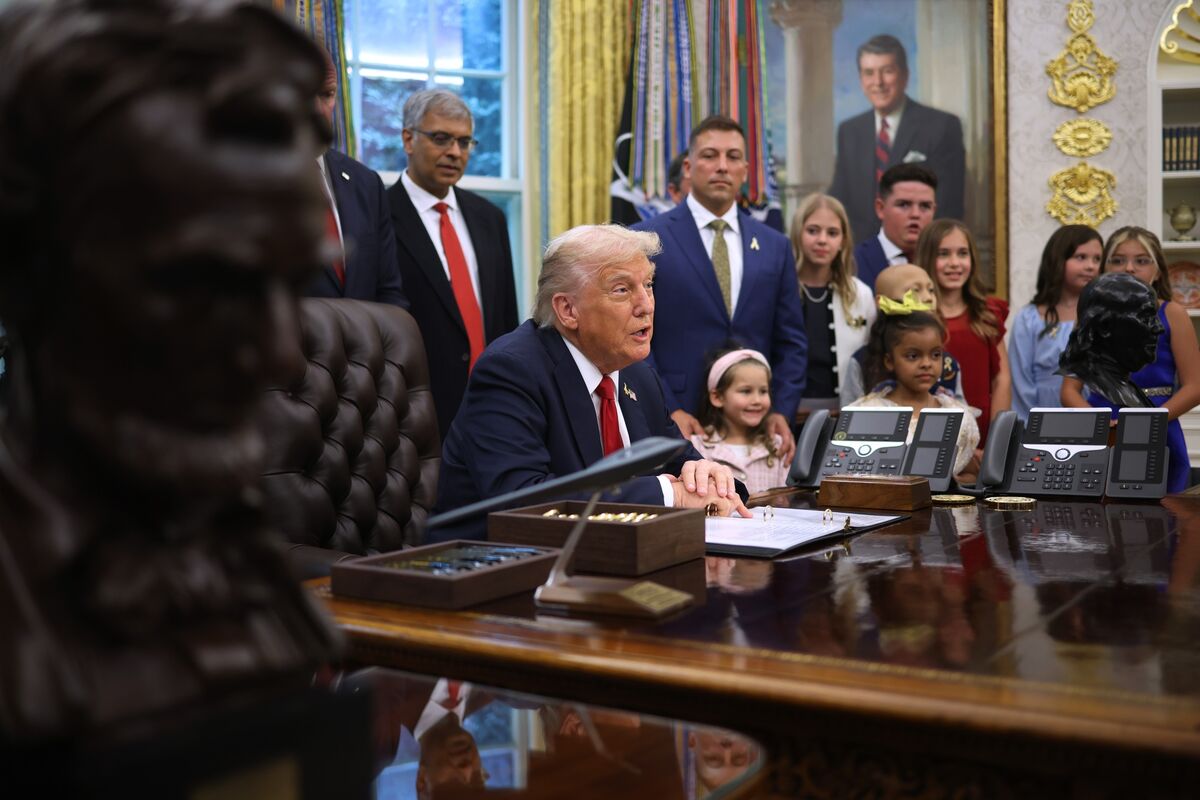
President Trump has directed the federal government to utilize artificial intelligence to advance childhood cancer research, allocating $50 million to the National Institutes of Health for this initiative. This targeted investment aims to leverage existing data to accelerate the discovery of new treatments and prevention strategies, signaling a strategic focus on AI applications in medical research despite broader administrative budget cuts to the agency.
The Trump administration has directed a $50 million investment into the National Institutes of Health (NIH) specifically for the application of artificial intelligence in childhood cancer research. This initiative aims to leverage existing large datasets to accelerate the discovery of new treatments and prevention strategies. While the directive is framed optimistically, its financial scale is modest in the context of the overall federal research budget. The key insight lies in the strategic contradiction: this targeted funding occurs even as the administration pursues broader budget cuts at the NIH. This signals a clear government prioritization of AI-driven medical innovation over other research areas, highlighting a thematic focus on technology's role in healthcare. The absence of any named corporate entities suggests the immediate impact is confined to the public research sector, with potential downstream opportunities for private AI and biotech firms that can align with this federal mandate.
AI-powered research, real-time alerts, and portfolio analytics for institutional investors.
Request DemoOverall Sentiment
moderately positive
Sentiment Score
0.50
