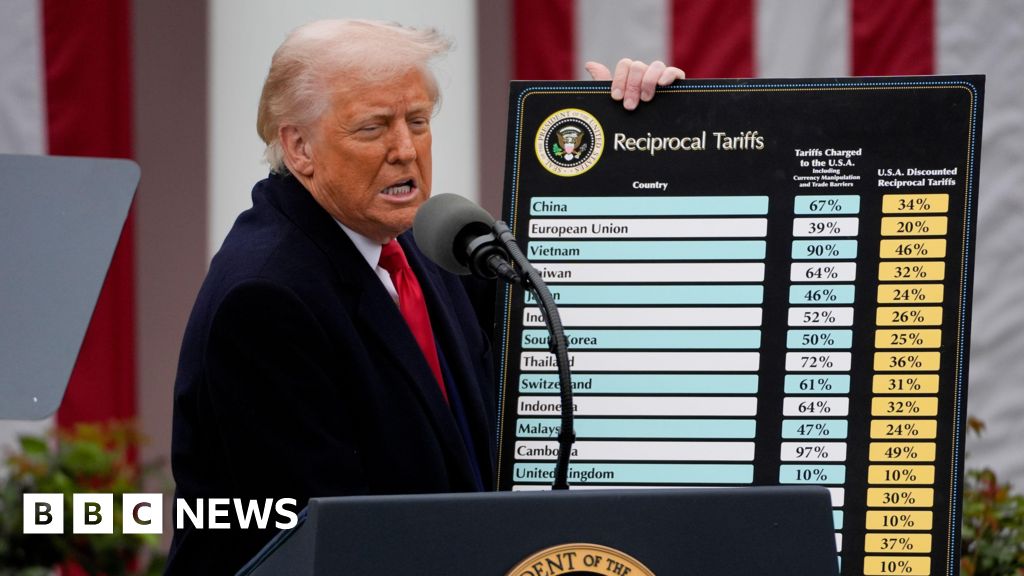
Average US effective tariffs rose to roughly 10% (from ~2.5% a year earlier), coinciding with a ~30% drop in US imports from China and >25% decline in US exports to China; Chinese goods fell to <10% of US imports (vs >20% in 2016). About 55% of new tariff costs were passed to consumers, boosting US inflation by ~0.5 percentage points and contributing to business strains, manufacturing contraction and lower foreign investment; the US must now return over half of ~$260bn in collected tariff revenue after a Supreme Court ruling. Political and soft-power fallout includes a 20% plunge in Canadian travel to the US (costing >$4bn), shifting trade partnerships (increased links with Vietnam/Mexico and Canada reducing EV tariffs toward China), and heightened election- and policy-risk that could entrench partial decoupling.
Policy-driven trade friction has created a persistent political-risk premium that is already being capitalized into corporate capex and location decisions; once factories and supplier networks are relaunched in new jurisdictions the switching costs (training, real estate, logistics contracts) produce multi-year inertia even if headline tariffs ebb. Expect a two-track outcome: accelerated industrial activity and asset returns in alternate manufacturing hubs and logistics nodes, and a longer-than-anticipated margin headwind for US firms that import complex inputs or rely on discretionary consumer demand.
Second-order winners are not just Asian or Mexican exporters but the asset classes that sit between factories and shoppers — port terminals, regional trucking/logistics, container lessors and industrial automation vendors — which should see step-function demand as shipping patterns re-route. Conversely, consumer-facing leisure and mid-market retail that compete on discretionary spend are exposed to a sustained affordability shock as import cost pass-through compounds with wage pressure.
Key catalysts that can re-rate positions are highly binary and time-staggered: near-term (weeks–months) legal and legislative actions that alter tariff incidence; medium-term (6–24 months) corporate capex announcements and factory openings; long-term (2–5 years) geopolitical realignments and reciprocal protectionist measures that could broaden contagion. Tail risks include a coordinated protectionist wave among multiple economies or, conversely, a comprehensive trade rollback that would compress the political-risk premium rapidly.
The consensus underestimates the persistence of logistics winners and overestimates quick corporate reshoring for the most complex supply chains; this asymmetry creates attractive pairs where you can own the infrastructure beneficiaries while hedging exposure to cyclical demand volatility.
AI-powered research, real-time alerts, and portfolio analytics for institutional investors.
Request DemoOverall Sentiment
mildly negative
Sentiment Score
-0.25
Ticker Sentiment
