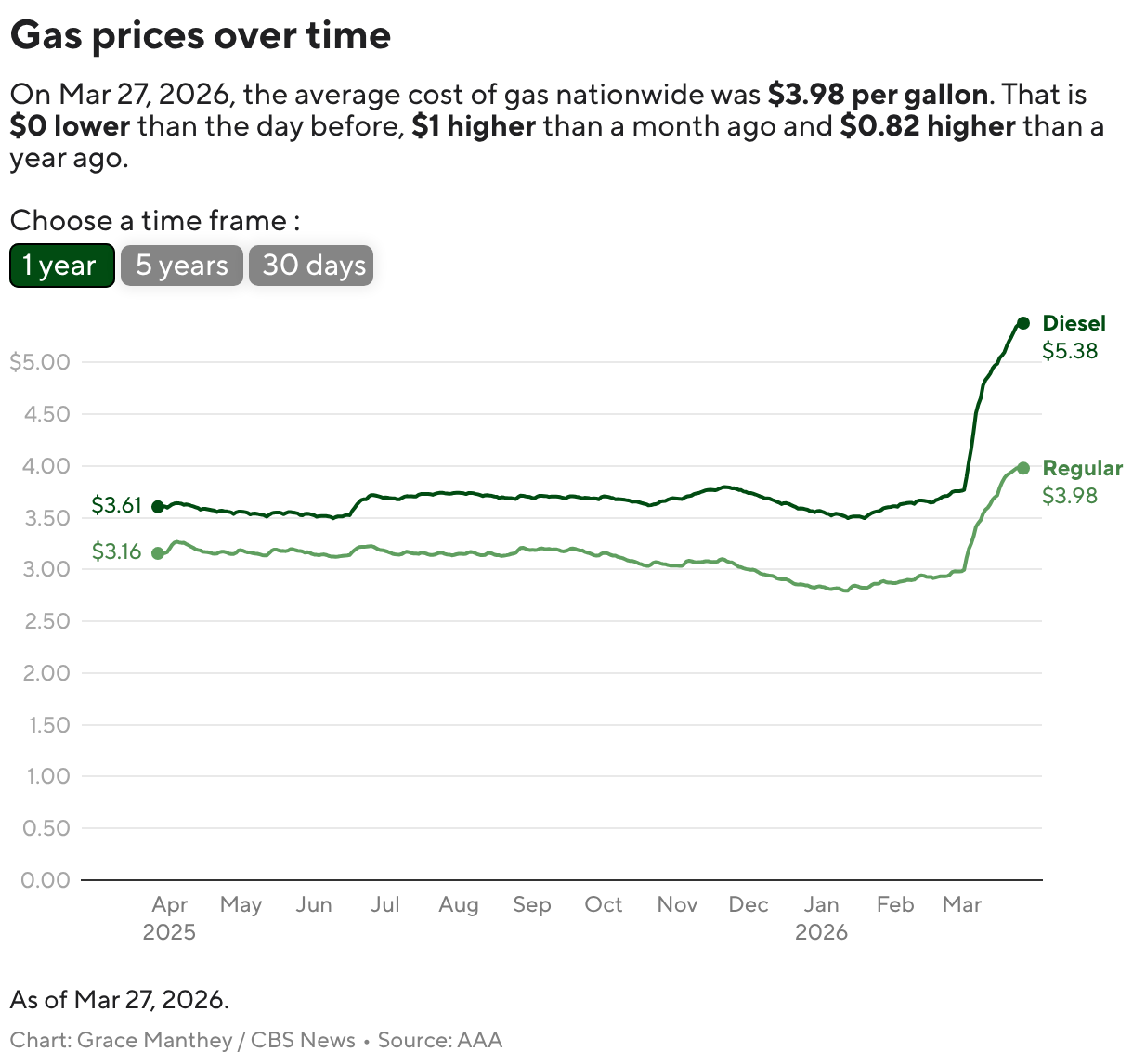
U.S. inflation accelerated to a 3.8% annualized rate in April, with higher energy prices accounting for 40% of the monthly increase. Gasoline rose more than 28% year over year, energy costs nearly 18%, and diesel is near record highs, putting pressure on consumers, airlines, shipping, and food prices. Economists now expect inflation to move above 4% in coming months, reducing the odds of Fed rate cuts this year.
This is less a one-off inflation scare than a margin transfer from discretionary sectors to energy-linked cash flows, and the second-order hit to demand has not fully shown up yet. The biggest near-term loser is the consumer balance sheet: higher fuel and utility bills function like a regressive tax, so lower-income cohorts will cut back first on autos, apparel, dining, and travel within 1-2 payroll cycles. That is the setup for weaker volume growth in consumer-facing equities even before the headline CPI peak is printed.
The more interesting macro implication is that inflation is re-anchoring through services and logistics, not just commodities. Diesel and jet fuel pressure should keep freight, parcel, airline, and food distribution margins under strain for multiple quarters because contracts reprice with a lag; that creates a slow-burn earnings downgrade cycle even if crude stabilizes. Power demand tied to AI data centers adds a second inflation vector that is structurally different from the war shock, making disinflation harder to re-establish quickly.
For rates, the market may be underestimating how long the Fed can stay boxed in. If inflation expectations drift higher while nominal growth holds up, front-end yields should remain sticky and real yields may rise, which is negative for long-duration equities and rate-sensitive cyclicals. The key catalyst risk is a sudden de-escalation or supply restart, but even then the lagged pass-through into utilities, food, and transport means inflation data will likely stay hot for several months.
The contrarian point: energy equities are not the cleanest expression here. If the shock is temporary but inflation persistence is real, the best relative winner may be quality value with pricing power rather than pure exploration exposure, because the market often fades oil after the initial spike while leaving inflation-sensitive multiples compressed longer than necessary. That favors hedges against consumer and transportation earnings, not a blanket long-energy trade.
AI-powered research, real-time alerts, and portfolio analytics for institutional investors.
Request DemoOverall Sentiment
strongly negative
Sentiment Score
-0.75
Ticker Sentiment
