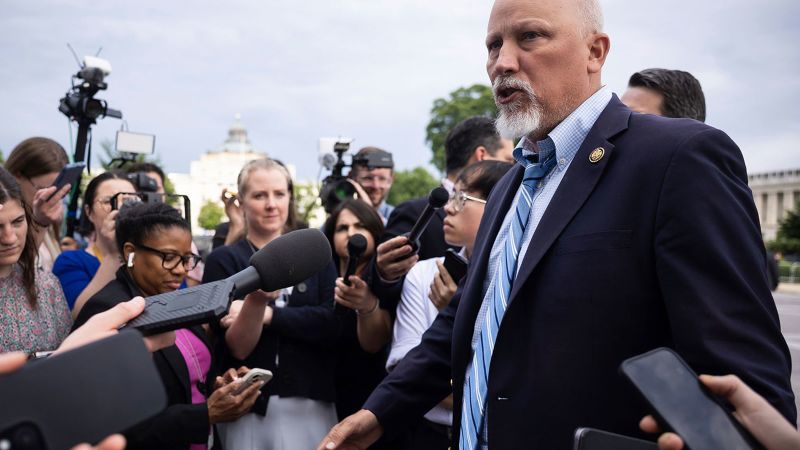
Representative Chip Roy is emerging as a key obstacle to President Trump's reconciliation bill in the House, leading a group of fiscal conservatives demanding significant spending cuts, particularly to Medicaid. Roy's opposition stems from concerns over the bill's impact on the national debt, potentially jeopardizing its passage given the narrow Republican majority. While negotiations are ongoing and Roy has shown some flexibility, his commitment to fiscal conservatism and past clashes with Trump suggest a difficult path to securing his support, which could also hinge on changes in the Senate.
The passage of President Trump's major reconciliation bill faces a significant hurdle in the House, primarily due to the staunch opposition from Representative Chip Roy and a small group of fiscally conservative Republicans demanding substantial spending cuts, reportedly in the trillions of dollars, with a particular focus on programs like Medicaid to address 'government red ink.' Roy's leverage is amplified by the narrow GOP majority, where as few as two defections beyond Representative Massie could derail the legislation. While negotiations are ongoing, with Roy indicating some progress ('We’re in a better spot than we were even 48 hours ago'), the final outcome remains highly uncertain, reflecting an 'Uncertain' overall tone and a low market impact score of 0.3 from associated signals. The situation highlights deep intra-party fissures, as Roy's demands for fiscal austerity, driven by a belief that this is a critical opportunity to 'significantly narrow the scope of the federal safety net,' clash with the objectives of moderate Republicans seeking alterations like a higher SALT cap and the broader party's desire to secure a legislative victory for Trump. Roy's consistent skepticism towards fiscal measures that increase deficits without commensurate spending cuts ('What I do not believe in is magic fairy dust that says the budget will magically balance if you cut taxes and never cut spending') underscores the difficulty in reaching a compromise, with potential implications for the U.S. fiscal outlook and specific government programs should his faction succeed in embedding deep cuts into the final bill.
AI-powered research, real-time alerts, and portfolio analytics for institutional investors.
Overall Sentiment
Neutral
Sentiment Score
-0.10
