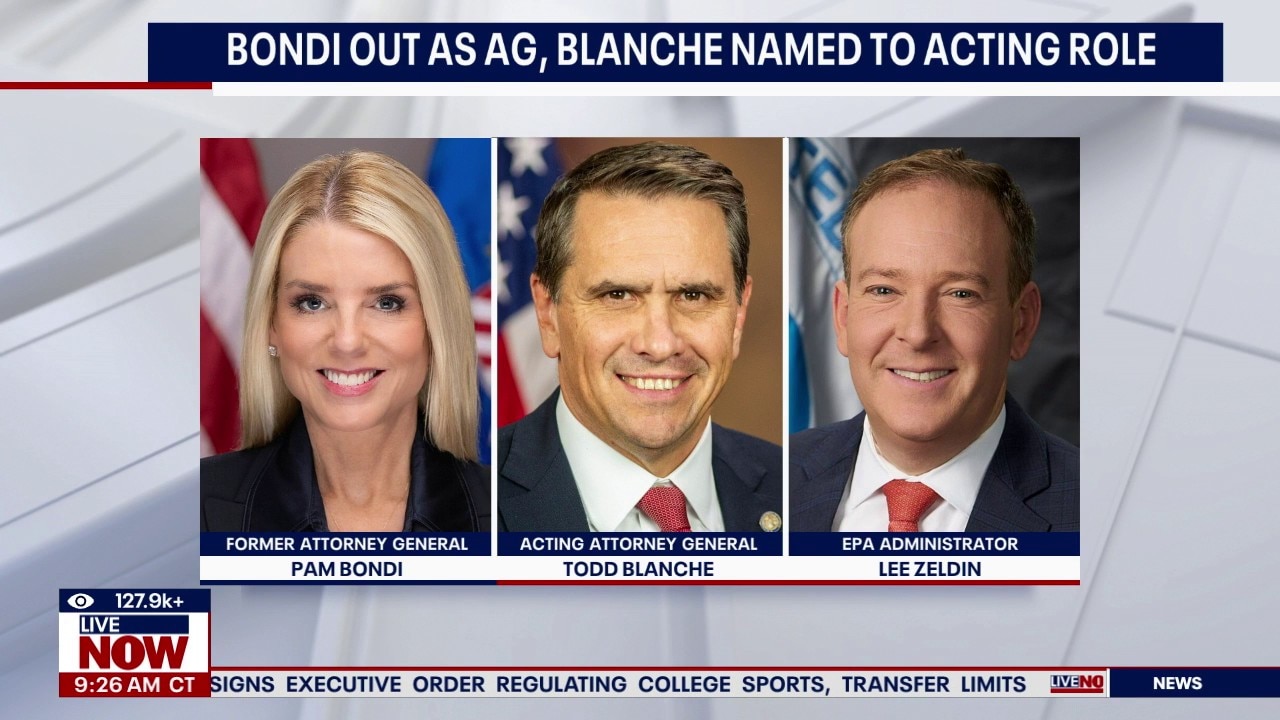
Key event: multiple cabinet departures and potential further shakeups in the Trump administration — DHS's Kristi Noem and DOJ's Pam Bondi are out, while Tulsi Gabbard (DNI), Labor Secretary Lori Chavez-DeRemer, and Commerce Secretary Howard Lutnick are reported as possible targets amid political disagreements, an inspector-general probe, and reputational issues. These personnel risks increase short-term political uncertainty ahead of crucial midterm elections and amid the Iran conflict but are unlikely to move markets materially beyond modest risk repricing.
Cabinet churn ahead of the midterms raises policy tail-risk and creates a discrete event window (now → midterms, 1–4 months) in which market narratives will re-price sectoral winners and losers. Rapid personnel turnover amplifies procurement and enforcement optionality: new appointees can accelerate contract awards or pause them pending reviews, moving near-term revenue timing for defense primes and homeland security vendors by quarters rather than years.
A change at the Justice/AG or national security posts is a binary for regulatory enforcement trajectories: a harder-line appointee fast-tracks antitrust and export-control actions (weeks → months to surface in filings), while a politically aligned, performance-focused hire can delay or de-prioritize cases, effectively providing temporary regulatory relief to targeted industries. That asymmetry creates outsized option value in names exposed to DOJ decisions (large tech, semiconductor suppliers) and in companies that benefit from stepped-up homeland security spending.
Second-order winners are contractors and cybersecurity firms that capture incremental discretionary spending if political messaging pivots to “security and performance.” Second-order losers include companies with high litigation sensitivity whose valuations embed low probability of aggressive enforcement — those valuations can gap lower on renewed filings or investigations. The practical tradeable implication: prefer defined-risk, event-driven instruments (options, spreads, short-duration exposure) that monetize a directional policy swing while capping headline-driven downside over the 1–12 month horizon.
AI-powered research, real-time alerts, and portfolio analytics for institutional investors.
Overall Sentiment
mildly negative
Sentiment Score
-0.15
Ticker Sentiment
