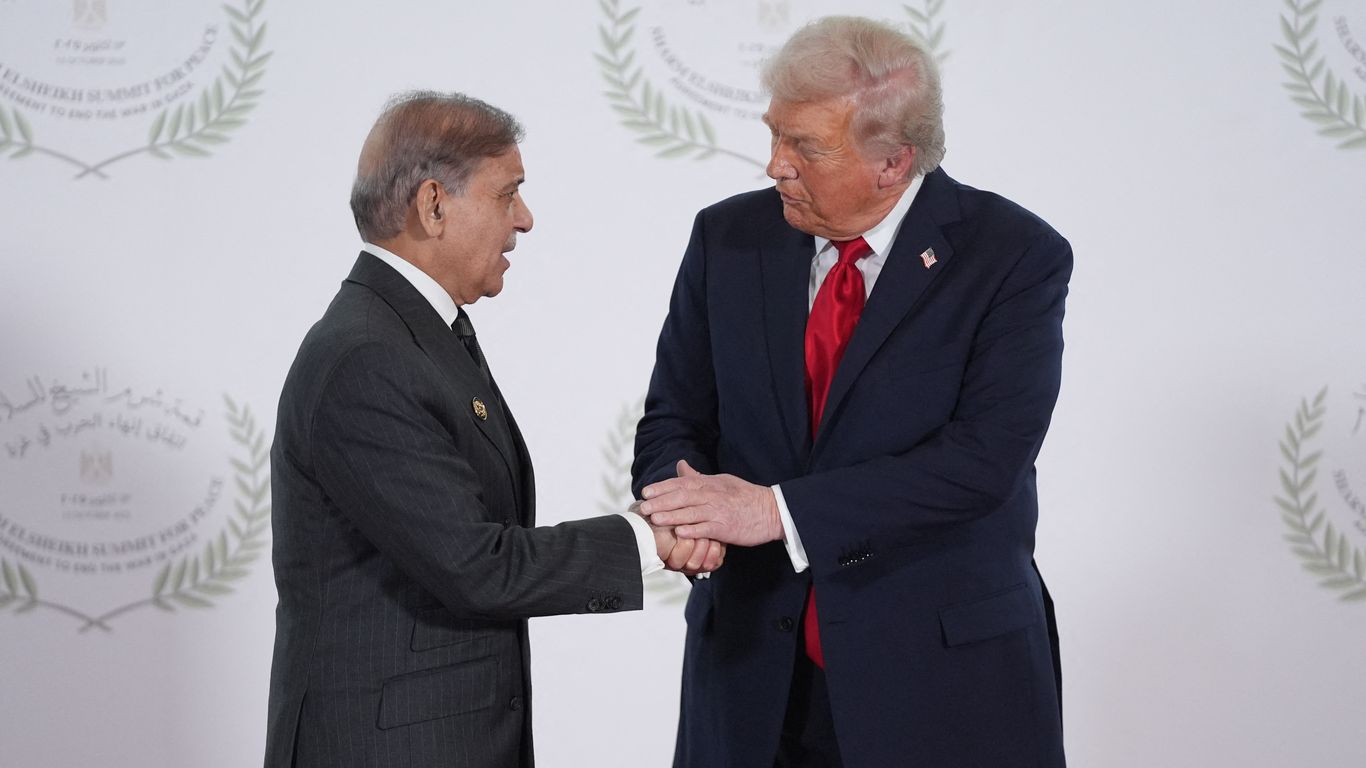
Two-week ceasefire proposal: Pakistan PM Shehbaz Sharif urged President Trump and Iran to agree to a two-week ceasefire to allow diplomacy, asking Iran to briefly reopen the Strait of Hormuz and requesting Trump extend a bombing deadline that was less than five hours away. Pakistan, as primary mediator, said negotiations have progressed and a senior Iranian official told Reuters Tehran is 'positively reviewing' the proposal. If accepted, the pause could materially reduce near-term risk to regional energy flows and avert U.S. strikes, with oil and defense sectors most likely to react. Outcome remains uncertain pending an imminent White House response.
A short, credible diplomatic pause materially compresses the energy risk premium that has been priced into shipping, insurance and crude. Historically a temporary reopening of choke points or de‑escalation removes roughly $3–8/bbl of geopolitical premium inside days and knocks front‑month volatility down by 30–60%, which cascades into lower jet fuel and bunker costs and higher short‑cycle demand elasticity.
Immediate beneficiaries are high fixed‑cost, fuel‑sensitive operators: airlines and container lines capture most of the margin relief in the first 2–6 weeks because fuel is a large variable cost and route re‑routing is time‑consuming. Conversely, defense primes and tactical energy service names carry a near‑term valuation tailwind risk — their risk premia should compress quickly if the pause sticks, but that compression is vulnerable to rapid reversal if talks fail.
Two practical timing dimensions matter: days (front‑month crude and insurance spreads reprice), weeks (operators and refiners begin to reflect lower fuel costs in guidance), and months (policy responses and inventory movements can re‑establish a new baseline). Key catalysts that would reverse the move are any credible kinetic incident in the Gulf, failure of follow‑on talks, or an abrupt change in US policy signalling renewed punitive strikes — each can re‑inflate premiums far faster than they deflate.
AI-powered research, real-time alerts, and portfolio analytics for institutional investors.
Overall Sentiment
mildly positive
Sentiment Score
0.20
